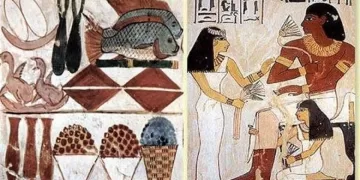





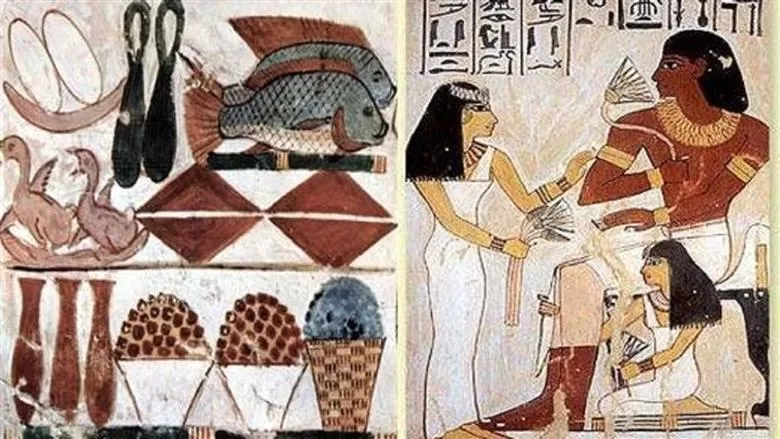
For Egyptians, Sham el-Nessim (Arabic for smelling the breeze) is not simply a public holiday pinned to the calendar, but a small annual release: a collective exhale after winter and a chance for families strained by rising costs to spend some time together under the sky.
Celebrated nationwide on the Monday after Coptic Easter, the spring festival is widely described as uniquely Egyptian, a tradition whose spirit remains stubbornly local even as modern life reshapes its rituals.
By late morning, Cairo’s parks, riverbanks and promenades swell with families carrying the same familiar picnic foods passed down through generations.
Teenagers drift along the Nile in photo-taking clusters. Grandparents settle onto benches in the shade, keeping an eye on toddlers who run in circles until they collapse laughing.
Vendors thread through the crowds with balloons, roasted nuts, soft drinks and paper cups of tea.
Many historians trace Sham el-Nessim back nearly 5,000 years, to around 2700 BC during the Old Kingdom.
Egyptians have observed it through the eras of temples and medieval alleyways, colonial boulevards and today’s high-rise neighbourhoods, holding onto the central idea that spring is not only a season but a moment of renewal best met outdoors.
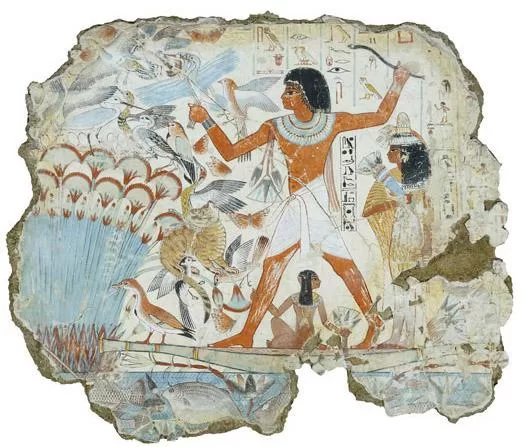
That endurance has made it feel less like a once-a-year event than a national habit, as if the country itself, over millennia, learned to step into the light at the same point in the year.
The name Sham el-Nessim itself is contested, with competing explanations circulating in popular culture and scholarly discussion.
One widely repeated interpretation links it to an ancient Egyptian festival known as ‘Shomu’, associated with the return or rebirth of life.
Over time, the term is believed to have shifted in pronunciation as Arabic became dominant, while el-nessim, the breeze, was added to capture the feel of spring air and the custom of going out to enjoy it.
Another explanation connects the term to Coptic, suggesting it derives from an expression sometimes rendered as Shom en sim, meaning a garden or orchard of plants, a phrase that matches the season when fields green and flowers open.
“There is more than one plausible reading of the term,” Archaeologist Magdy Shaker, a senior figure in the tourism and antiquities ministry, told The Egyptian Gazette.
He reflected how Sham el-Nessim travelled across languages and eras while keeping its seasonal core.
He pointed to how ancient Egyptian art and texts underscore the civilisation’s deep attachment to gardens and cultivated beauty.
“Tomb paintings show lotus blossoms floating on water, orchards planted with sycamore and palm, fish moving through garden lakes and shaded paths laid out with care,” Shaker said.
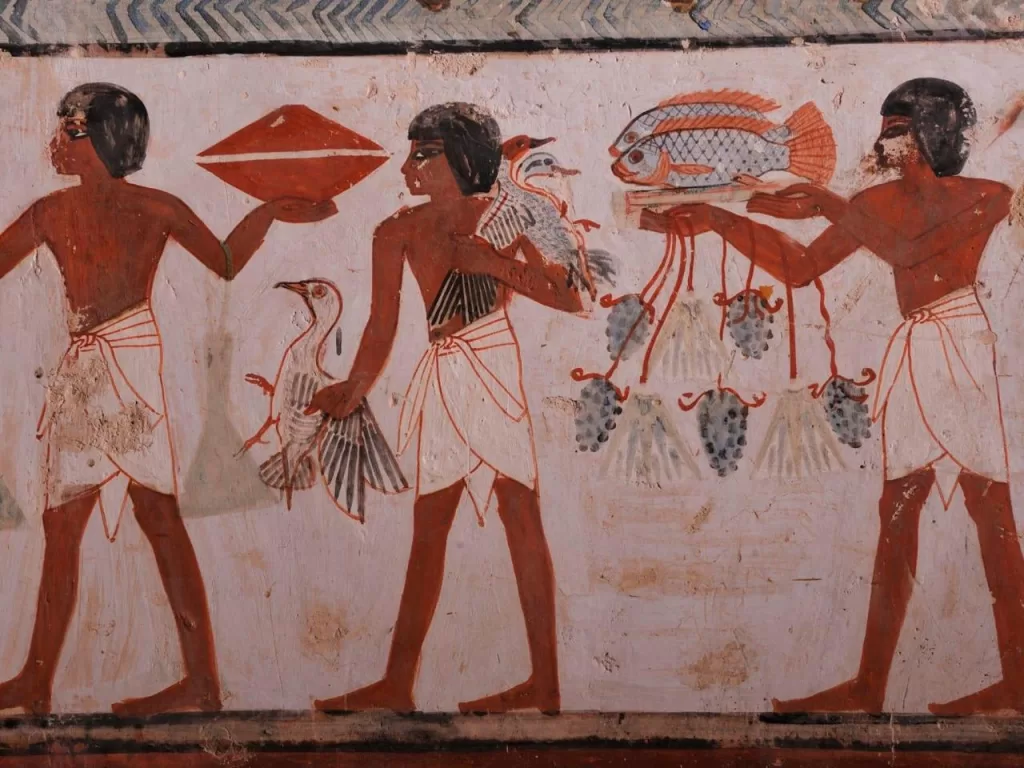
Historical records, he added, point to specialised roles for gardeners and flower arrangers linked to temples and elite households.
“It is a sign that the symbolic and aesthetic value of plants was woven into daily life and ritual,”Shaker said.
Against that backdrop, Shaker argued that a spring holiday devoted to green spaces and fresh air can feel less like a later invention than an inheritance.
Over centuries, he added, the festival’s timing came to sit alongside religious observances shaping regional calendars.
Popular Egyptian narratives often connect the celebration to the period associated in Jewish tradition with the Exodus and Passover, which in turn influenced the Christian calendar around Easter.
“Here, where Christianity took deep root early, the spring outing continued and became fixed to the Monday after Easter,” Shaker said, explaining the reasons why Sham el-Nessim falls on that specific day.
Whatever the precise historical pathways, the modern outcome is striking: the holiday is widely shared across communities as a national pause, less about formal worship than about family, food and the outdoors.
“If Sham el-Nessim has a signature, it is the picnic,” Shaker said.
“And the picnic has a signature too: the unmistakable smell of salted fish drifting across lawns and footpaths.”
He described the traditional menu: eggs; feseekh(salted, fermented fish); plus lettuce, spring onions and fresh green chickpeas, known locally as malana.
In some households, he added, garlic is included too, sometimes as food, sometimes through home habits that blend folklore with health beliefs.
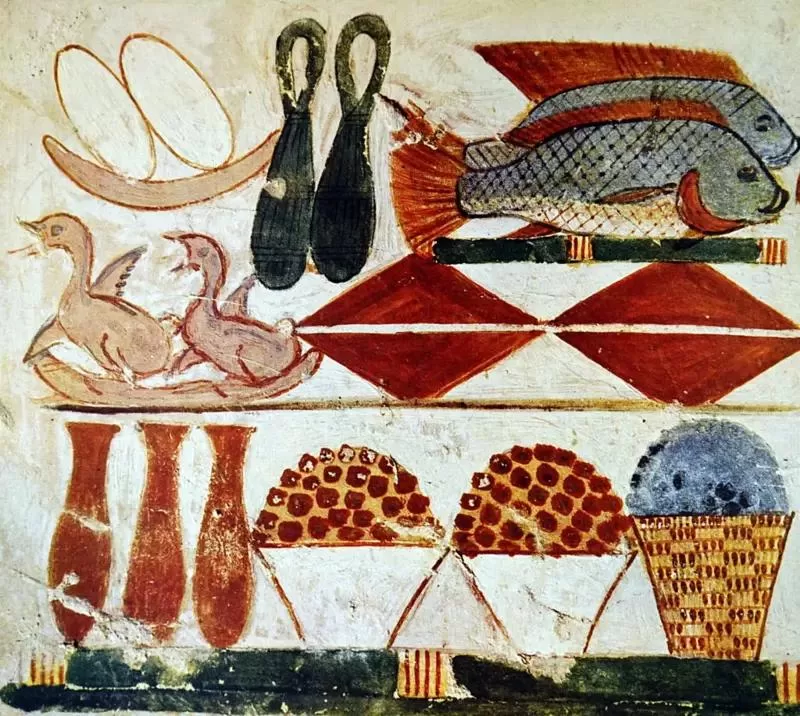
Shaker explained that eggs carry older symbolic weight: “Eggs are closely linked to creation and beginnings.”
In accounts often repeated around the holiday, he said, ancient Egyptians treated the egg as an emblem of life emerging from what seems lifeless.
Some traditions describe people writing wishes or prayers on eggs at the start of the year and placing them where morning sunlight could touch them.
Today, that religious symbolism has faded for many families, but the joy remains: children dye eggs in bright colours, parents take photos, and the egg becomes an edible craft project packed into a picnic bag.
“Feseekh is both beloved and feared,” Shaker said.
For devoted fans, it is the taste that makes the holiday feel real, sharp, salty, and tied to memory.
Its place on the Sham el-Nessim table is often linked in Egyptian storytelling to ancient skill in preserving fish.
Ancient sources, including the Greek historian Herodotus, wrote that Egyptians ate salted fish during festivals.
But Shaker also stressed the modern caution.
“This is where old tradition meets modern risk,” he said, as health authorities warn consumers to buy it only from reputable sellers and handle it carefully, since improper preparation can cause dangerous food poisoning.
He added that lettuce, known since ancient times in Egypt, is associated in popular accounts with fertility and growth, while green chickpeas signal that spring has truly arrived.
Onions carry a different meaning: ancient depictions show onions among offerings, and Egyptian folklore often treats them as protective.
He added that they used to place onions near the patient’s nose at the beginning of spring and at the time of a child’s birth.
They would also pour its juice on the thresholds of their homes, similar to what happens during Sham El-Nessim, because they believed it drove away diseases and protected against envy.
In the end Shaker suggested, Sham el-Nessim’swider meaning is found in its ordinariness.
“It demands no expensive tickets, no formal clothes and no elaborate preparations,” he said.
“Even when budgets are tight, families usually find a way to carry something to share,” Shaker added.
Where to spend the day
Those living in Cairo mark the day in whatever open spaces they can reach.
– Families with access to transport often head to large parks.
– Others gather close to home, using nearby public spaces within walking distance, such as small grassy patches beside main roads, shaded spots along the Nile and modest neighbourhood gardens.
– Al-Azhar Park attracts many visitors who picnic on its wide lawns and enjoy views of historic domes and minarets.
– Along the Nile, the Ahl Masr Walkway fills with people strolling, drinking tea and eating simple snacks while taking in the river scenery.
– The International Garden in Nasr City offers themed sections that give families the feel of a mini world tour.
– The Aquarium Grotto Garden in Zamalek offers a quieter escape, with tunnels and shaded corners that spark children’s sense of adventure.
– The Japanese Garden in Helwan draws visitors seeking a calmer atmosphere, with Buddha statues, stone pathways and distinctive design.
– Many people also opt for indoor or modern outings, choosing cinemas and malls, or visiting the Cairo Tower for panoramic city views.
– The Spring Flowers Exhibition 2026 hosts a soft opening at the Agricultural Museum in Dokkistarting today, allowing visitors to explore both the exhibition and the newly renovated museum ahead of the official opening scheduled for April 16.

