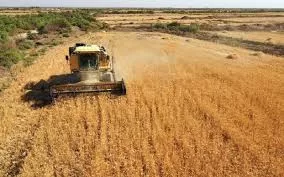




By the end of the wheat harvest season, thousands of trucks leaving the fields carried more than grain; they carried the story of an exceptional season in which Egyptian farmers achieved the highest wheat procurement figures in the country’s history.
According to Prime Minister Moustafa Madbouli, Egypt has achieved an unprecedented record in wheat procurement, reaching approximately 4.6 million tons—about 600,000 tons more than last season.
For a country that remains one of the world’s largest wheat consumers, every additional locally supplied ton helps reduce import pressure and strengthens food security amid global market instability.
In recent years, the government has intensified efforts to encourage farmers to expand wheat cultivation and increase supply.
This season, the government announced the procurement price early at LE 2,500 per ardab. The early announcement served as a signal to farmers before planting began, helping them calculate costs and expected returns more clearly.
However, price was not the only deciding factor; the speed of payment also played a significant role in boosting deliveries.
According to official data, suppliers are paid within 48 hours, enabling farmers to access cash quickly and encouraging them to use the official supply system.
“The government’s procedures for the wheat supply system this year represent an important and unprecedented step. They have directly contributed to increased farmer interest in cultivating and supplying wheat,” Hussein Abu Saddam, head of the Farmers Syndicate, said.
“The government moved early, even before the planting season began, through a package of policies designed to support farmers,” he added.
This was also accompanied by an increase in wheat-growing areas to about 3.7 million acres, one of the highest levels in recent years.
Moreover, continued efforts to provide certified seeds, fertilizers, and agricultural guidance, as well as the expansion of new silos, have helped preserve the crop and reduce losses.
“The government procedures regarding the wheat procurement system this year were clearly different and have begun to bear fruit on the ground in the form of a significant increase in farmers’ willingness to supply,” Abu Saddam said. “What is happening this season reflects a state of trust between farmers and the state, which is evident in the unprecedented figures achieved,” he added.

