








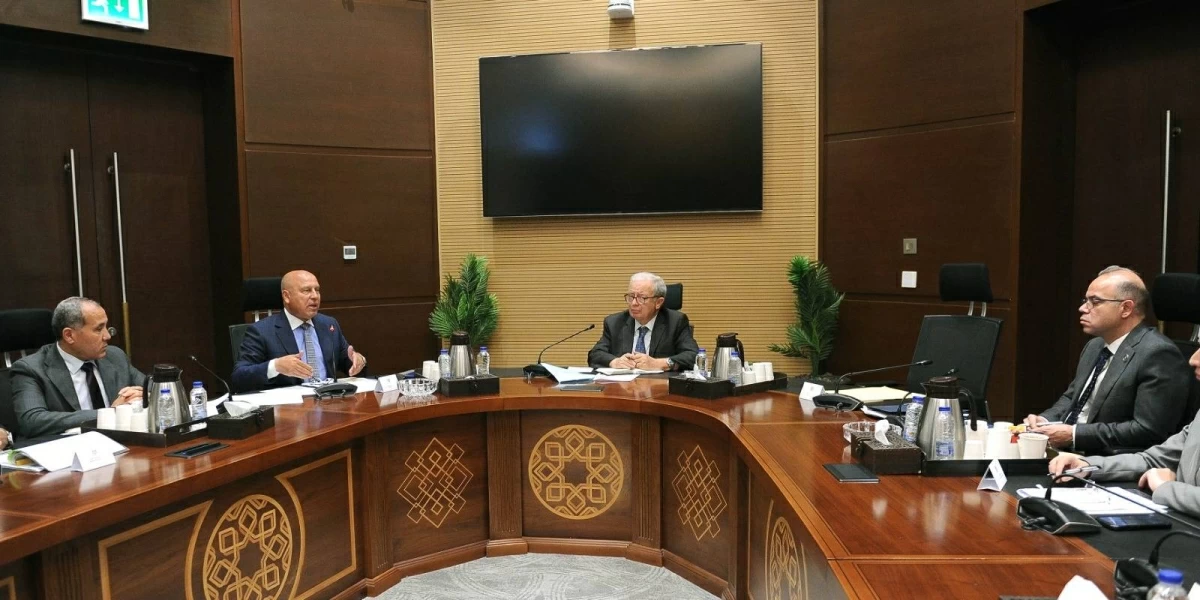
Egypt’s Deputy Prime Minister for Economic Affairs, Hussein Eissa, has described the high-speed electric rail network as one of the country’s most significant strategic initiatives in recent years, highlighting its considerable economic, developmental, social, and investment potential.
Eissa’s remarks were made during a meeting on Saturday with Minister of Transport, Kamel El-Wazir, to review progress on the project. He described the network as a “vital artery” that will connect governorates and major projects across various sectors, providing a significant stimulus to the national economy.
For his part, El-Wazir emphasised that the high-speed rail network is among the most important projects currently underway, citing its central role in driving comprehensive development and strengthening Egypt’s position as a regional and global logistics hub.
He explained that the network will establish an integrated logistics corridor linking the Red Sea and the Mediterranean, thereby enhancing international trade flows and supporting Egypt’s integration into global economic corridors.
The project will link industrial zones to export ports and connect major agricultural development areas—including the New Delta, West Minya, Mostakbal Misr, and Toshka—with consumption centres and ports, thereby maximising productivity and the wider benefits of these national projects.
El-Wazir added that the network will support the tourism sector by connecting diverse coastal, cultural, and religious destinations. He also highlighted the project’s role in sustainable urban development, noting the creation of new growth corridors, the redistribution of population, and the reduction of emissions compared to diesel-based transport.
Upon completion, the network will span 2,000 km, feature 60 stations, and is expected to serve up to 2.5 million passengers daily while transporting 15 million tonnes of freight annually.

