









Wael Salem
Over the past few years, Egypt has embarked on an ambitious overhaul of its healthcare system, guided by a series of presidential initiatives and structural reforms.
The aim is to expand access, improve quality, and create a sustainable framework that serves all citizens.
At the core of this transformation is a comprehensive vision to deliver equitable healthcare, underpinned by the gradual rollout of the Universal Health Insurance System (UHIS) and reinforced through international partnerships, including the World Bank, the French Development Agency, and Japan’s International Co-operation Agency (JICA).
One Health’
Egypt’s healthcare transformation is increasingly connected to global initiatives.
Minister of Health Khaled Abdel Ghaffar recently attended the One Health Summit in Lyon city, Paris, highlighting Egypt’s commitment to aligning national strategies with global health priorities.
“The summit provides a vital platform to accelerate the global implementation of the ‘One Health’ approach,” he said, emphasising its role in strengthening international dialogue, supporting scientific research, and coordinating efforts to improve health systems, disease surveillance, and risk prevention.
Abdel Ghaffar explained that the “One Health” framework addresses complex global challenges, including zoonotic diseases, antimicrobial resistance, sustainable food systems, and environmental risks.
Egypt has long embraced this integrated approach, coordinating between national and international stakeholders to enhance preparedness for future health threats and support the Sustainable Development Goals.
The One Health Summit, convened under the French G7 Presidency and coinciding with World Health Day, is the first of its kind to bring together heads of state and government alongside international organisations, parliamentarians, scientists, the private sector, civil society, local authorities and youth to accelerate the implementation of the One Health approach globally.
Presidential initiatives
Since 2014, the government has prioritised healthcare on the national agenda, launching initiatives to close longstanding gaps in service delivery.
Key campaigns have focused on hepatitis C, non-communicable diseases, maternal and child health, and early cancer detection.
These efforts have not only enhanced early diagnosis rates but have also eased pressure on hospitals nationwide.
The “100 Million Healthy Lives” campaign stands out as a landmark achievement, helping Egypt become the first country to eliminate hepatitis C as a public health threat.
Building on this success, screening programmes now cover conditions, such as diabetes, hypertension, and obesity, signalling a shift towards preventive care.
Upgrading infrastructure
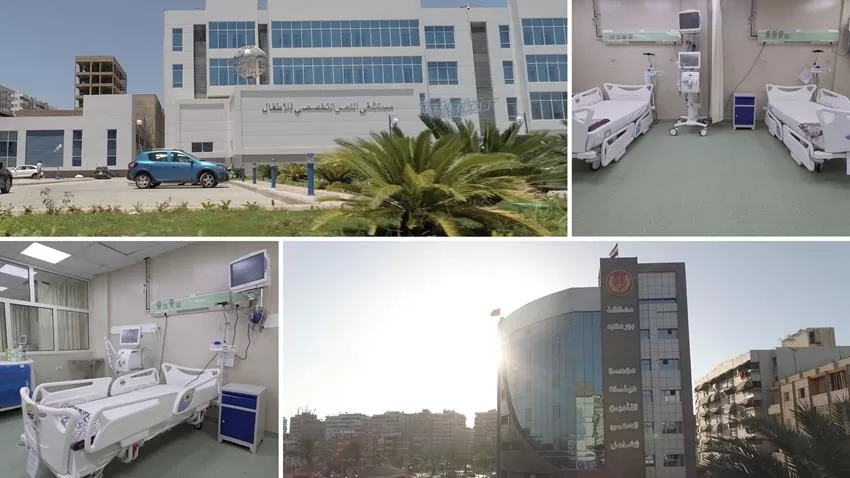
Parallel to these health campaigns, Egypt has invested heavily in upgrading its healthcare infrastructure.
Hundreds of hospitals and primary care units, particularly in rural and underdeveloped areas, have been modernised.
Investments in medical equipment, digital health systems, and workforce training have further enhanced the quality and efficiency of medical care.
UHIS
Launched in 2018, the Universal Health Insurance System (UHIS) stands as a cornerstone of Egypt’s healthcare reforms. Its first phase, covering six governorates — Port Said, Luxor, Ismailia, South Sinai, Suez, and Aswan — has reached 5.1 million citizens, with investments totalling LE51 billion between 2018 and 2025.
The second phase will extend coverage to five additional governorates — Damietta, Marsa Matrouh, Kafr El-Sheikh, North Sinai, and Minya — serving 12.4 million people through 69 hospitals and 669 primary healthcare units, at an estimated cost of LE115 billion.
The third phase is set to deliver nationwide coverage by 2030, two years ahead of the original 2032 target. Altogether, the full rollout of the system, encompassing all phases, is expected to surpass LE360 billion.
Digitalisation
The Egyptian government is making significant strides in healthcare digital transformation through the National Digital Health Strategy (2025–2029), aiming to unify health data, establish electronic medical records (EMRs) for all citizens, and reduce patient waiting times by up to 60 per cent.
The strategy focuses on telemedicine, AI-driven diagnostics, and expanding digital health services to underserved rural areas, enhancing efficiency and equality.
“The implementation of this strategy will contribute to improving the performance and resilience of Egypt’s healthcare system by supporting data-driven decision-making, facilitating access to digital health services, and raising the efficiency of the health system in facing accelerating challenges,” Minister of Health Khaled Abdel Ghaffar said in recent press remarks.
Such efforts, he added, come within the framework of the Egyptian state’s direction towards building an advanced digital health system that contributes to strengthening citizens’ trust in health services and ensuring their sustainability.
Experts stress that continued investment in human resources and primary healthcare is essential.
“The progress achieved in recent years is significant, particularly in preventive care and disease control,” Hassan Tawfik, former chairman of Benha Health Insurance Hospital, said.
“Digital tools, such as electronic health records, telemedicine, and data-driven decision-making will further improve efficiency and patient outcomes,” he told The Egyptian Gazette.
Sustaining momentum for future
While the progress is remarkable, challenges remain. Ensuring sustainable financing, maintaining service quality, amid growing demand, and addressing regional disparities are ongoing priorities.
For Egypt, the journey continues, combining national ambition, human-centred care, and global collaboration to create a healthier future for all.

