


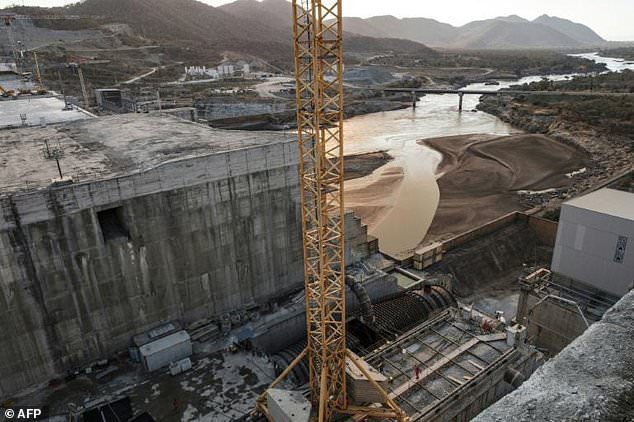
Egyptians reacted angrily to an announcement by the Ethiopian government that it had already started the second filling of the reservoir of the Grand Ethiopian Renaissance Dam (GERD), expressing fears that the gigantic project would have adverse effects for Egypt.
The Egyptian Ministry of Irrigation has already sent a notice to Ethiopia in which it rejected the move, especially given the fact that Addis Ababa has started the second filling of the dam reservoir without reaching a deal with both Egypt and Sudan, two downstream states whose combined populations of over 150 million would be negatively affected by any Ethiopian move in relation to the water of the Nile River, Egypt’s only source of water.
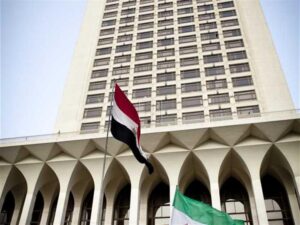
The Egyptian Foreign Ministry also sent a letter to the United Nations Security Council, in which it expressed categorical rejection of the Ethiopian unilateral move, ahead of the Council session on the dam, scheduled for tomorrow.
Away from this official position, fear and anger dominated the debates of the members of the public here, including among water experts who warn that the second filling of the dam would be devastating for Egypt and its population of 102 million.
“The crisis over the Ethiopian dam has already taken a dangerous turn,” said Egypt’s former irrigation minister Mohamed Nasr Allam. “It is difficult to anticipate what can happen next,” he wrote on his Facebook page.
Other experts have warned against starting the second filling of the Ethiopian dam without reaching a legally-binding deal on the operation and the filling of the project and so did the Egyptian government.
Egypt’s fear is that the filling of the dam will deprive it of sizeable amounts of water from the Nile, on which it heavily depends for the needs of its population, its agricultural and industrial sectors.
Egypt is water-poor already and the amounts of water it gets from the Nile are barely enough to quench the thirst of its people or satisfy its food production needs.
Whereas this populous country receives 60 billion cubic metres of water each year, most of it comes from the Nile River, it needs 114 billion cubic metres to satisfy its needs annually, according to the Ministry of Irrigation and Water Resources.
This gap between water resources and actual needs is bridged by treating agricultural wastewater and underground water and surface water.
Egypt also imports the equivalent 34 billion cubic metres of water in food each year, the ministry says.
Climatic changes and the growing population also aggravate the problems this country faces in making available the amounts of water necessary for the continuity of life.
The Ethiopian dam, especially in the absence of a legally-binding deal on its operation and filling, will worsen Egypt’s problems. This is why there is widespread anger among Egyptians, including people on the streets, at the new Ethiopian unilateral move. This anger was manifest in a number of developments in the past few hours since Ethiopia announced the start of the second filling of the dam’s reservoir.
There has been an outpouring of support for Egyptian President Abdel Fattah ElSisi, especially when it comes to any decisions the Egyptian leadership will take in the coming days to protect Egypt’s right to survive and save Egyptians from dying in thirst because of the Ethiopian dam.
This anger was also expressed massively on social media where users have been calling on the Egyptian leadership to take whatever decisions itsdeems fit to protect Egypt against thirst.
“This dam is an existential threat to Egyptians,” one Twitter user wrote, repeating remarks by Sisi. “We cannot stand idly by and wait to die in thirst.”


Discussion about this post