




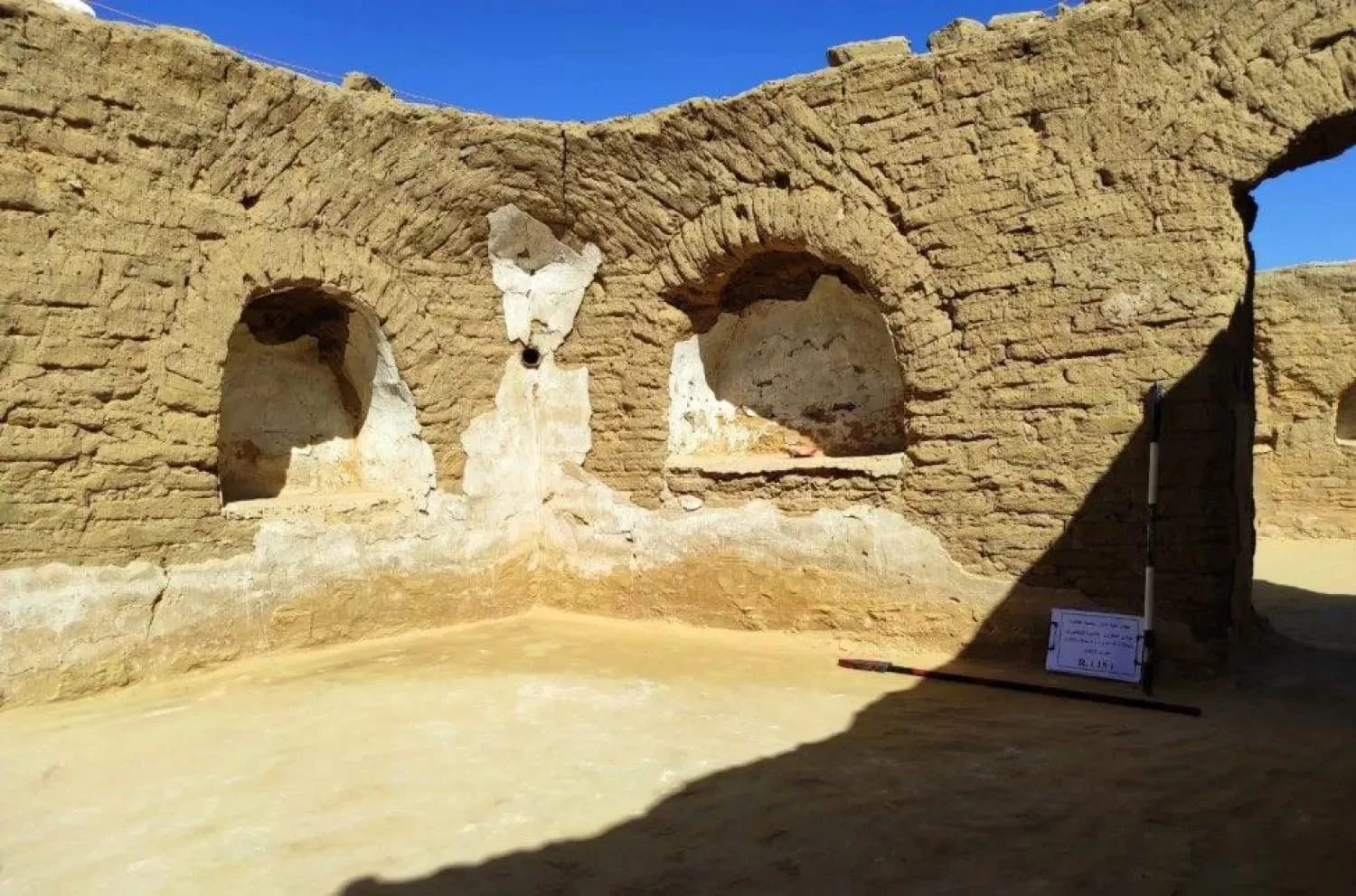
A joint Egyptian archaeological mission from the Supreme Council of Antiquities and the Faculty of Archaeology at Cairo University has uncovered the remains of a monastic complex dating back to between the 4th and 6th centuries AD in the buried monasteries area of Wadi El-Natrun in Beheira Governorate — one of the earliest centres of monasticism in Egypt and worldwide.
The discovered structure spans around 2,000 square metres and is built of mudbrick.
The complex features a central open courtyard forming the core of the layout, surrounded by architectural units including smaller courtyards leading to monks’ cells of varying shapes and sizes.
Excavations also revealed service annexes in the western section, including kitchens, ovens, and storage areas.
Archaeologists uncovered several burial spaces inside the complex containing human remains believed to belong to monks, reflecting the funerary aspects associated with monastic life during that period.
A number of Coptic inscriptions were also found, bearing the names of monks who lived in the monastery, along with religious texts invoking mercy and forgiveness.
The discovery, carried out entirely by Egyptian teams using modern excavation techniques, provides important material evidence supporting historical accounts of the origins of monasticism in Wadi El-Natrun.

