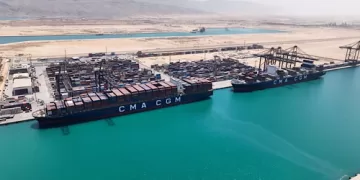




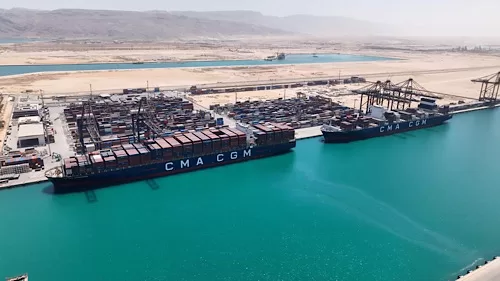
Egypt is developing Sokhna port on the Red Sea to transform it into a regional hub for transport, logistics and transshipment trade, Transport Minister Kamel el-Wazir said during an inspection tour of the project.
The port is a key component of the Sokhna-Alexandria logistics corridor, which is designed to connect the Red Sea and the Mediterranean and support the movement of containers across Egypt.
“The work being carried out at this project is a great achievement implemented by Egyptian companies,” Wazir said, according to a statement from the transport ministry.
The minister inspected the port’s main administrative building and operations at the Red Sea Container Terminal 1, operated by a consortium of Hutchison Ports, CMA CGM and COSCO Shipping. The terminal began commercial operations in mid-January.
During the visit, the terminal was handling two COSCO vessels. The CSPC Jade was unloading 1,317 containers and loading 816, while the Xin Hai Kou, arriving from Jeddah and bound for China, was loading 1,549 containers and unloading 1,516.
The terminal has so far received 24 vessels, including 13 operated by CMA CGM, nine by COSCO Shipping and two by OVP, the ministry said.
Wazir described the terminal as a fully automated facility operated according to international standards, saying it would enable Sokhna to receive major global shipping lines, strengthen Egypt’s role in international supply chains and support exports.
The wider port project covers 29 square kilometres and includes the construction of five new basins. The ministry said 18 kilometres of marine berths, with a depth of 18 metres, had been completed, bringing the port’s total berth length to 23 kilometres.
The project also includes 17 kilometres of internal roads, featuring three concrete lanes in each direction, as well as 17 kilometres of electric and diesel railway lines linking the port to Egypt’s wider transport network.
Other completed or ongoing works include 3,270 metres of breakwaters, the reclamation of around four million square metres of land, container yards covering 8.6 square kilometres and logistics zones spanning 6.3 square kilometres.
The project aims to increase Egypt’s share of the global transshipment market. Wazir said the port’s master plan had been designed to match the standards of the world’s most advanced ports and serve regional and international trade.
Waleid Gamal el-Din, chairman of the Suez Canal Economic Zone, said developing the zone’s ports was a top priority, particularly amid continuing disruptions to global supply chains.
He said the authority was seeking to exploit the strategic locations of its ports on the Red Sea and Mediterranean, while supporting investors and accelerating ongoing projects.

