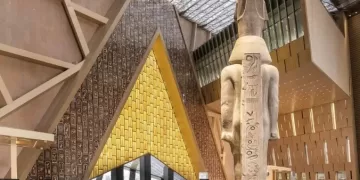





CAIRO – Egypt was inaugurating the Grand Egyptian Museum (GEM) on Saturday, the world´s largest museum dedicated to its ancient civilization – a megaproject also aimed at boosting the country´s tourism industry and economy.
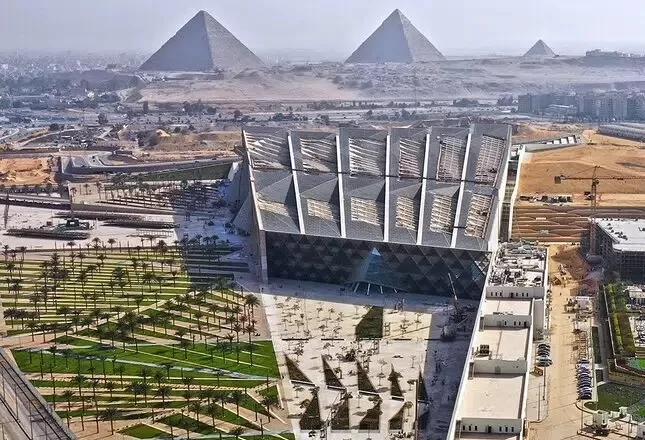
Overlooking the Pyramids of Giza, the museum showcases over 50,000 artifacts detailing life in ancient Egypt.
World leaders, including monarchs, heads of states and governments, were to attend the grand opening ceremony in the Egyptian capital, according to a statement from the presidency, which touted the museum as “an exceptional event in the history of human culture and civilization.”
President Abdel Fattah El Sisi wrote on social media that the museum will bring “together the genius of ancient Egyptians and the creativity of modern Egyptians, enhancing the world culture and art with a new landmark that will attract all those who cherish civilization and knowledge.”
A stage was built in the museum courtyard where an orchestra and musicians would later preform what the Egyptian media described as a “global symphony of humanity.”
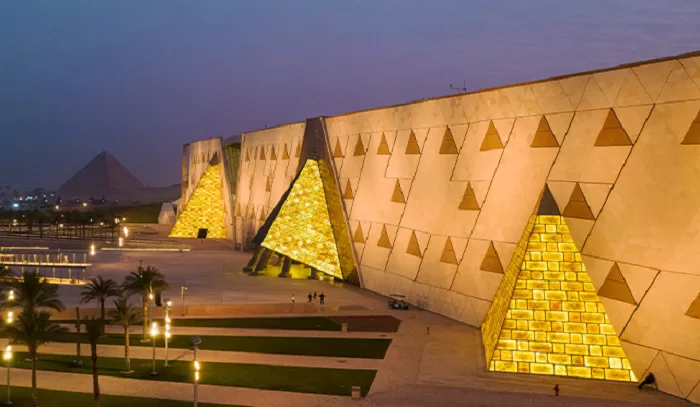
The museum, known as GEM, boasts a towering, triangular glass façade imitating the nearby pyramids, with 24,000 square metres (258,000 square feet) of permanent exhibition space.
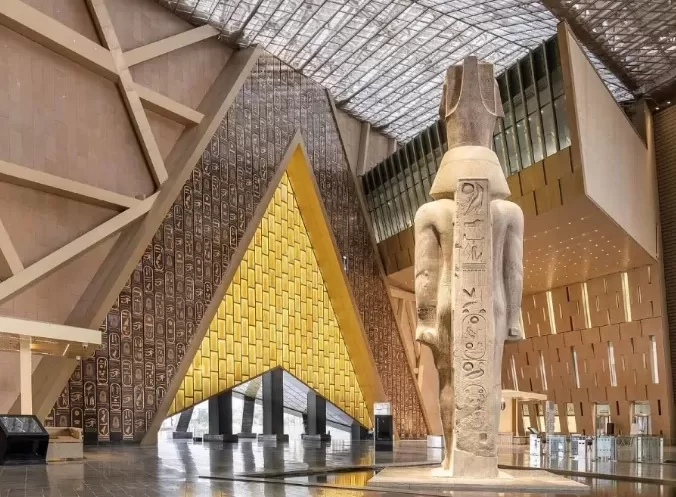
It opens to a granite colossus of Ramses the Great, one of ancient Egypt’s most powerful pharaohs who reigned for around 60 years, from 1279 B.C. to 1213 B.C. The statue greets visitors once they step inside the museum´s angular atrium.
From the atrium, a grand six-story staircase lined with ancient statues leads up to the main galleries and a view of the pyramids. A bridge links the museum to the pyramids, allowing tourists to move between them either on foot or via electric vehicles, according to museum officials.
The museum´s 12 main galleries, which opened last year, exhibit antiquities spanning from prehistoric times to the Roman era, organised by era and by themes.
Two halls are dedicated to the 5,000 artifacts from the collection of King Tutankhamun – who ruled from 1361 B.C. to 1352 B.C. – that will be displayed in its entirely for the first time since British archaeologist Howard Carter discovered King Tut´s tomb in 1922 in the southern city of Luxor.
Zahi Hawass, Egypt´s most renowned archaeologist and former minister of antiquities, said the Tutankhamun collection is the museum’s masterpiece.
“Why this museum is so important, and everyone is waiting for the opening?” he told The Associated Press. “Because of Tutankhamun.”
The collection includes the boy pharaoh´s three funeral beds and six chariots, his golden throne, his gold-covered sarcophagus and his burial mask, made of gold, quartzite, lapis lazuli and colored glass.

