




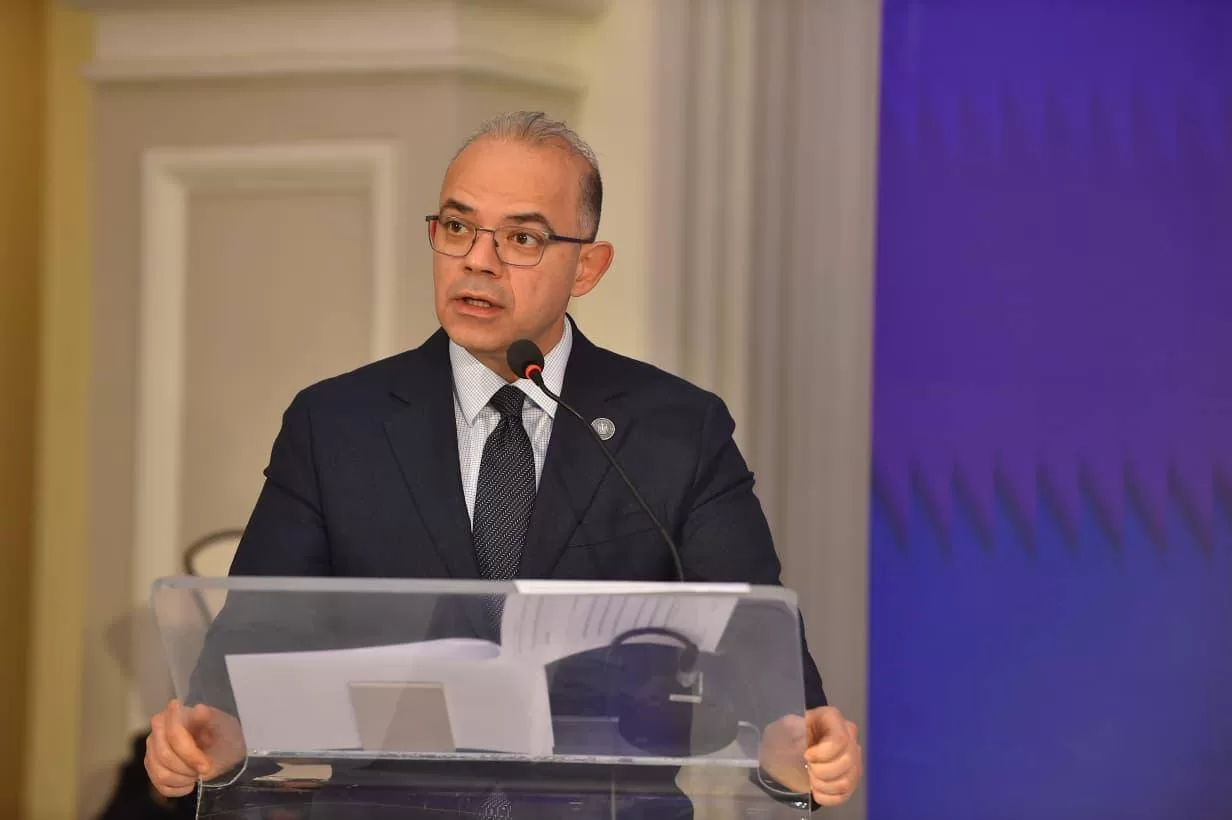
Minister of Investment and Foreign Trade Mohamed Farid Saleh stressed that climate finance is no longer an environmental obligation but a ‘top-tier competitive and economic issue amid the rapid global shift toward a green economy’.
This approach aligns with Egypt’s vision to enhance the competitiveness of its business environment, attract climate-related investments, and prepare Egyptian exports for global markets under carbon border adjustment mechanisms, the minister said in an opening speech to the Climate Finance Accelerator (CFA) programme conference, on Tuesday
The event is organised in partnership with the British Embassy in Cairo and Flat6Labs, which is the leading entrepreneurship platform in emerging markets.
Attendees included the UK Special Representative for Climate Rachel Kyte, and Deputy Head of Mission at the British Embassy Catherine Carr, as well as leading investors, international partners, and startups in climate-aligned sectors.
Minister Saleh noted that Egypt and the United Kingdom are working closely together to strengthen their strategic partnership to promote investment in the green economy, a fact reflected in their deep historical and economic ties.
He added that bilateral trade reached £2.8 billion in 2025, including £1.5 billion in Egyptian exports, and £1.3 billion in imports, the minister said, noting that the ‘UK remains the second-largest foreign investor in Egypt’.
On climate finance, Saleh stressed the integration of green investments and climate funding into the Egyptian government’s annual plan to maximise opportunities linked to the transition to a low-carbon economy.
He referred to the ongoing consultations to help Egyptian exports reach global markets. He noted that aligning Egyptian industry with carbon border standards is essential for maintaining market shares and boosting export capacity.
The CFA is a four-year technical assistance programme, funded by the UK Government’s International Climate Finance in the Department for Energy Security and Net Zero (DESNZ).
It responds directly to the urgency and scale of the climate crisis by supporting highly promising low-carbon projects to become more bankable and appealing to investors.
The CFA addresses the challenges involved in attracting climate finance to where it is most needed by bringing together stakeholders that can develop and finance climate projects at scale. By doing this, it helps countries to meet their Nationally Determined Contribution (NDC) pledges under the Paris Agreement.

