



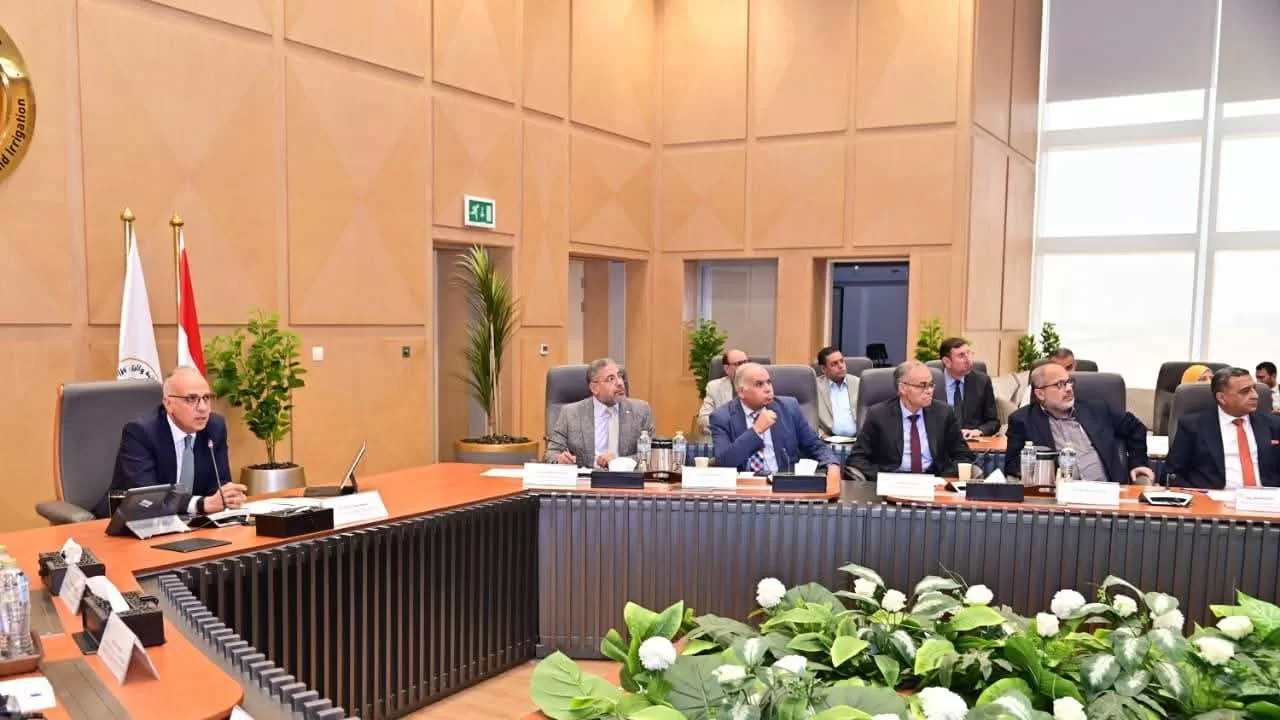
Egypt’s Minister of Water Resources and Irrigation, Hani Sweilem, met on Saturday with international development partners to enhance co-ordination and support for the nation’s water sector priorities.
The meeting was held within the framework of the ministry’s “Water System 2.0” vision for second-generation water management.
Co-chaired by the European Union and the German Embassy in Cairo, the gathering brought together a broad spectrum of international stakeholders, including representatives from development banks, diplomatic missions, and United Nations organisations.
During the meeting, Minister Sweilem emphasised the importance of strengthening international and regional partnerships.
He noted that maximising technical expertise, financial resources, and development support is central to advancing priority projects, improving sustainable water resource management, building climate resilience, and reinforcing Egypt’s long-term water security.
The minister explained that following a high-level workshop with senior officials and affiliated entities, the ministry developed a comprehensive portfolio of priority projects aligned with the pillars of Water System 2.0.
This exercise aimed to define strategic needs and future interventions, ensuring projects are ready for financing through the state budget, development partners, and international financial institutions.
Sweilem outlined that the portfolio reflects the core pillars of Water System 2.0, including digital transformation, smart water management, resilient infrastructure, climate change adaptation, governance, capacity building, and public awareness.
It also encompasses expanded investments in water treatment and desalination to support intensive agricultural production and improve the utilisation of non-conventional water resources.
He further underlined the ministry’s commitment to integrating human resource development, governance principles, and smart water systems across all future projects, noting that Egypt’s highly qualified technical cadre remains a key asset in driving institutional modernisation.
Development partners welcomed the ministry’s structured portfolio, noting that it provides clearer visibility of sectoral needs and enables a more efficient allocation of financial and technical support.
They highlighted that aligning these projects with the Water System 2.0 framework and climate commitments reflects a comprehensive vision.
This approach strengthens coordination between national priorities and international development agendas while improving donor effectiveness and implementation impact across the sector.

