



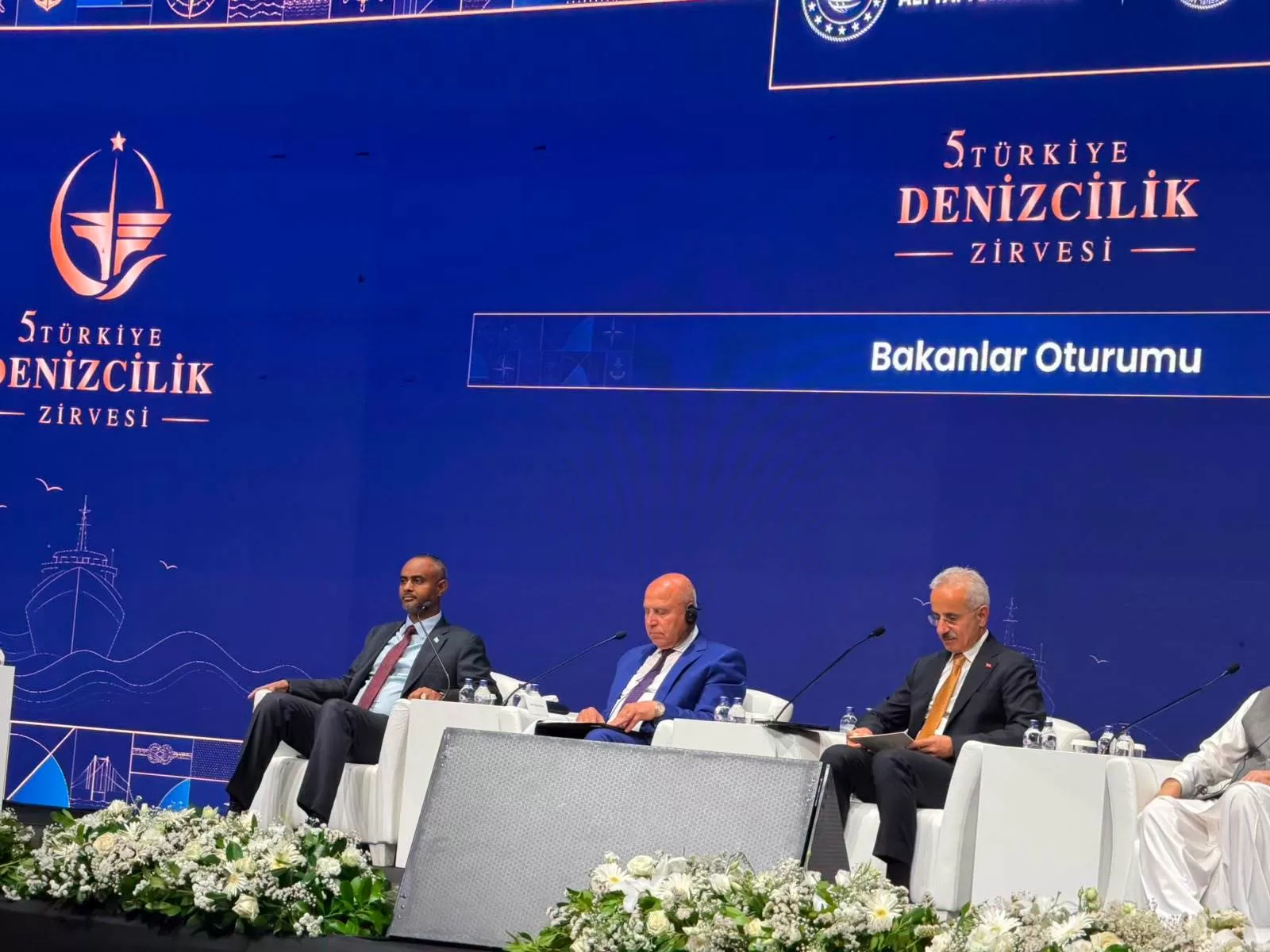
Egypt’s Minister of Transport, Kamel el-Wazir, has outlined the country’s ambitious strategy to transform into a premier regional hub for transport, logistics, and transit trade. Speaking during a ministerial dialogue session at the 5th Türkiye Maritime Summit, el-Wazir highlighted Egypt’s shifting role in global commerce.
The summit is widely recognized as one of the Middle East and Eastern Mediterranean’s leading strategic forums dedicated to maritime transport and the blue economy. This year’s event brought together Türkiye’s Minister of Transport and Infrastructure, Abdulkadir Uraloğlu, alongside senior government officials, maritime experts, and international industry leaders to discuss the future of global shipping and regional connectivity.
El-Wazir emphasized that the summit arrives at a critical juncture, as the global transportation system undergoes profound transformations driven by supply chain disruptions, climate challenges, and accelerating development needs.
“The integration of transport networks is no longer an option but a necessity,” el-Wazir told the gathering.
He stressed that stronger Egyptian-Turkish cooperation could play a pivotal role in advancing regional development. This would be achieved through joint investments in port infrastructure, cross-border railway networks, and new logistics corridors designed to facilitate trade and expand market access.
El-Wazir reaffirmed that Egypt’s national vision extends far beyond its traditional role as home to the Suez Canal, one of the world’s most critical maritime routes. Instead, Egypt is implementing a comprehensive strategy to position itself as a leading regional logistics platform connecting Europe, the Gulf region, the Levant, and Africa.
As part of this vision, Egypt has launched an integrated national transport modernization programme. This includes the development of eight international multimodal logistics corridors designed to enhance regional connectivity, strengthen the competitiveness of the Egyptian economy, and facilitate smoother global trade flows.
Leveraging Egypt’s exceptional geographic location at the crossroads of Asia, Africa, and Europe, these corridors are expected to support more efficient trade between Europe and the Arab Gulf. Furthermore, they will integrate with major international initiatives, such as the India-Middle East-Europe Economic Corridor (IMEC) and China’s Belt and Road Initiative.
The minister also highlighted Egypt’s ongoing efforts to modernize its seaports into smart, multi-purpose facilities. This strategy includes expanding maritime industries, localizing marine services, and enhancing partnerships with leading global port operators and shipping lines.
Underscoring Egypt’s proactive, long-term investment strategy over short-term fixes, el-Wazir noted that the Ministry of Transport is simultaneously implementing plans to transform Egyptian ports into integrated logistics hubs, modernize the national merchant fleet, and accelerate the transition toward green maritime transport.
El-Wazir stressed that Egypt’s ultimate objective is not only to remain a vital gateway for global commerce through the Suez Canal but to become a strategic partner in shaping the future of international maritime transport and resilient global supply chains.

