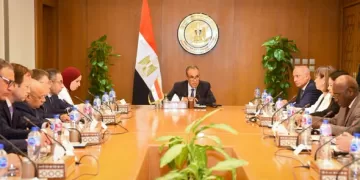








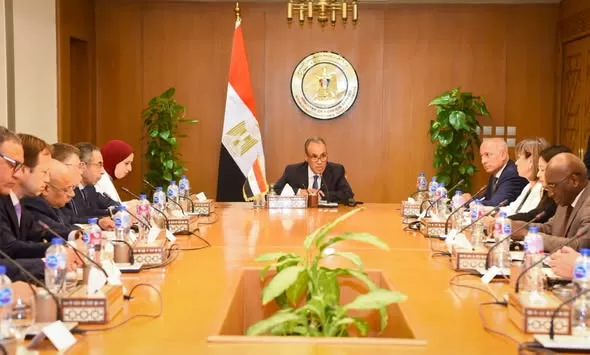
Egypt’s Ministry of Foreign Affairs, International Co-operation and Egyptian Expatriates on Tuesday hosted a strategic dialogue with international development partners to review progress of the country’s economic reform programme and probe ways to advance co-operation in support of sustainable development priorities.
The meeting, chaired by Foreign Minister Badr Abdel-Aati, was attended by representatives of international financial institutions and development partners, including UN Resident Coordinator in Egypt Elena Panova, African Development Bank (AfDB) Regional Director Abdourahmane Diaw, European Investment Bank (EIB) Regional Hub Head Guido Clary, European Bank for Reconstruction and Development (EBRD) Managing Director for the Southern and Eastern Mediterranean Mark Davis, International Fund for Agricultural Development (IFAD) Country Director Vrej Jijyan, as well as representatives of a number of foreign embassies in Cairo.
In his opening remarks, Minister Abdel-Aati praised Egypt’s long-standing partnerships with international financial institutions and development partners, saying they had played a key role in supporting national development priorities, advancing economic reforms and financing development projects across various sectors.
This dialogue is the first to be held following the integration of the international co-operation portfolio into the ministry, he said, referring to the move as part of Egypt’s vision to unify political, economic and development diplomacy within a comprehensive institutional framework and maximise the benefits of international partnerships.
The minister highlighted the launch of the NWFE (Nexus of Water, Food and Energy) country platform during Egypt’s presidency of the 2022 UN Climate Change Conference (COP27), and described it as “a model for linking climate action with national development priorities and translating climate commitments into bankable investment projects”.
The platform helped establish an innovative financing model based on blended finance, concessional finance and debt-swap mechanisms to mobilise investment and accelerate priority projects, Abdel-Aati said.
Egypt’s top diplomat stressed the importance the country attaches to consolidating integration among water, food, energy and sustainable transport sectors, describing them as the four pillars of sustainable development and climate resilience.
He called for greater concessional financing, increased investment, enhanced technology transfer and capacity-building, while urging stronger support for non-conventional water solutions, including desalination and water reuse. He also called for multilateral development banks to expand concessional financing and adapt their policies to better support developing countries.
During an interactive session, representatives of international financial institutions praised Egypt’s implementation of its economic reform programme and efforts to accelerate the green transition, particularly in the water, food, energy and transport sectors.
They also commended the government’s commitment to empowering the private sector through the State Ownership Policy, noting that these measures have contributed to a rise in private investment during the first quarter of the current fiscal year.
Concluding the dialogue, Foreign Minister Abdel-Aati reaffirmed the ministry’s commitment to deepening international partnerships, boosting the role of the private sector and enhancing international co-operation mechanisms to support the national reform programme and translate the dialogue’s outcomes into practical initiatives that advance sustainable development goals.

