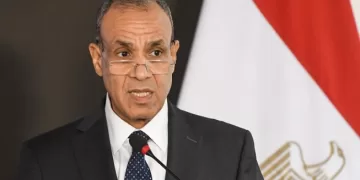









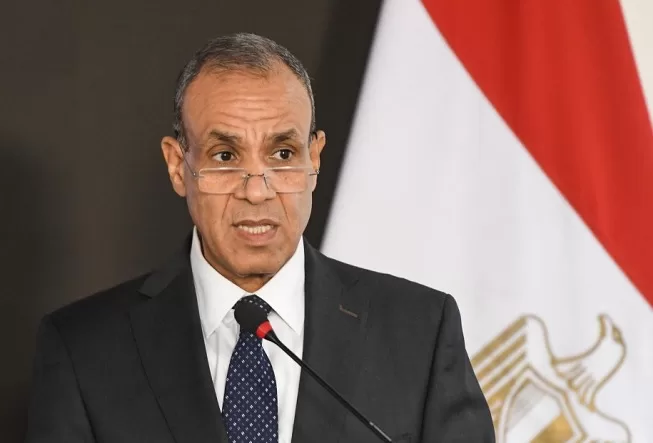
CAIRO – Minister of Foreign Affairs, Emigration, and Egyptian Expatriates Badr Abdelatty reaffirmed Egypt’s active role in consolidating efforts to shore up security and stability in the region.
The minister’s remarks were made during his meeting with the editorial board of The Washington Post during his official visit to Washington, D.C.
The minister praised the strategic partnership between Egypt and the United States, underscoring its role as a cornerstone of regional stability.
He stressed the need to further strengthen bilateral cooperation in the political, economic, and security spheres, with the view to advancing shared interests and supporting sustainable development and stability throughout the Middle East.
Abdelatty reviewed the promising economic, trade, and investment ties between the two countries, citing the outcome of the Egypt-US Business Forum held in Cairo in May.
The minister highlighted Egypt’s ongoing economic and structural reforms aimed at enhancing the investment climate, encouraging greater private sector engagement, and attracting foreign capital.
He underscored the country’s competitive advantages, including its strategic geographic location, advanced infrastructure, and specialized economic zones.
He also outlined Egypt’s progress in advancing political and civil rights, along with significant strides in social development.
The minister provided an overview of the implementation of Egypt’s National Human Rights Strategy (2021–2026), highlighting key achievements in advancing religious freedoms and civil liberties.
He also addressed the multifaceted and unprecedented challenges confronting the Middle East and North Africa, marked by overlapping security, humanitarian, and developmental crises.
Abdelatty said that addressing these challenges demands balanced, comprehensive approaches grounded in respect for national sovereignty, with a focus on political and diplomatic solutions and enhanced collective efforts to counter transnational threats, particularly terrorism and irregular migration.
Regarding the situation in the Gaza Strip, Abdelatty outlined Egypt’s coordinated efforts with key international partners; the United States and Qatar, to facilitate the delivery of humanitarian assistance, mediate a ceasefire, and enable the exchange of hostages and prisoners, as a foundation for future reconstruction efforts.
He reiterated Egypt’s outright rejection of any attempts to forcibly displace the Palestinian population, emphasizing the urgent need for a comprehensive political resolution based on the two-state solution.
This includes the establishment of an independent Palestinian state along the June 4, 1967 borders, with Al-Quds (occupied East Jerusalem) as its capital, he added.
As for the developments in Sudan, the minister reaffirmed Egypt’s steadfast support for Sudan’s unity, stability, and the preservation of its national institutions, calling for an immediate and sustainable ceasefire.
With regard to Syria, Abdelatty reiterated Egypt’s full support for the Syrian people, underlining the importance of upholding Syria’s sovereignty and territorial integrity, and of ensuring the country’s return as a stabilizing force in the region.
Turning to the issue of Egypt’s water security, the minister stressed the necessity of adhering to international law concerning the governance of transboundary water resources.
He called for constructive cooperation to achieve mutual benefit and firmly rejected unilateral actions by Ethiopia that violate international legal norms.
He affirmed Egypt’s readiness to take all measures permitted under international law to protect its water interests.
The meeting also addressed the growing security challenges in the Horn of Africa and the Sahel region, particularly those linked to the spread of terrorist organizations and armed militias.
Abdelatty reviewed the outcomes of his recent diplomatic tour of West Africa, highlighting Egypt’s strategic interest in the Sahel as an extension of its regional and strategic neighborhood.

