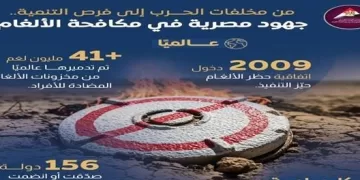




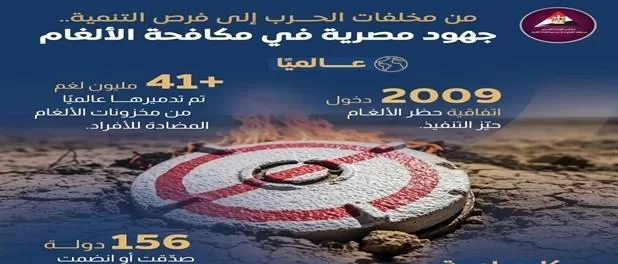
The Cabinet’s Information and Decision Support Centre (IDSC) released an infographic on Saturday, titled “From War Remnants to Development Opportunities: Egypt’s Efforts in Combating Landmines,” showcasing national and international initiatives to mitigate the dangers of landmines and optimise the use of cleared land.
The infographic noted that globally, over 41 million stockpiled anti-personnel mines have been destroyed since the Mine Ban Treaty came into force in 2009, with 156 countries having ratified or acceded to the treaty.
“Despite these efforts, landmines and explosive remnants of war continue to claim civilian lives, with one person killed or injured every hour. Children remain among the most affected groups, particularly with the increasing use of improvised explosive devices (IEDs),” the IDSC highlighted.
In Egypt, more than 25 million landmines, explosive devices, and wartime remnants, primarily from World War II and concentrated in the Western Desert, which covers about 22% of the country’s total area, have been cleared.
The cabinet bcentre also noted that as of July 2025, 100 prosthetic limbs had been delivered and maintained for mine victims in Matrouh Governorate. Furthermore, a grant of 1.52 million Chinese yuan was signed in July 2025 to develop prosthetic systems, strengthening state efforts to support those affected.
The infographic emphasised that demining operations have enabled the execution of key development projects, including the construction of the Hammam Canal, the clearance and development of the El Alamein area, and land preparation for the Nuclear Power Plants Authority in Dabaa.
These efforts have facilitated the allocation of land for economic and investment projects, contributing to sustainable development and long-term national growth.

