



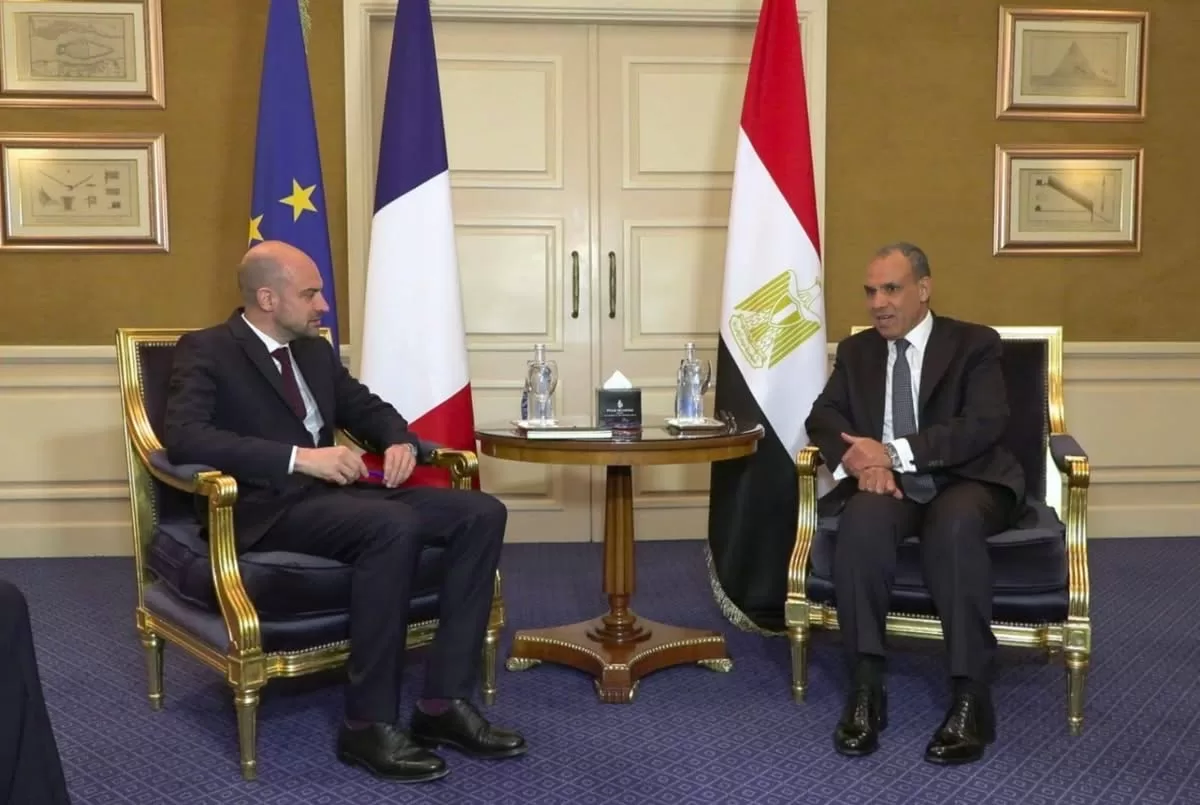
Egypt’s Foreign Minister Badr Abdel-Aati and his French counterpart Jean-Noël Barrot have highlighted the deep-rooted ties between the two nations, which were upgraded to the level of a strategic partnership.
The meeting between the two top diplomats, on Saturday, tackled ways to further strengthen strategic relations, alongside regional developments and efforts to de-escalate tensions in the region.
Both ministers expressed their aspiration to elevate co-operation across all fields, especially in economic and trade sectors, the foreign ministry in Cairo said in a statement on Sunday.
On regional issues, they reviewed developments in the US–Iran negotiation track, where Abdel-Aati stressed the importance of supporting the negotiations as the only path to de-escalation and ending the war, emphasising the need to safeguard freedom of navigation and take into account the security concerns of the Arab Gulf states.
He also reiterated Egypt’s condemnation of unjustified attacks on Arab states.
The two ministers exchanged views on the Palestinian cause, where Abdel-Aati stressed the importance of implementing the first phase of the US plan and proceeding to the second phase, highlighting the need for the national committee for Gaza administration to begin its work inside the Strip and for the rapid deployment of an international stabilization force.
The meeting also addressed developments in Lebanon, where the Egyptian Foreign Minister reaffirmed Egypt’s support for Lebanon, condemning repeated Israeli violations of Lebanese sovereignty and stressing the importance of preserving Lebanon’s unity and territorial integrity, while supporting national institutions in fulfilling their responsibilities in maintaining security and stability.
For his part, the French Foreign Minister commended the progress in Egyptian–French relations across various fields, expressing appreciation for Egypt’s significant efforts to contain regional escalation.
The two ministers agreed to continue close coordination and consultation and to work jointly to reduce escalation and support security and stability in the region.

