




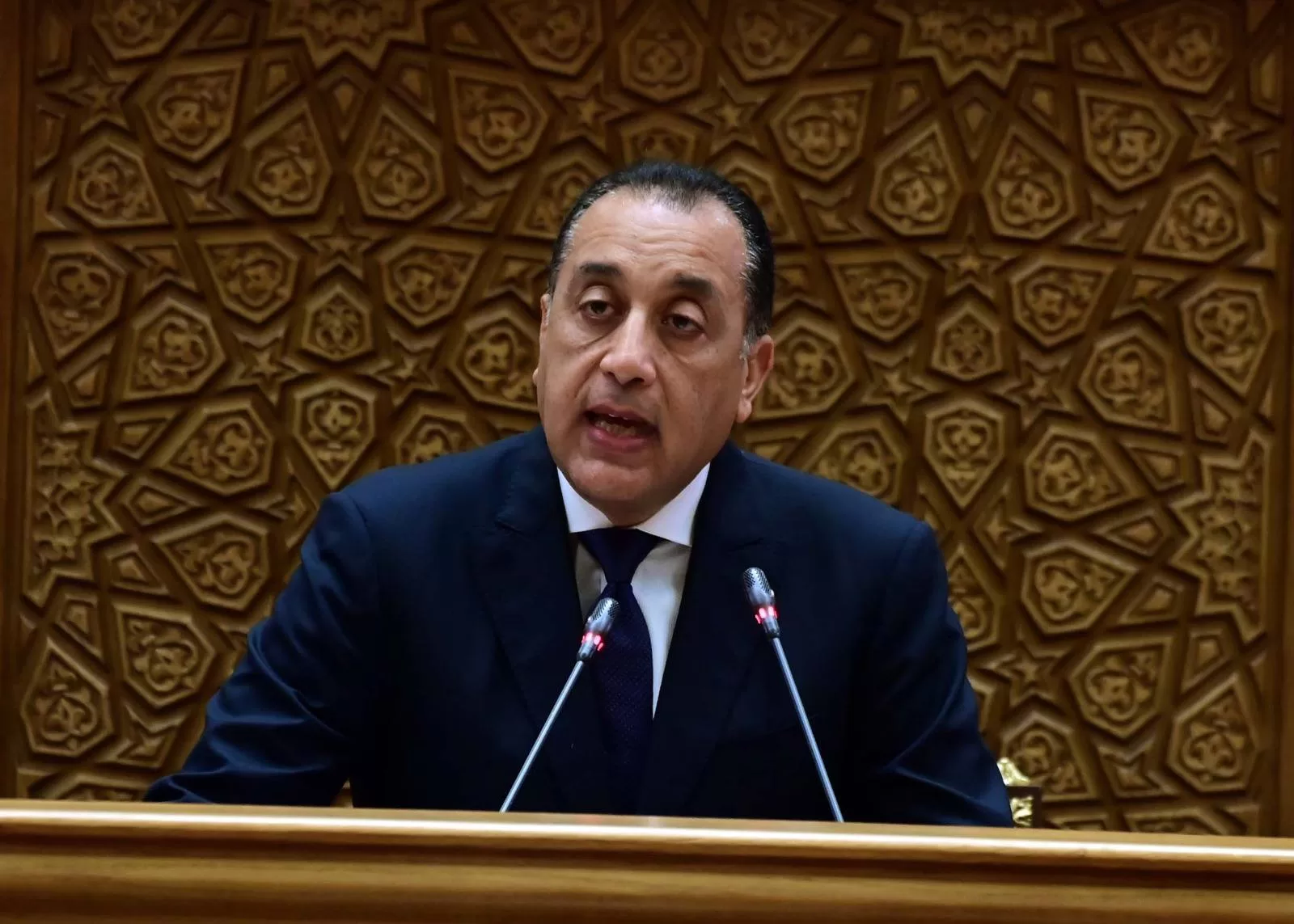
Prime Minister Moustafa Madbouli reaffirmed the government’s commitment to safeguarding Egypt’s economic stability and national security amid mounting regional and global challenges. He outlined a comprehensive strategy built on proactive crisis management, economic reform, and long-term development.
Addressing the House of Representatives during its first session of the third legislative term on Tuesday, Madbouli extended his greetings to lawmakers and the Egyptian people ahead of Sinai Liberation Day, paying tribute to the Armed Forces as the nation’s “shield and safeguard”.
He stressed that the current parliamentary session convenes at a time of exceptional global volatility, marked by escalating geopolitical tensions and a widening regional conflict whose repercussions have reverberated across international political and economic systems. The prime minister referred in particular to the recent escalation involving the United States, Israel and Iran, which has intensified instability and imposed new realities on global energy markets, supply chains and inflation.
Madbouli highlighted Egypt’s diplomatic efforts, led by President Abdel Fattah El Sisi, to support Arab states and advance political and diplomatic solutions to contain the crisis. He reiterated that Egypt’s foreign policy is rooted in firm principles, notably that Arab security is integral to Egypt’s national security.
Turning to the economic fallout, the prime minister detailed the severe global disruptions triggered by the conflict, including a sharp contraction in oil supplies due to the closure of the Strait of Hormuz, through which roughly 20 per cent of global oil passes.
The prime minister added that oil prices surged from around $69 per barrel prior to the crisis to peaks nearing $120, with projections indicating possible further increases. These pressures have driven inflation higher and disrupted global trade, tourism and food supply chains.
Against this backdrop, Madbouli stressed that the Egyptian government acted swiftly and implemented a series of pre-emptive measures to cushion the domestic economy. A crisis committee was established from the outset to monitor developments and coordinate responses, while efforts were intensified to secure strategic reserves of essential commodities, ensure uninterrupted supply chains, and maintain financial stability.
He affirmed that Egypt has maintained adequate reserves of food, medicine and energy supplies, noting that no shortages were recorded during the crisis. Close coordination with the Central Bank of Egypt ensured the availability of foreign currency to sustain imports and production, supported by a flexible exchange rate policy and inflation-targeting framework, the prime minister told the parliament.
On social protection, the government rolled out a direct cash support package exceeding LE40 billion, benefiting 15 million families during Ramadan and Eid Al-Fitr. In addition, public sector wages are set to increase by 21 per cent in the 2026/2027 fiscal year, with the minimum wage set to increase to LE8,000 per month from July.
Acknowledging the strain on energy resources, Madbouli said the government had to raise fuel prices to secure supply continuity, as the monthly cost of imported natural gas surged significantly. Measures to rationalise energy consumption were also introduced, including reduced government spending, earlier shop closing hours, partial remote working, and nationwide efficiency campaigns.
Despite these pressures, the prime minister stressed that Egypt’s economic reforms in recent years have boosted resilience. Inflation declined from a peak of 38 per cent to 11.9 per cent by January 2026, while foreign reserves reached a record $52.8 billion by March. Economic growth stood at 5.3 per cent in the first half of the current fiscal year, driven by robust performance in industry, agriculture, ICT and tourism.
Foreign direct investment rose to $9.3 billion during the same period, alongside notable improvements in remittances, tourism revenues and the current account deficit. Madbouli also highlighted the ongoing efforts to reduce external debt and expand private sector participation in development process, which now accounts for a growing share of total investments.
Looking ahead, the government aims to inject LE3.8 trillion in total investments in the 2026/2027 fiscal year, with a target of increasing private sector participation to 60 per cent. A central pillar of this strategy is the expansion of renewable energy, with Egypt seeking to generate 45 per cent of its electricity from renewable sources by 2028, positioning itself as a regional hub for green energy.
Madbouli affirmed that the government is preparing for all possible scenarios, warning that the economic effects of the ongoing conflict may persist for some time. Nevertheless, he expressed confidence in the resilience of Egypt’s economy, emphasising that “the nation’s interest remains paramount”.
“The government remains fully committed to transparency, coordination with parliament, and the pursuit of policies that serve the Egyptian people,” he said, pledging continued engagement with lawmakers as Egypt navigates an increasingly uncertain global landscape.

