





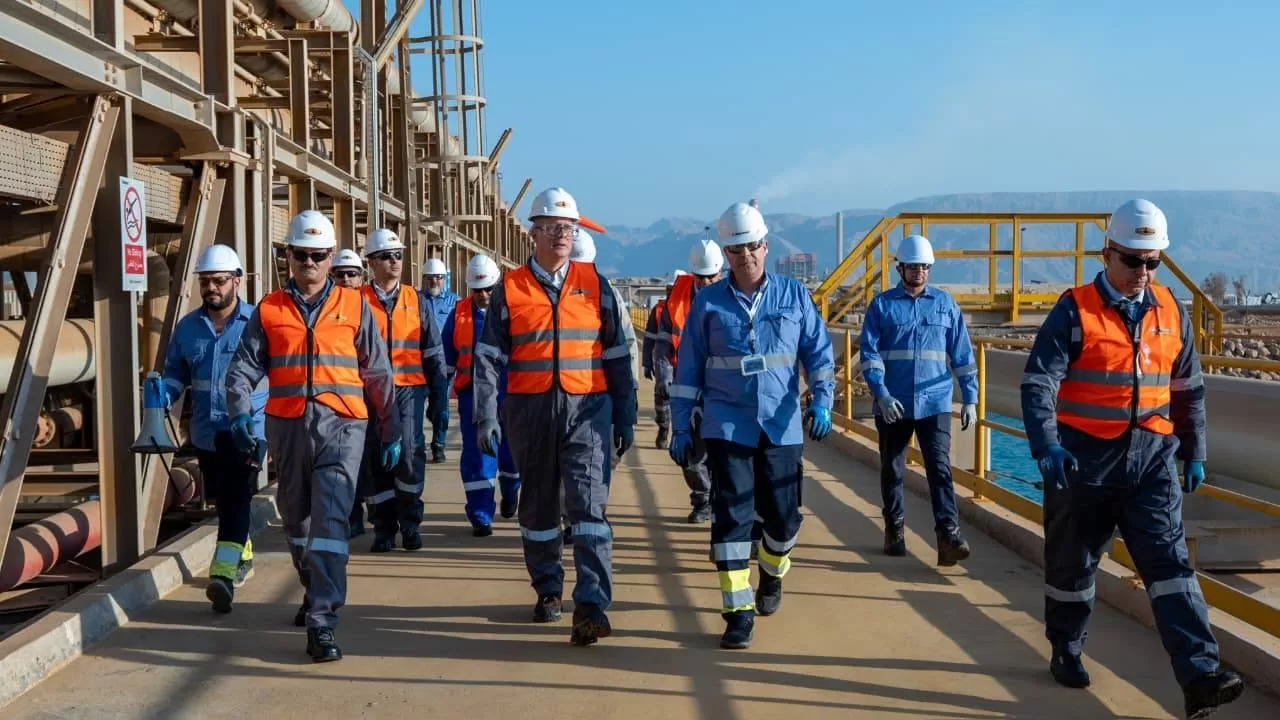
Minister of Petroleum and Mineral Resources Karim Badawi has inspected the liquefied natural gas (LNG) import and regasification system at Ain Sokhna, including three floating storage and regasification units: Höegh Galleon and Energos Eskimo at SUMED Port, and Energos Power at Sokhna Onshore Terminal, to review their operational readiness ahead of the summer peak demand period.
The minister said the facilities are fully prepared to receive LNG cargoes, regasify them and inject natural gas into the national grid, stressing that Egypt is operating a flexible and integrated system to secure energy supplies during periods of high demand.
He added that the petroleum sector is working in close coordination with the Ministry of Electricity and Renewable Energy to ensure stable fuel supplies for power plants and key industrial consumers.
Badawi said last summer’s record electricity demand, which exceeded 40,000 megawatts, underscored the resilience of Egypt’s energy system in managing peak loads, noting that LNG regasification units serve as a complementary source to domestic gas production, which remains the backbone of supply.
He explained that the combined regasification capacity of operating units at Ain Sokhna, along with a fourth vessel in Damietta, reaches around 2.7 billion cubic feet per day, enhancing the country’s ability to meet demand across power generation, industry and other sectors during peak periods.
The minister stressed the importance of adhering to the highest safety, operational and environmental standards across all facilities, praising the efforts of workers involved in LNG import and regasification operations.
In a separate statement, Badawi said Egypt’s settlement of outstanding arrears to foreign oil and gas partners reflects a strong commitment to improving the investment climate and reinforcing trust with international companies.
He added that the move is expected to accelerate exploration and development activities, attract new investment, boost production, and help narrow the gap between supply and demand, strengthening energy security and sustainability.
Badawi reaffirmed that the petroleum sector is pursuing an integrated strategy aimed at ensuring secure energy supplies while expanding investment and production to support economic growth and long-term sustainability.

