



By Wael Salem
The Iran war has quickly escalated into widespread instability that has left its toll on energy markets and global supply chains.
The same unrest redrew the map of international economic risks in just a few weeks.
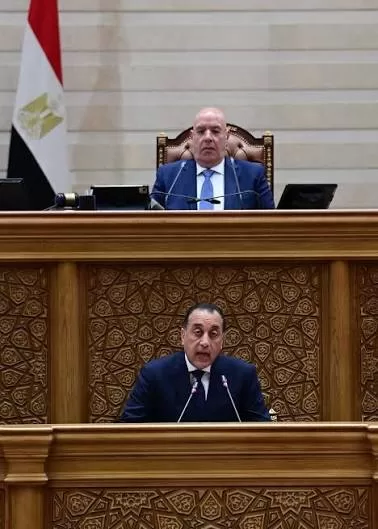
The magnitude of this crisis was highlighted by Prime Minister Moustafa Madbouli as part of his address to the House of Representatives (lower chamber of parliament) on Tuesday.
The prime minister highlighted the negative repercussions of the conflict for the national economy.
The Iran war, he said, has cast its shadow on all countries, prompting measures to deal with the crisis.
He revealed that his government deals with the war as an extended crisis.
“This crisis will likely to continue until the end of this year,” the prime minister told a house full of lawmakers.
“We prepare scenarios to address its economic impacts to protect the interests of our country and our citizens,” he added.
He cited severe shocks to the global economy from the war, including the rise in oil prices to $95 a barrel now, from $69 a day before it started.
The prime minister also expressed fears that the price of oil can jump to $150 or $200 a barrel in case the war re-erupts or the situation gets worse.
He referred to supplies through the Strait of Hormuz plummeting from approximately 20 million barrels of oil a day to just 3.8 million barrels, marking one of the most significant energy disruptions in recent history.
“These developments have negative repercussions for the Egyptian economy,” the prime minister said.
He revealed that Egypt now has to cough up $1.65 billion for the import of natural gas a month, from $560 million a month before the war.
Economists point, meanwhile, to heavy burdens on the state budget and foreign currency reserves from the crisis.
“Geopolitical crises in energy-producing regions immediately translate into global inflationary waves,” leading economist Sahar al-Damati told The Gazette.
“Energy-importing countries are the most vulnerable to this pressure,” she added.
She called, however, for proactive measures to deal with the consequences of the war.
Al-Damati cited what she described as “serious efforts” by the Egyptian government to deal with the crisis, including securing strategic essential commodity reserves.
Egypt, she added, was also keen to ensure that the supply chains of its essential supplies remain uninterrupted.
Such measures have already borne fruit, keeping a steady supply of essential goods in the local market.
This, al-Damati said, mirrored the efficiency of the early proactive measures taken by the government in the face of the crisis.
In his address to the legislature, the prime minister referred to daily coordination between the government and the Central Bank of Egypt to provide the foreign currency needed for the import of essential supplies, including food.
However, economists referred to the dilemma the government faced at the outset of the crisis: either bear a massive funding gap that threatens economic stability, or pass on part of the cost gradually and thoughtfully to citizens.
“A decision had to be made to avoid a larger shock to the economy,” leading economist Rashad Abdo told this newspaper.
In this, he explained the rationale behind the government’s decision to raise fuel prices.
Nevertheless, it tries to mitigate the effect of such a move by hiking salaries by 21 per cent.
The prime minister said civil servants’ salaries would be raised to EGP8,000.
This, he said, would cost the state budget EGP100 billion a year.
Abdo, a professor of economics at Helwan University, said the success of Egypt’s reform programme would be measured by its ability to protect vulnerable citizens.
The national economy, he said, demonstrated its resilience during this crisis.
The economic growth rate reached 5.3%, foreign currency reserves rose to around $52.8 billion, and inflation declined from 38% to 11.9%.
These indicators, economists like Professor Abdo said, constitute economic buffers that absorb external shocks.
The prime minister noted, meanwhile, that one of the government’s priorities would be maximise renewable energy use to reduce dependence on traditional fuels.
The government, he said, has achieved an unprecedented leap in electricity generating capacity from renewable energy, which has increased from 5,934 megawatts in 2020 to 9,366 megawatts in 2025.
He expected this to rise to 12,786 megawatts by the end of this year.

