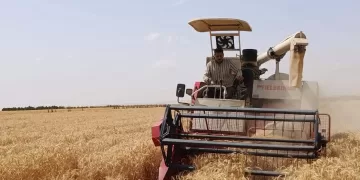








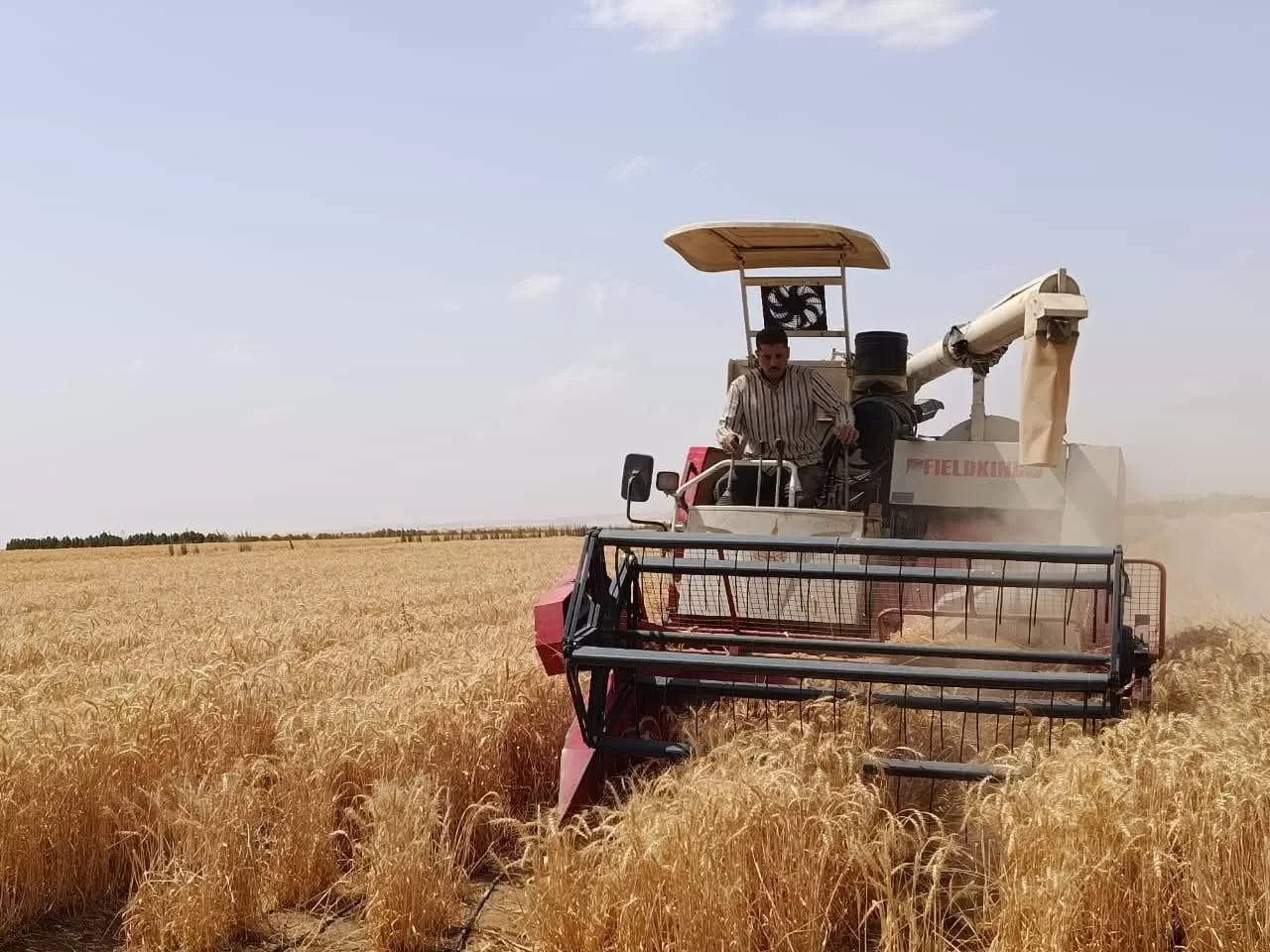
The New Egyptian Countryside Development Company announced on Monday a significant scientific and practical milestone in the cultivation of salt-tolerant wheat in the Al-Moghra region, as part of its mandate to implement and manage the national 1.5 million feddan development project.
The achievement reflects the company’s continued commitment to advancing agricultural innovation and improving the efficient use of natural resources through modern scientific approaches.
The successful trial was conducted in collaboration with the Desert Research Centre of the Ministry of Agriculture and Land Reclamation, highlighting the importance of integrated research partnerships in addressing environmental challenges.
The experiment involved the cultivation of three carefully selected salt-tolerant wheat varieties using irrigation water with salinity levels of around 8,000 parts per million.
The results confirmed the feasibility of growing wheat under such conditions, marking a notable advancement in land reclamation practices and expanding the potential use of non-traditional water resources, the company said in a statement.
Key outcomes included strong germination rates, clear resilience to high salinity levels, and promising productivity indicators.
The harvested grain also met recognised quality standards, reinforcing the economic viability of cultivating strategic crops in environmentally constrained areas, it added.
The company further noted that yields are expected to improve with wider application and continued refinement of agricultural techniques.
Chairman and Managing Director Major General Engineer Amr Abdel Wahab said the success of the initiative represents an important step in linking scientific research with practical agricultural development.
He stressed that the results support the company’s strategic direction to expand cultivation in challenging environments, particularly for essential crops such as wheat, thereby contributing to national food security and reducing dependence on imports.
He also affirmed the company’s commitment to adopting advanced agricultural systems, strengthening co-operation with research institutions, and improving resource efficiency to achieve high productivity in line with international standards.
He added that the 1.5 million feddan project continues to make tangible progress, reflecting Egypt’s broader vision for sustainable development.

