






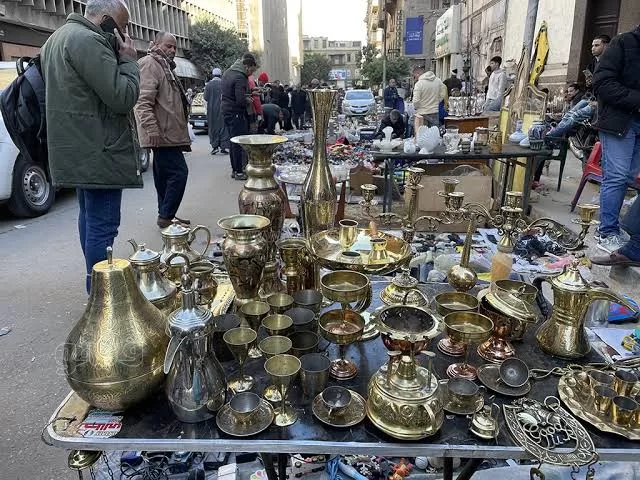
Taking its place boastfully in downtown Cairo, a different kind of market comes to life every Saturday.
Near the historic Diana Cinema, collectors,
traders and curious visitors gather in what has quietly become one of the city’s most distinctive cultural spaces: Diana Market.
Unlike traditional souqs, this is not a place defined by noise or clutter.
Instead, objects are carefully arranged,
including old gramophones, vintage telephones, copper pieces, watches and rare photographs, each carrying a story from another time.
What began as a simple meeting point for online sellers has gradually-evolved into a weekly destination for those seeking Egypt’s material past.
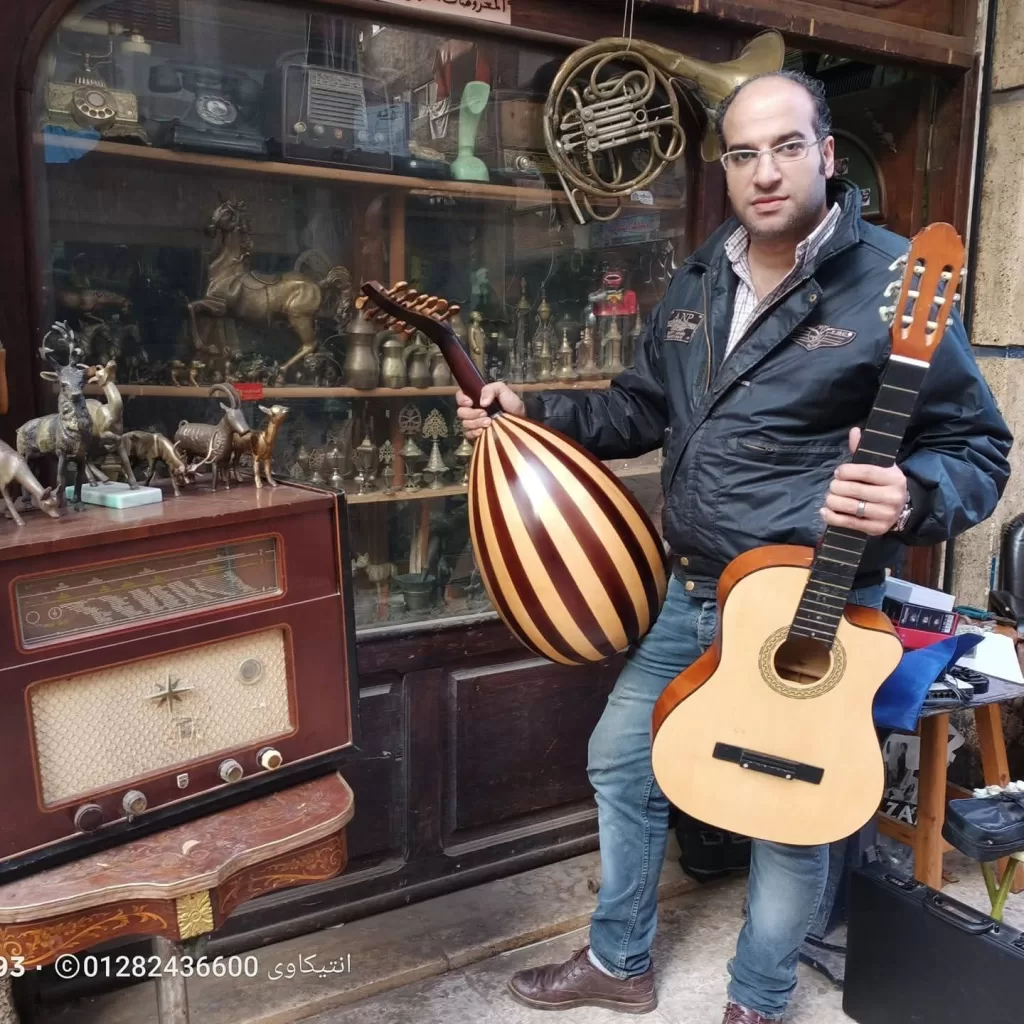
“Diana Market distinguishes itself from all other markets,” says Mostafa El Ahwal, an antique trader who has been part of the market for over a decade.
“It’s the last destination for clients looking
for antiques, including collectors and traders,” he told The Egyptian Gazette.
An IT engineer by profession, El Ahwal comes to the market from the northern coastal city of Alexandria every Saturday.
However, he did not start as a professional
trader. His journey began with selling personal items online, objects he no longer needed.
Encouraged by friends, he eventually visited Diana Market where his role gradually shifted.
“I was a collector at first,” he explained. “I
generally love collecting old items.”
Over time, El Ahwal had to sell some of his
personal pieces to be able to buy new ones. That was how he became a trader.
Today, the market reflects both worlds: passion and commerce. While some visitors come searching for specific items, others simply wander, drawn by curiosity or nostalgia.
What sets Diana Market apart, El Ahwal argues, is not only the variety of items available in it but also the way they are presented.
“Other markets, like Souq El Gomaa (Friday
Market), differ in terms of quality and organisation,” he said.
“Here, products are displayed in a more
organised and neat way, so anyone from any background can visit and easily find what they are looking for,” he added.
This accessibility has helped the market attract a diverse audience, including a growing number of foreign visitors.
“Foreigners are usually different from Egyptians in that they often look for copper antiques or old metal items,” El Ahwal
said.
He noted that some of those foreigners go to the market to search for things they had seen in films or photographs, like gramophones or vintage telephones.
Egyptian visitors, on the other hand, tend to
approach the market with a different mind-set.
“They are more interested in items they can resell,” he said. “They always think about value and profit.”
To keep up with this growing demand, El Ahwal launched an online community called Antiqawy, a Facebook-based platform connecting sellers and buyers.
Traders post photos of their items, and
interested buyers can reserve pieces before collecting them at the market.
The hybrid model, part digital, part physical, reflects how the market itself has evolved.
What started as a delivery point for online
transactions has transformed into a fully-fledged cultural space, where objects are not only exchanged but experienced.
For visitors, the appeal often lies beyond the items themselves.
“I came here with a friend, but didn’t expect to find this kind of place,” Omar Fadel, a 27-year-old Egyptian visitor, said.
For Fadel, visiting the market feels like walking through different eras at once.
“You learn something, even if you don’t buy
anything,” Fadel told this paper.
For others, especially international visitors,
the market offers a tangible connection to Egypt’s past.
“I’ve seen places like this in Europe, but this feels very unique,” Anna Wilson, a German visitor of the market, said.
“Some of these objects might look ordinary to locals, but for me they represent history. I was especially drawn to the old photographs and handwritten documents,” she added.
Despite its growing popularity, Diana Market remains relatively under the radar, a space known mostly through word of mouth and online communities.
Nonetheless, this limited visibility adds to its charm, preserving a sense of discovery for those who find it.
Prices vary widely, depending on the rarity,
condition and historical value of each item.
Some pieces sell for just a few hundred pounds, while others, such as branded watches, antique pens or rare photographs of public figures, can reach thousands.
But for many, the true value of the market cannot be measured in price.
“It’s a different experience,” El Ahwal said simply.