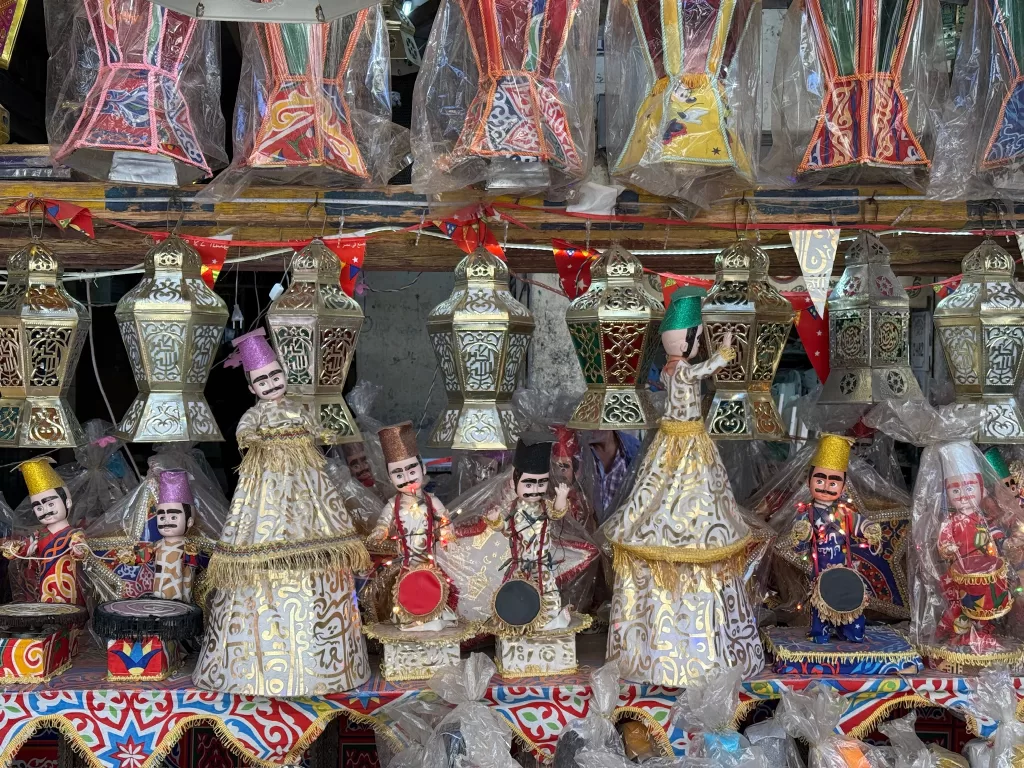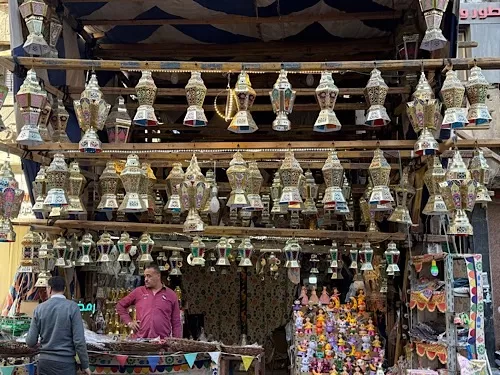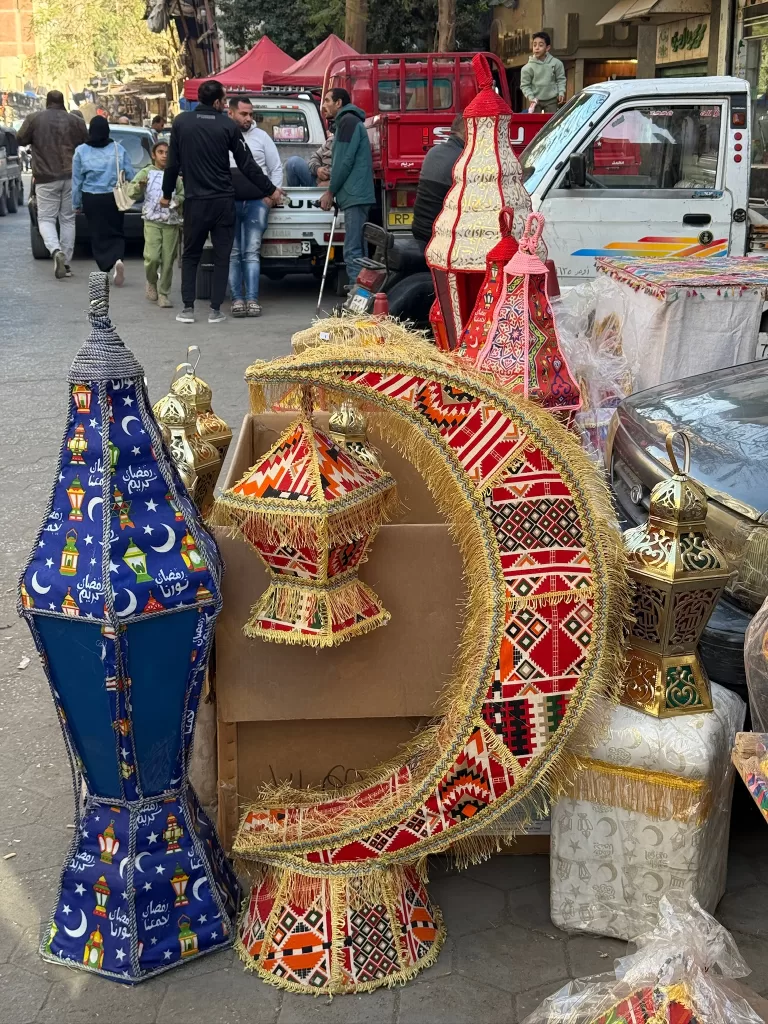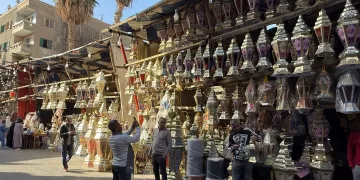





Om Nada (mother of Nada) sat inside her small shop on Taht el-Rab’ Street in the Islamic quarter of Cairo, surrounded by lanterns in every shade of colour.
The glass gleamed, the tin caught the afternoon sun and the plastic dolls sang the cheerful songs of the Islamic month of Ramadan.
She watched people coming and going in front of her with quiet attentiveness, answering questions gently, always with a warm smile.
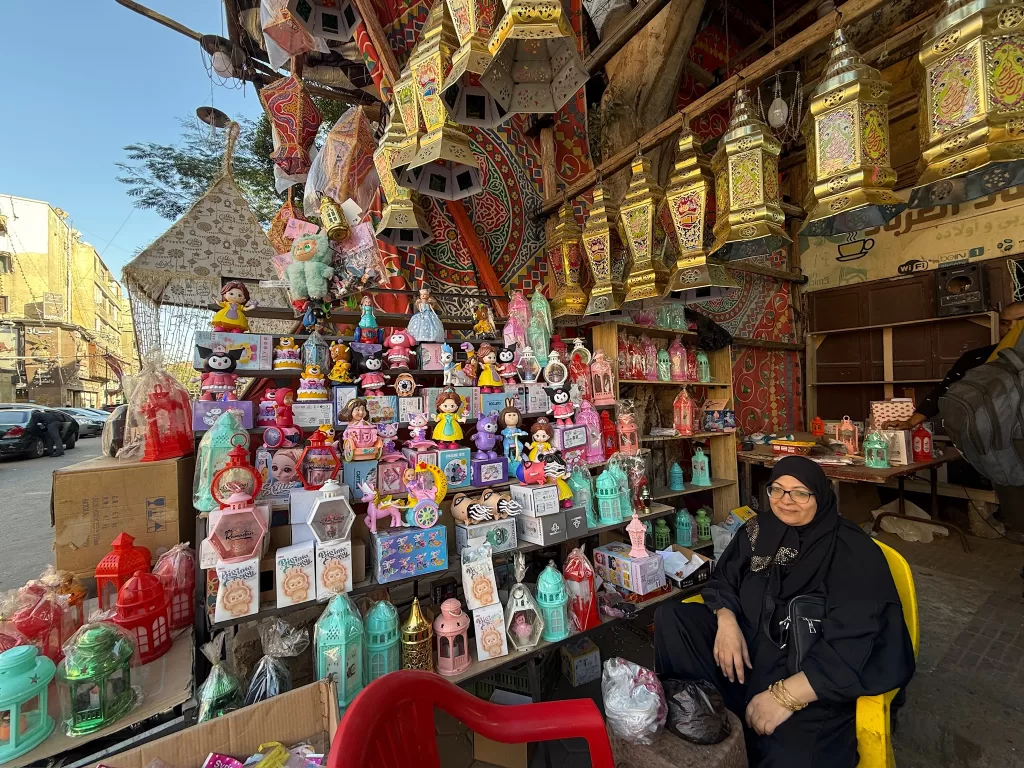
This woman has been selling Ramadan lanterns in this shop for 30 years now. During those years, she saw how things have changed since the first time she sold these light-filled objects.
“Lantern prices are far higher now than in the good old days, even as materials continue to be the same,” she said, adjusting her eyeglass as she spoke.
Om Nada’s world of lanterns may seem timeless,and in many ways, it is.
Around her, the street carried the weight of history that stretches over a thousand years back.
It was here that the people of Cairo once greeted Fatimid Caliph al‑Muizz li‑Din Allah with lanterns as he passed through Bab Zuweila, a moment that tied lanterns to the spirit of Ramadan forever.
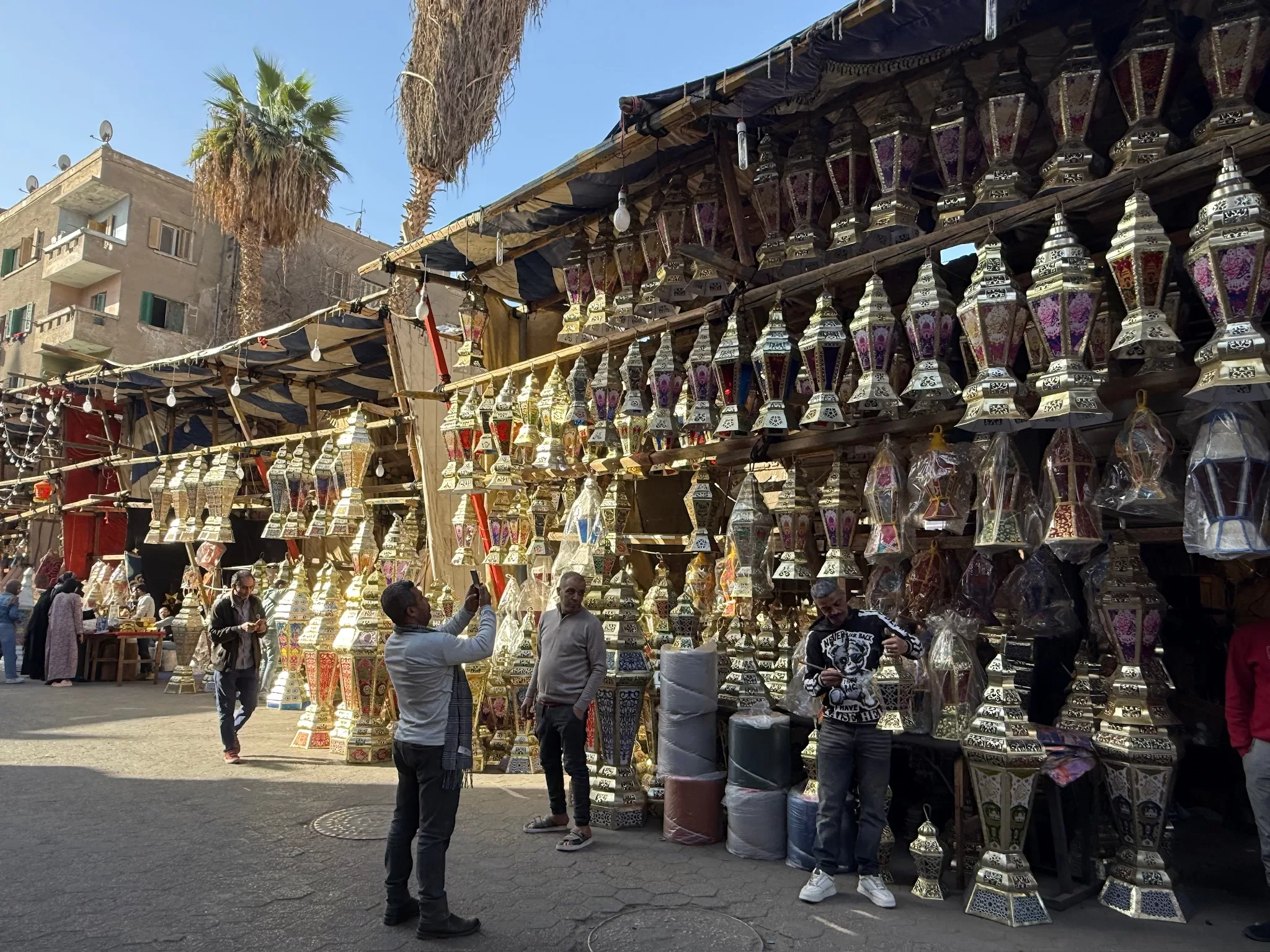
Ever since, Taht el-Rab’ Street has been one of Cairo’s most important commercial lanes, its identity anchored in the craft and trade of lanterns.
Situated on Al‑Darb Al‑Ahmar, the street runsfrom the old Cairo Security Directorate to Bab Zuweila, lined with one shop after another that is stacked with lanterns.
The street’s name recalls the simple living quarters of the poor during the Mamluk and Ottoman eras, but its story goes even deeper.
Long before Fatimid Cairo was founded in 969, this land was part of Qata’i, the capital of the Tulunid dynasty in 868.
Cairo changed one capital after another over the centuries, making Taht el‑Rab’ older than Fatimid Cairo itself.
After the 1952 Free Officers’ Movement, the street was renamed Ahmed Maher, honouring Egypt’s former prime minister. However, its essence remains untouched.
Today, the street is still alive with craft, memory, and the glow of lantern light. Om Nada, who buys her materials two months ahead of Ramadan each year, sits at its centre.
This year feels different for the quadragenarianlady. She concedes that yesterday was better than today.
“By the same token, last year was better than this year,” she told The Egyptian Gazette.
Many people stop, ask for prices, and walk away. Although all lanterns are locally made, the traditional ones being made of glass and tin and the musical ones being made of plastic, costs continue to rise.
“We stopped importing lanterns, especially from China, many years ago,” she said. “Nevertheless, the prices of the materials keep increasing year after year. I don’t know why.”
Now a grandmother, Om Nada still believes deeply in lanterns as the most important tradition of this holy month.
The lanterns will remain, she said, so long as there is Ramadan.
“The shape of the lanterns can change to keep up with fashion, trends and the times, but they will never die,” she said confidently.
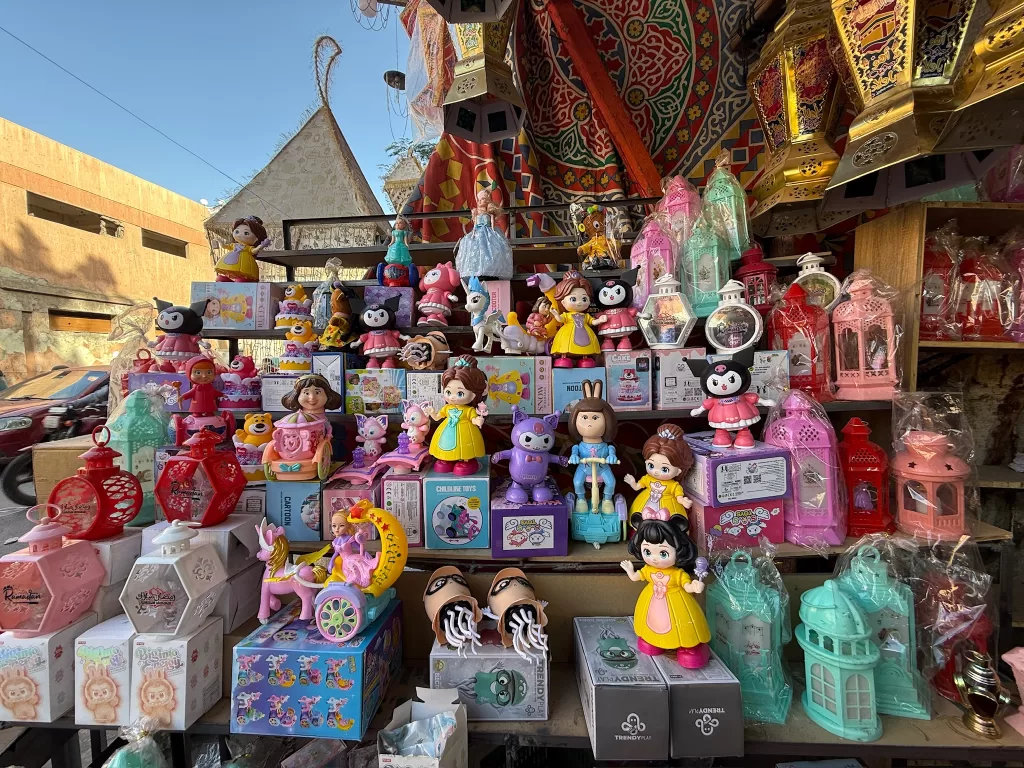
She pointed to a brightly coloured, doll-shaped plastic lantern, describing it as “trendy”. She said the price of any lantern ranged between EGP200 and EGP600.
Larger lanterns, she added, that are used for home decorations could cost between EGP1,500 and EGP3,000.
Om Nada’s lantern selling season comes to an end early on, towards the end of the first five days of Ramadan.
Our season, she said, is always brief and short-lived. Even with this, Om Nada and other lantern sellers are what they like to describe as “satisfied”.
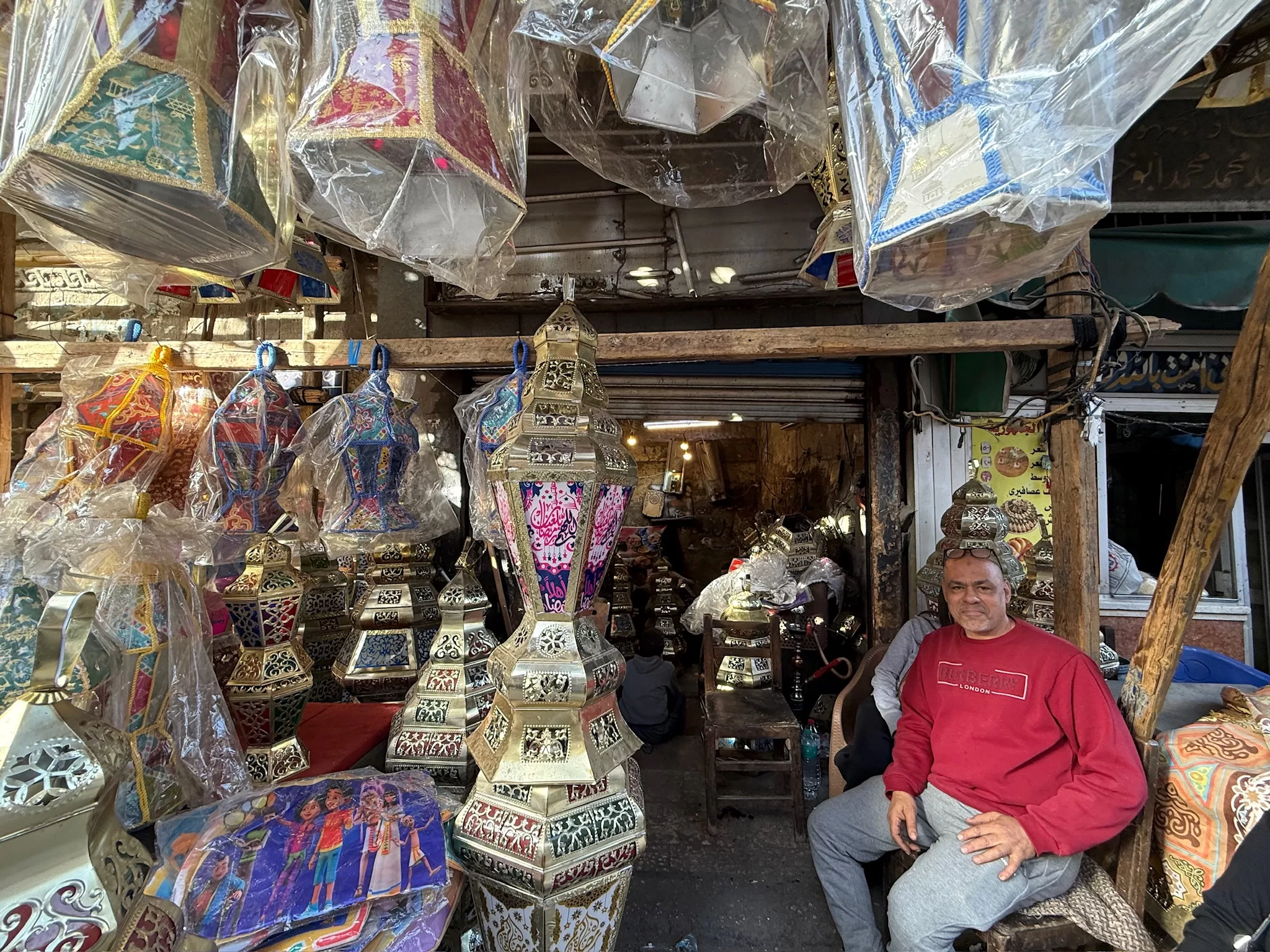
A short walk away from Om Nada’s shop, there is another one where Tarek Abul Adab, one of the most respected lantern sellers of Taht el‑Rab’, was busy talking to inquisitive customers.
He inherited the lantern selling craft from his father and grandfather who were involved in this trade for eight decades.
Abul Adab holds a bachelor’s degree in commerce. Nonetheless, he speaks the language of the guardian of an important tradition, not of a trader.
“You can’t feel the atmosphere of Ramadan in the absence of the lantern,” he said warmly.
Despite changes to the shapes and the styles of the lanterns, most customers, he said, still prefer the old-fashioned glass ones which are lit by candles.
To Abul Adab, lanterns are more than just pieces of metal or glass.
“They are the soul of Ramadan,” he said, with a gentle smile glinting over his face.
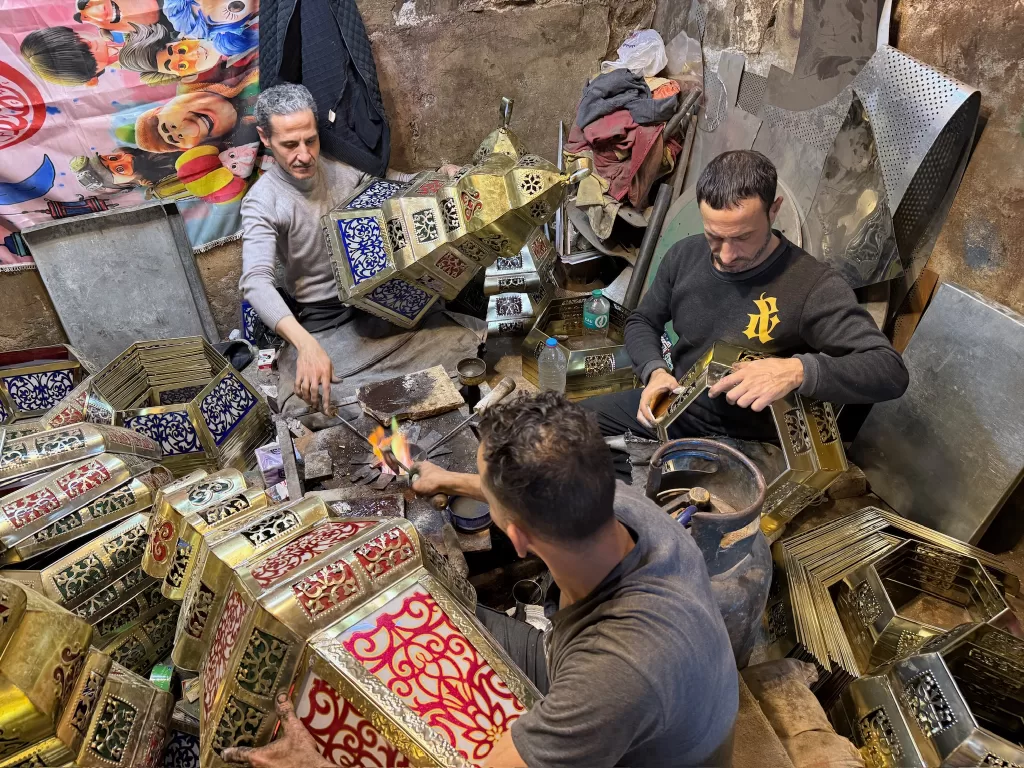
The lantern-making season starts for people like Abul Adab immediately after the end of the lesser bairam (Eid el-Fitr), the three-day celebration that begins with the end of Ramadan.
He buys tin, glass, and welding materials from factories in Cairo and Alexandria. In his workshop, three craftsmen sit on low stools in a circle, working with fire, gas, and tools to shape tin into lanterns.
Abul Adab provides the designs, while the craftsmen bring them to life.
Glassmakers then create pieces to fit each design and printers add the finishing touches. Whatever is left after Ramadan is stored until the following year, as Abul Adab plans new designs for the next season.
As Abul Adab spoke proudly of his trade, a man arrived with a heavy, damaged lantern and asked for it to be repaired. Abul Adab nodded and took the lantern, promising to restore it to its original condition.
“We have to please everyone,” he said.
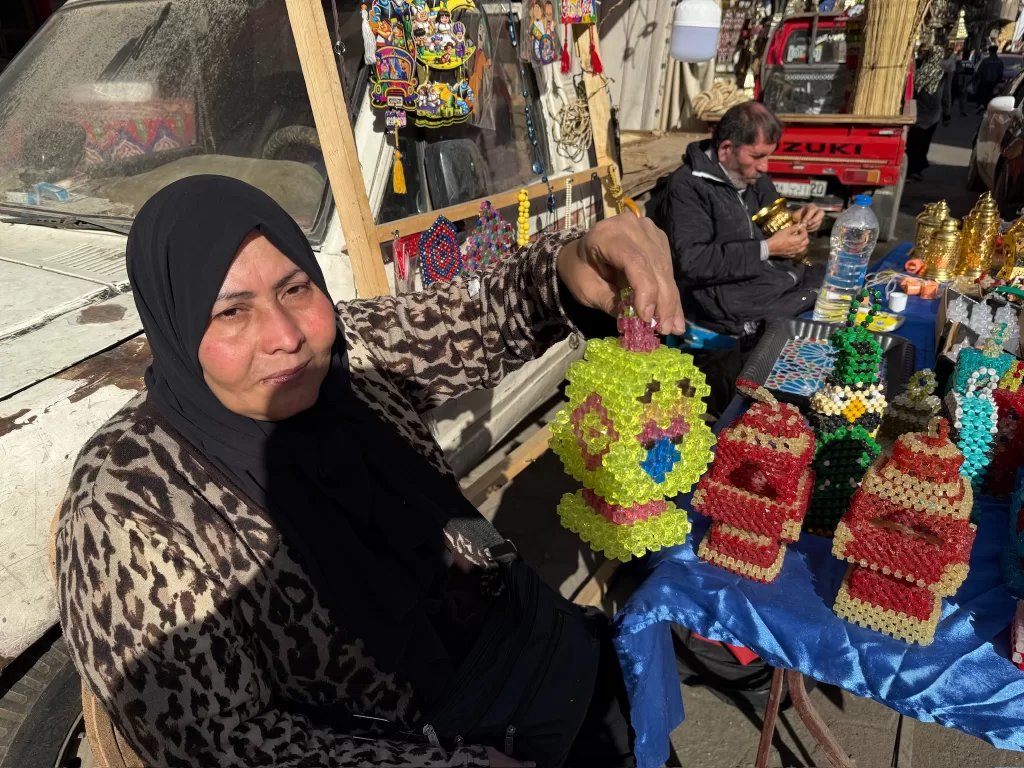
Sekina Mostafa sat at a small table scattered with the tiny beaded fawanees she crafts by hand.
For 15 years, she has sold her creations beside her husband. Once a housewife who learned to make simple accessories, she now proudly runs her own small business. Her miniature beaded lanterns are unmistakably hers — delicate, colorful, and, charmingly, they even sing.
“I try to make children happy with my own hands,” she said. She buys her beads from Cairo’s el‑Mosky market and adds small golden tin lanterns to appeal to every taste.
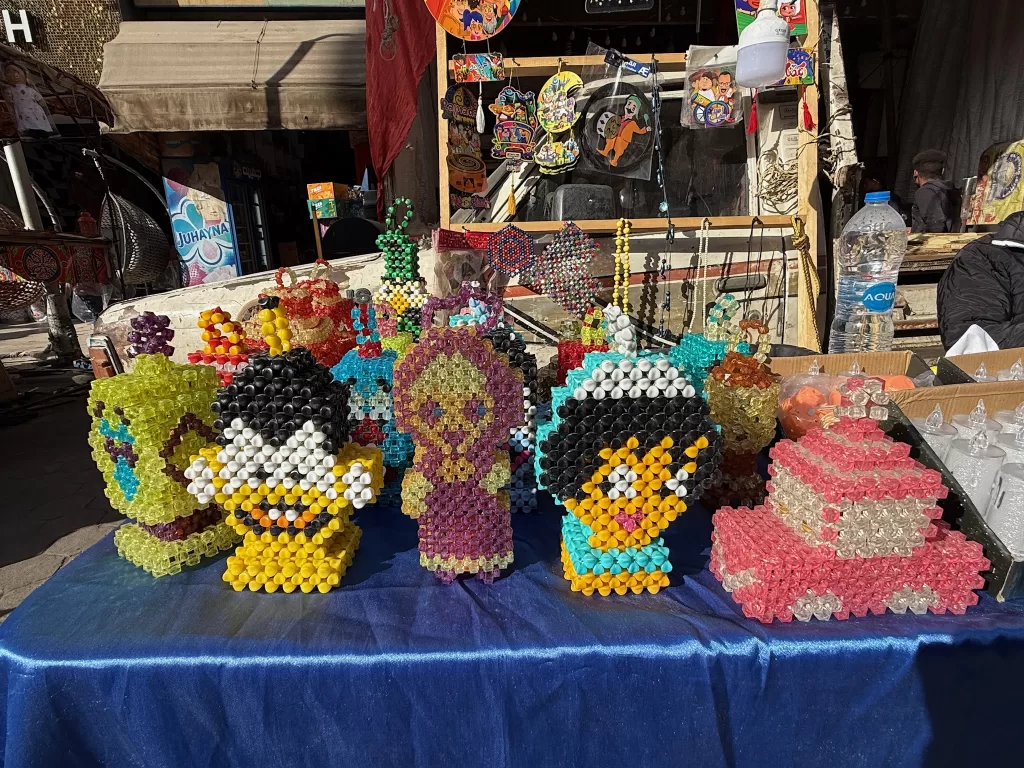
Unlike many seasonal sellers, the 56‑year‑old works all year long. “I usually make handmade food and sell it,” she said. “I also make other products from beads and leather.”
On this street, her lanterns shine in a way that feels almost extraordinary — their glow shaped by the hands that made them, the memories stitched into them, and the long tradition they carry.
Each one tells a story, a story that has lived for centuries and continues to brighten Ramadan today.