







Egypt works hard to join the international march towards green hydrogen production as a clean source of energy.
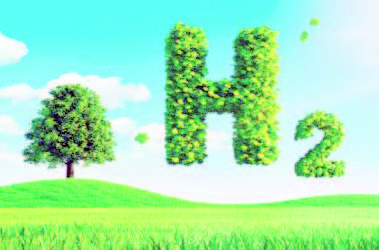
Hydrogen is a carbon-free energy source produced by an electric analyser to separate it from oxygen.
It is green when it is produced from renewable sources. Sorry to say, almost 95 per cent of the world’s hydrogen is produced from gas and coal.
Green hydrogen is emerging as a profitable and viable alternative to fossil fuels, especially after the outbreak of the war between Russia and Ukraine.
The war has given rise to concerns about energy supply, amid calls for increasing dependence on less environmentally-polluting energy sources.
Cairo is answering these calls, even as its interest in the production of green hydrogen preceded the war outbreak.
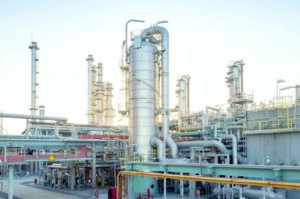
The Egyptian government plans to announce a list of projects for the production of green hydrogen soon.
These projects, it said earlier this year, would be part of a national initiative.
Egypt also has plans for incorporating green hydrogen production into its Energy Strategy for 2035.
President Abdel Fattah El Sisi directed the government in July last year to formulate a national strategy for the production of green hydrogen and present this plan during the United Nations climate conference, COP27, which will be held in Sharm el-Sheikh in November of this year.
In late May this year, President Sisi met Chairman of the Suez Canal Economic Zone (SCZone), Yehia Zaki, and Minister of Electricity and Renewable Energy, Mohamed Shaker, to discuss means of raising electricity production from renewable energy to 42 per cent.
Egypt is not alone in giving that much attention to the production of this clean fuel.
Several other countries around the world, such as Australia, France, India and Brazil, are taking similar steps by announcing their own national plans for the production of green hydrogen.
Some Arab countries are close to producing green hydrogen as well, including the United Arab Emirates where state-owned company ADNOC signed an agreement in this regard with the Spanish company Cepsa.
Morocco and Germany also hammered out a partnership to build Morocco’s first green hydrogen plant.
Egypt, for its part, wants to transform the SCZone into a regional green energy hub, hoping to use the investment momentum generated by COP27 preparations to fulfill this goal.
Egypt signed six memorandums with international companies, including Norway’s Scatec, the Abu Dhabi Future Energy Company, Hassan Allam Holding, Egyptian Inara Capital, Danish Maersk, France’s EDF Alliance and the UAE’s AMEA Power, to start the production of green hydrogen.
The SCZone also signed a memorandum of understanding with the Sovereign Fund of Egypt, the New and Renewable Energy Authority, the French Total Alliance and Inara Capital for the implementation of a project that will produce 300,000 tonnes of green ammonia.
Masdar and Hassan Allam Holding also signed a memorandum to develop plants in the SCZone and the Mediterranean coast.
These projects are expected to produce 480,000 tonnes of green hydrogen.
Hassan Allam says it will establish a green hydrogen plant that will start operating in 2026.
The plant, the company says, will produce 100,000 tonnes of green methanol annually.
This methanol, it adds, would be used in fuelling cargo ships transiting the Suez Canal.
Zaki met officials of the European Bank for Reconstruction and Development in London on May 20.
He referred to $10 billion in hydrogen and green ammonia investments in Egypt.
He expected Egypt to produce close to 2 million tonnes of both fuels annually.
“We expect more investments to be poured in this sector in the coming period,” he said.
He added that the government sought to experiment the operation of green hydrogen projects in 2025 or 2026.
He revealed that between $15 billion and $17 billion in investments are needed to raise the production to 5 million tonnes.
Part of this money, he said, would be used for solar and wind power projects in areas other than the SCZone.
The government also works to attract investments, including by supporting investors.
Prime Minister Moustafa Madbouli announced the formation of an independent unit to follow up on investors’ problems, remove challenges and facilitate investment procedures in all sectors.


Discussion about this post