



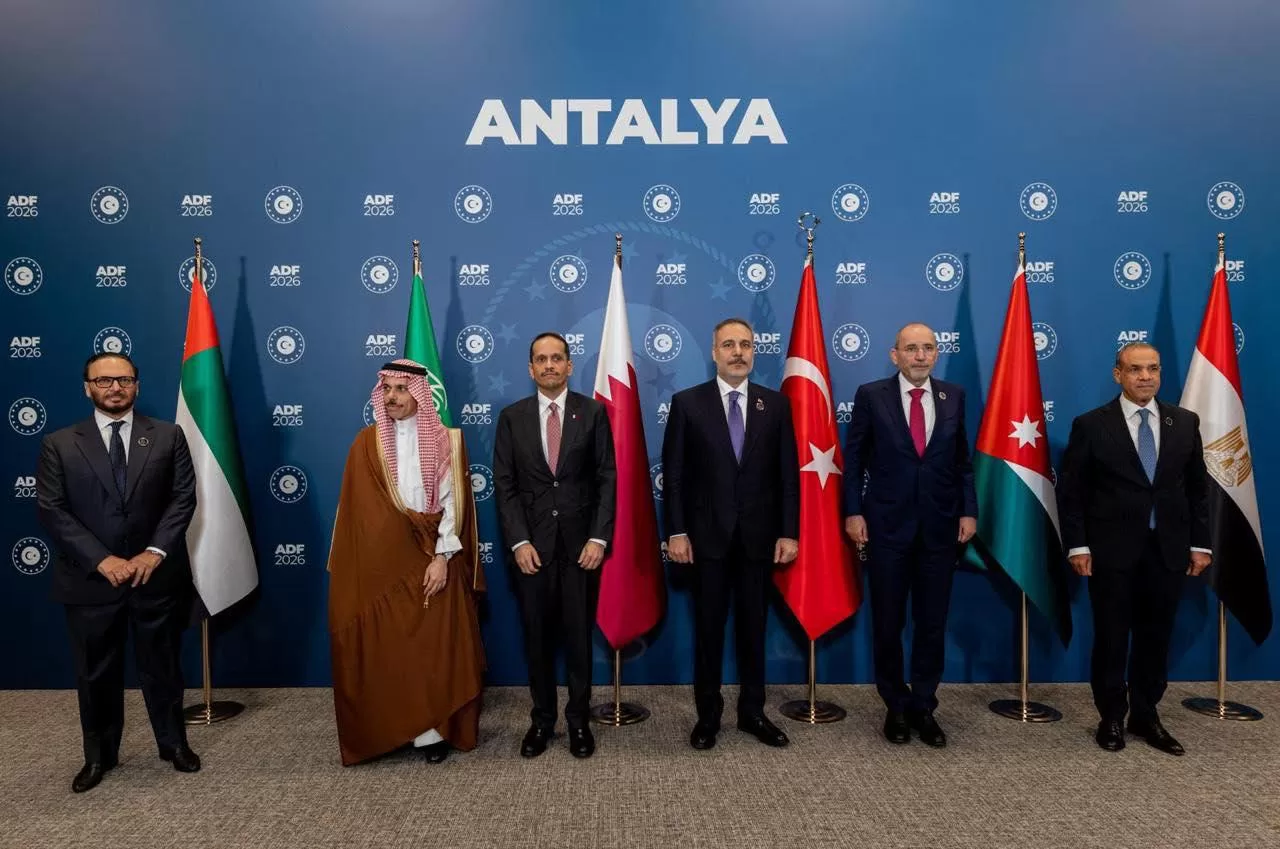
Egypt’s participation in the Antalya Diplomacy Forum this April reflects a broader strategy to expand its diplomatic reach and strengthen its role in regional and global affairs. The Egyptian delegation, led by Foreign Minister Badr Abdel-Aati, used the forum as a platform to engage with key international partners at a time of rising geopolitical tension.
Speaking to The Egyptian Gazette, Dr Tarek Fahmy, Professor of Political Science at Cairo University and academic advisor to the National Centre for Middle East Studies, said that Egypt’s presence reflects a deliberate policy of openness. He explained that this approach is part of what he calls “presidential diplomacy,” where foreign policy moves in line with the broader vision of the political leadership.
Throughout the three-day event, Egypt focused on building partnerships and exchanging views on urgent regional issues. Meetings with officials from Turkey, Azerbaijan, Rwanda, and others signaled Cairo’s intention to maintain balanced relations across different regions. These discussions were not only symbolic but also practical, addressing cooperation in trade, security, and political coordination.
Fahmy also points out that the forum itself has gained importance in recent years. With many countries participating and ongoing global tensions, it has become a key platform for dialogue. Egypt’s active involvement, he said, strengthens its image as a country that supports stability through diplomacy rather than confrontation.
A major theme in Egypt’s engagement was de-escalation. Abdel-Aati outlined Cairo’s efforts to reduce tensions and support negotiations, reflecting Egypt’s consistent belief in political solutions and dialogue as the main path to stability.
The forum also offered a chance to deepen ties with African and Arab partners. In his meeting with Somali President Hassan Sheikh Mohamud, the Egyptian minister reaffirmed Egypt’s support for Somalia’s unity and sovereignty. This highlights how Egypt connects its foreign policy with regional security, especially in the Horn of Africa.
Meanwhile, Fahmy stressed that these efforts are part of a wider, consistent strategy. By engaging with different partners, Egypt increases its diplomatic weight and its ability to influence regional outcomes while protecting its national interests.

