




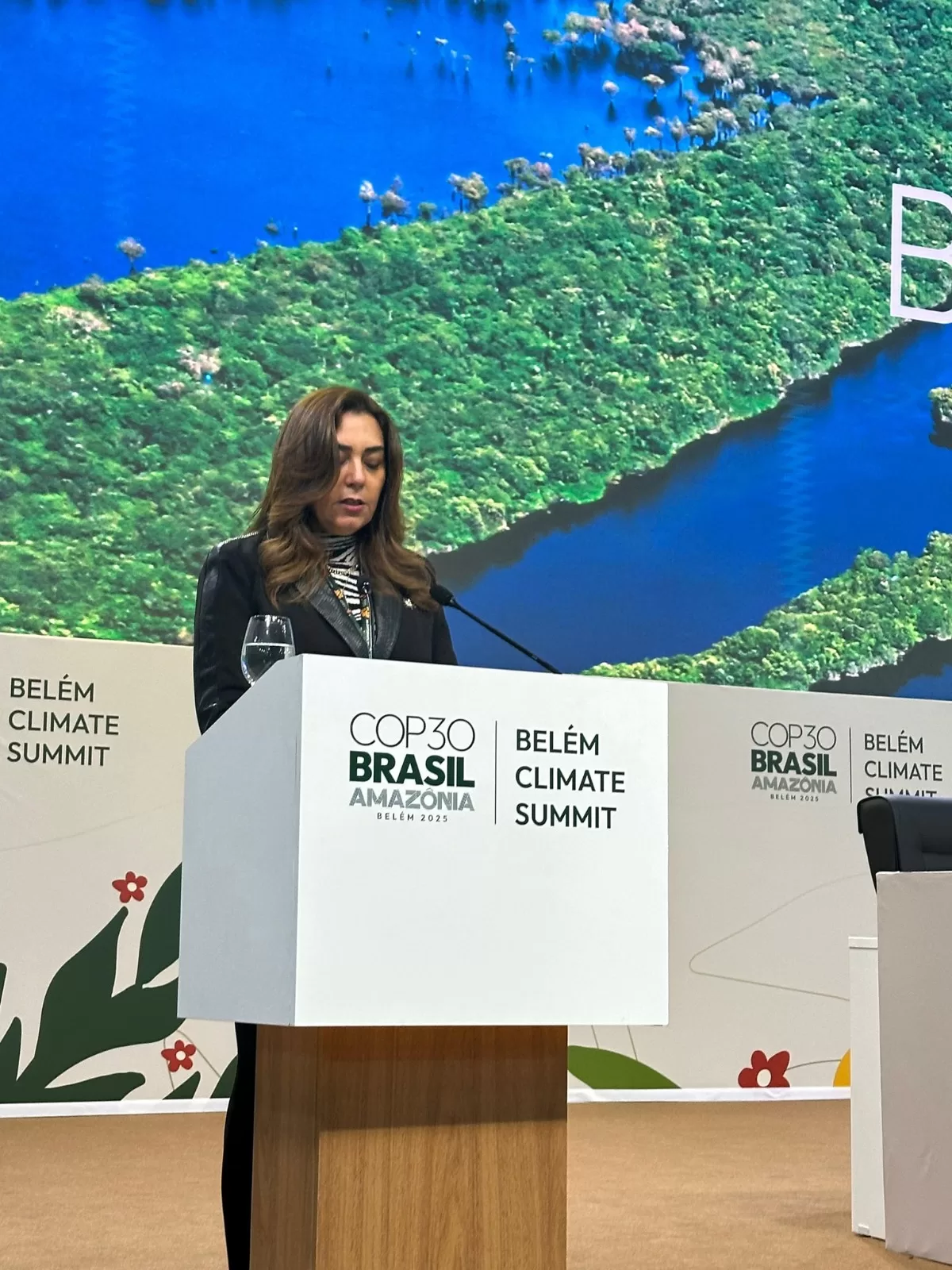
Egypt has urged world leaders to use the upcoming COP30 climate summit as a moment of “frank review” to close the growing gap between climate pledges and implementation. Speaking on behalf of President Abdel Fattah El Sisi, Minister of Local Development and Acting Minister of Environment Manal Awad stressed yesterday that the conference, coinciding with the tenth anniversary of the Paris Agreement, must renew global trust and cooperation.
Minister Awad delivered yesterday Egypt’s address at the “High-Level Segment” Leaders’ Summit in Belém, Brazil, held ahead of the official start of the 30th Conference of the Parties to the United Nations Framework Convention on Climate Change (UNFCCC) on November 10. She emphasized that the multilateral system faces challenges that threaten the spirit of cooperation, urging all parties to “revive the spirit of Paris, which was founded on justice, trust, and shared responsibility.
A central theme of Egypt’s message was the critical failure to meet funding requirements, with climate finance remaining “below the required level.”
Awad stressed that the new collective financing goal must be based on the needs of developing countries, balance mitigation and adaptation efforts, and rely on new, fair, and concessional grants rather than loans.
The Minister highlighted that adapting to climate change is an “existential priority for the African continent,” where drought, water scarcity, and rising sea levels threaten millions of lives. She emphasized the urgent need to fulfill the pledge to double adaptation funding and fully activate the global adaptation goal to support vulnerable communities.
While welcoming the progress made on the Loss and Damage Fund—an achievement of the previous COP27 in Sharm El-Sheikh—Awad called for the rapid injection of new grant-based resources to prevent adding to the debt burden of developing countries.
Minister Awad insisted that climate justice must be the foundation of any fair climate system. She asserted that moving from the stage of pledges to full implementation requires a focus on providing means of support rather than imposing new obligations beyond those agreed upon in the Paris Agreement.
Awad underlined the principle that nationally determined contributions (NDCs) remain a sovereign right of each country, to be set according to its capabilities and development circumstances. She cautioned against policies, such as carbon limit adjustment mechanisms, that could impose new burdens or undermine pathways to a just transition for developing nations.

