


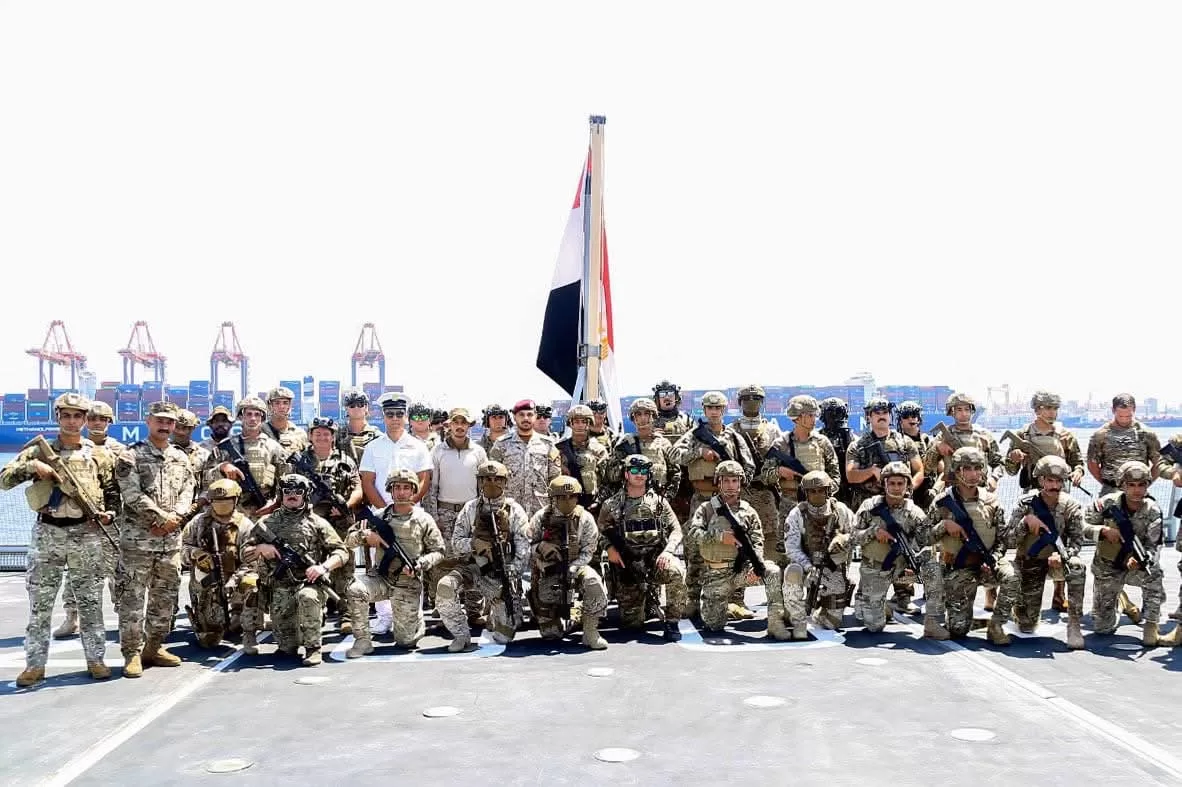
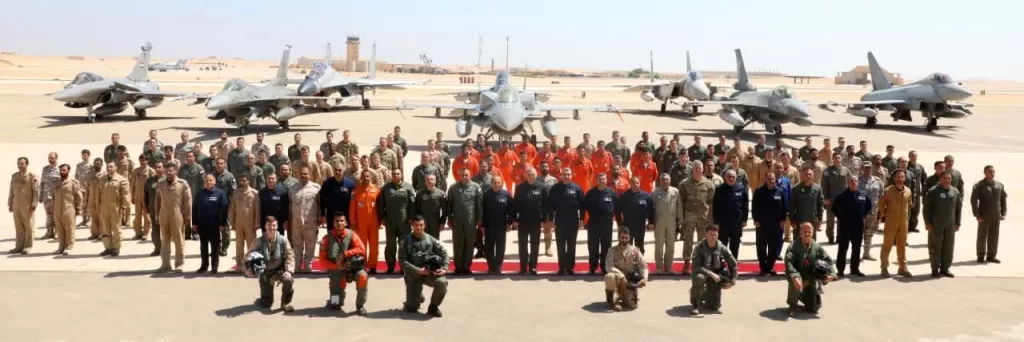
With the participation of 44 sisterly and friendly nations, the activities of the joint Egypt-US multinational military exercise codenamed Bright Star 2025 continued at full pace at the Mohamed Naguib Military Base and a number of naval and air bases across Egypt, with training activities scheduled to continue through September 10.
Considered one of the largest combined military exercises in the region, Bright Star 2025 includes a wide range of tactical and operational training activities.
As part of the ongoing drills, the participating forces executed a wide range of live-fire exercises, simulating combat from multiple firing positions to test readiness and interoperability.
A series of specialised training exercises (STX) were also conducted, focusing on vital tactical scenarios such as countering improvised explosive devices (IEDs), emergency first aid and medical evacuation, and drone defence operations.
In parallel, the Command Post Exercise (CPX) component was launched, providing an essential platform for the exchange of operational expertise and enhancing strategic-level decision-making among multinational command structures.
Moreover, air and naval forces carried out complex operational manoeuvres. The Egyptian Air Force conducted airstrike simulations designed to enhance joint air dominance and air combat capabilities, while naval units performed maritime security tasks, including visit and search operations on suspect vessels.
Additionally, participating units conducted chemical, biological, radiological, and nuclear (CBRN) decontamination exercises to reinforce preparedness in asymmetric warfare scenarios.
The General Command of the Egyptian Armed Forces continues to oversee the planning, coordination, and execution of Bright Star 2025, ensuring optimal integration and cooperation among all participating nations.
Bright Star continues to serve as a cornerstone of the US-Egypt defence partnership and plays a pivotal role in advancing peace and security across the Middle East. By training together, participating nations enhance interoperability, sharpen operational readiness, and align more closely on shared strategic objectives – building a stronger foundation for regional and global stability.


