



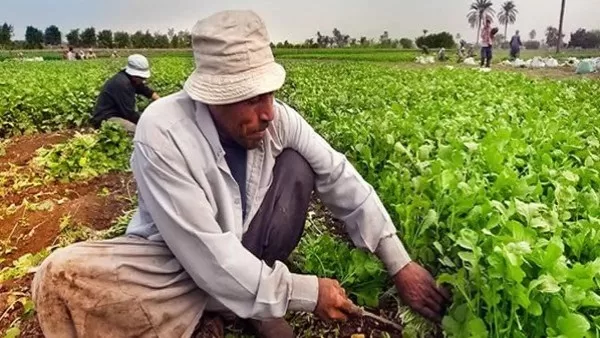
As temperatures climb in Egypt, farmers are struggling with the heat.
Extreme hot weather is damaging crops, cutting harvests, and driving up food prices for everyone.
In recent months, high temperatures have hit several key crops like tomatoes, watermelons, and apricots.
This has pushed market prices higher, a trend people are starting to call “heatflation”.
Now, specialists blame recent changes in climate and rising temperatures for causing serious damage to many crops.
“Shifts in temperature and humidity have hurt production and led to higher prices,” said Hussein Abu Saddam, the head of Egypt’s Farmers’ Syndicate, the independent union of the nation’s agricultural workers.
“Watermelons, apricots, and tomatoes have been among the worst affected,” he told the Egyptian Mail.
Most of these crops are grown in open fields rather than protected greenhouses, which makes them especially vulnerable to heat waves.
The problems go beyond just fruits and vegetables. Long periods of extreme heat encourage pests and diseases, forcing farmers to use more fertilisers and pesticides.
High temperatures can also reduce the quality of grains, lowering their protein and gluten content.
Abu Saddam noted that climate change is slowly changing Egypt’s agricultural map.
“Some crops that used to grow only in Upper Egypt are now being planted in the Delta and other areas because the climate has shifted,” he said.
The Ministry of Agriculture’s Climate Change Information Centre warned farmers in late May about risks to summer crops.
Centre Head Mohamed Ali Fahim said temperature swings are already causing real problems.
“Climate change is clearly affecting our crops,” Fahim explained.
“Unstable temperatures cause flowers and fruits to drop and help spread plant diseases,” he added.
He pointed to mangoes, pomegranates, and tomatoes as some of the hardest-hit crops. “The current conditions are putting huge pressure on Egyptian farmers,” Fahim said.
He also directly linked the recent jump in tomato prices to the ongoing heat waves.
Still, experts say the situation has not reached the point where crops are disappearing from Egypt.
“What we’re seeing now mainly affects how much we produce, not whether the crops can grow at all,” Fahim added, noting that Egypt is still in North Africa’s naturally dry climate zone.
To fight the damage, the government is following a two-part plan.
First, it encourages farmers to adjust planting dates, avoiding the hottest months and steering clear of the coldest periods in January and February.
The second part focuses on research. Agricultural centres across the country are working on developing “climate-smart” crops that can better handle heat, use less water, and survive tougher conditions.
Agricultural expert Sherif Fayyad believes science will be the key to Egypt’s future.
“Research is essential if we want to reduce the long-term impact of climate change on farming,” Fayyad, an agronomics professor at the Desert Research Centre, said.
He also sees greenhouse farming as an important way to shield fruits and vegetables from unpredictable weather.
In the end, Fayyad stressed that adaptation is the real challenge.
“We need strong scientific work to create crop varieties that can stand up to higher temperatures, drought, and saltier soil,” Fayyad told this newspaper.
“These steps are vital to keep our farms productive and protect our food supply as the climate changes,” he added.

