


October 1973 generation redefined history of Egyptian military traditions through their sacrifices
Sinai, modernisation, and Egypt’s anti-terror model
By Mohamed Fahmy and Sarah Saad
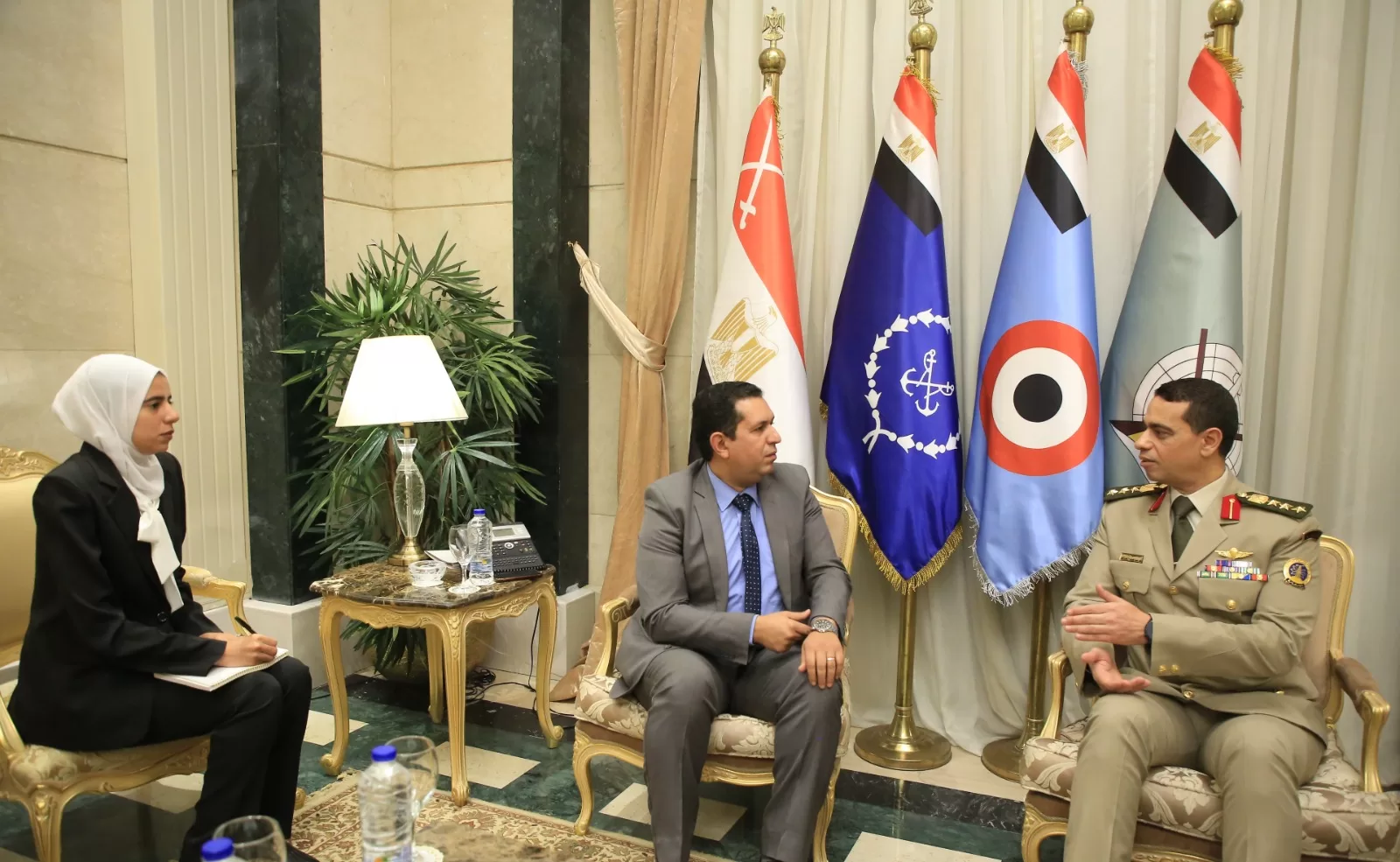
Egyptian Armed Forces Spokesman, Staff of Brigadier General Gharib Abdel Hafez Gharib, said the 43rd anniversary of the Liberation of Sinai stands as a testament to what he described as the “unparalleled sacrifices” and “dedication” of the Egyptian Armed Forces.
It also stands as a reminder, he said, of the unwavering commitment of the Armed Forces to reclaiming Egyptian territories and safeguarding national dignity.
“Sinai’s liberation was a direct result of the immense sacrifices made by Egyptian soldiers and officers during the War of Attrition and the subsequent decisive victory of the October War in 1973,” Staff of Brigadier General Gharib said.
“This victory paved the way for the complete and unconditional return of the Sinai Peninsula,” he told The Egyptian Gazette in an exclusive interview on the occasion of the 43rd Sinai Liberation Day.
He noted that the Egyptian army proved that it did not want conflict for its own sake, but was rather in a determined pursuit of peace and dignity.
He highlighted unified national efforts behind the liberation, describing them as an “epic” in which all segments of Egyptian society participated.
These efforts, he said, showcased an unprecedented spirit of unity and unwavering support for the Armed Forces.
“This unity remains a powerful symbol of strength, cohesion, and national solidarity,” Staff of Brigadier General Gharib said.
He paid tribute to the “great” October 1973 generation.
This generation, he said, redefined the history of Egyptian military traditions through their sacrifices.
“They left a timeless legacy for future generations,” Staff of Brigadier General Gharib said.
“The victories of October 1973 were made possible by the unwavering support of the Egyptian people for their Armed Forces during a critical period in the nation’s history,” he added.
He said the War of Attrition and the October 1973 war victory culminated in the complete liberation of Sinai on April 25, 1982, a day forever marked as Sinai Liberation Day.
He mentioned the subsequent reclamation of Taba through international arbitration on March 15, 1989.
This reclamation, he said, symbolised the full return of Sinai to Egyptian sovereignty.
Armed Forces’ Modernisation
Staff of Brigadier General Gharib referred to what he described as a “comprehensive modernisation strategy” within the Armed Forces.
This strategy, he said, put individual soldiers at its core.
“This strategy encompasses keeping pace with rapid advancements in combat systems, diversifying armament sources, and acquiring cutting-edge technologies and weapons systems to enhance combat and technical readiness,” Staff of Brigadier General Gharib said.
“These efforts are crucial for securing Egypt’s borders across all strategic directions and preserving national security in the face of evolving regional and international challenges,” he added.
He noted that armaments acquired between 2014 and 2025 included the following:
- Rafale and F-16 aircraft for the Air Force
- A diverse array of naval assets, including submarines, class helicopter carriers, German type 209/1400 submarines, Gowind-class frigates, and Meko A200-class frigates.
- A sophisticated and integrated air defence system, incorporating reconnaissance, early warning, and aerial surveillance capabilities to counter all threats effectively.
- The development of systems to counter unmanned aerial vehicles and the manufacture of an Egyptian radar in collaboration with Armed Forces research centres and civilian institutions.
Staff of Brigadier General Gharib said the Armed Forces recognise the individual soldier as the foundation of development.
He highlighted enhancements in administrative and moral aspects, academic and research co-operation with civilian universities, and the development of combat skills through continuous training.
State strategy to eradicate terrorism with participation of Armed Forces
Staff of Brigadier General Gharib said Egypt faced an unprecedented level of simultaneous threats on all strategic fronts.
In response, he said, it adopted a comprehensive national security concept to protect its internal and external interests.
The Armed Forces, he added, have been at the forefront of safeguarding Egyptian national security.
He highlighted the Armed Forces’ successful efforts in restoring stability and security in Sinai through a comprehensive strategy rooted in addressing the underlying causes of terrorism to ensure security and social peace.
He said this strategy is built on the following three main pillars:
Security, a pillar that focuses on confronting terrorist elements, cutting off supply lines, and securing borders.
Development which includes active participation in the state’s comprehensive development plan.
A social pillar which includes co-operation with state institutions to improve citizens’ living standards and public services.
Staff of Brigadier General Gharib referred to international recognition of Egypt’s counter-terrorism strategy, citing a United Nations semi-annual report on January 28, 2022.
The report, he said, addressed the global threat of terrorist organisations to international peace and security and the UN’s initiatives to assist member states in countering this threat.
“Key highlights of the report included explicit praise for the Egyptian government’s determined efforts to combat terrorism,” Staff of Brigadier General Gharib said.
“The report also noted a significant decline in terrorist activity in North Sinai, alongside instances of defection from terrorist organisations,” he added.
He noted that these developments contributed to the fragmentation of these groups and a decline in morale among their remaining members.
The UN report, he said, also highlighted a notable increase in public investments in infrastructure, transport, and housing projects in Sinai.
This progress, he added, received substantial coverage from both local and international media.
“These commendations from the UN underscore the effective and well-considered approach adopted by the Egyptian state and its Armed Forces in their sustained campaign against terrorism,” he said.
“This reflects Egypt’s broader commitment to participating in the maintenance of international peace and security under the auspices of the UN,” he added.
Armed Forces and peacekeeping efforts
He said Egypt’s contribution to peacekeeping forces stems from the pivotal and pioneering role of the Egyptian state and its constant commitment to supporting peace and security efforts around the world through effective participation in UN peacekeeping missions with highly qualified troops.
He added that Egypt proudly stands as one of the largest troop-contributing countries to UN peacekeeping missions, ranking among the top ten globally in this regard and holding the distinction of being the first Arab nation to contribute to UN missions.
“The tasks undertaken by our forces within UN missions are diverse and crucial,” Staff of Brigadier General Gharib said.
“They include diligently monitoring ceasefires, effectively supervising the withdrawal of forces, and establishing vital demilitarised zones between conflicting parties,” he added.
He noted that Egyptian troops participating in UN peacekeeping missions are also entrusted with securing essential facilities, ensuring the safe passage of relief convoys, and safeguarding UN centres and the centres of other international organisations.
A key objective, he said, is to actively de-escalate tensions and prevent the outbreak of renewed fighting between the involved parties.
Our forces, he added, also provide a secure environment conducive to negotiations between the conflicting sides and play a vital role in securing the electoral process to guarantee its integrity and transparency.
Armed Forces role in Sinai development
Highlighting the Armed Forces’ broader contributions to national development, particularly in Sinai, Staff of Brigadier General Gharib said under the directives of the Supreme Commander of the Armed Forces starting from June 30, 2014, the Armed Forces have implemented 460 development projects across various sectors, including infrastructure, transportation, housing, and land reclamation, significantly impacting the fight against terrorism.
He noted that key projects included the following:
- Roads and transport
Completion of 73 projects, including the development of the East Port Said – Sharm El Sheikh road (464 km) and the Ismailia – El Ouga road (221 km) - Housing and urban development
Implementation of 30 projects, which included the construction of 48,590 flats in New Ismailia, New Rafah, Al-Arish, Port Said, South Sinai, and Sharm El Sheikh. - Development clusters
Completion of 21 projects, including the establishment of 17 development clusters in North and South Sinai and the construction of 4 fishing villages on Lake Bardawil - Healthcare sector
Completion of 31 projects, including the construction and upgrade of hospitals across North and South Sinai - Water Supply
Completion of 25 projects, including the construction of seawater desalination plants in Taba, Ras Malab, and Al-Tor, with 6 additional projects underway - Agriculture and land reclamation
Completion of 13 projects, including the reclamation and development of 13,680 feddans in Bir El-Abd

Countering rumours that threaten national security
Staff of Brigadier General Gharib underscored the Armed Forces’ commitment to transparency and their continuous engagement with media to answer inquiries and debunk rumours concerning the military.
He urged media professionals to rely exclusively on official Armed Forces sources for information.
He outlined the rigorous process for issuing official statements, one that ensures that information is documented and verified before publication and prioritises operational security while demonstrating commitment to providing the public with accurate and verified information through national media channels.
“The sacrifices and patriotic efforts of the Egyptian Armed Forces will always be a source of national pride and appreciation,” Staff of Brigadier General Gharib said in conclusion.
“The will continue to be loyal and dedicated to Egypt and its people, under wise leadership and in line with the state’s strategic vision for a modern nation that secures Egypt’s rightful place regionally and internationally,” he added.