




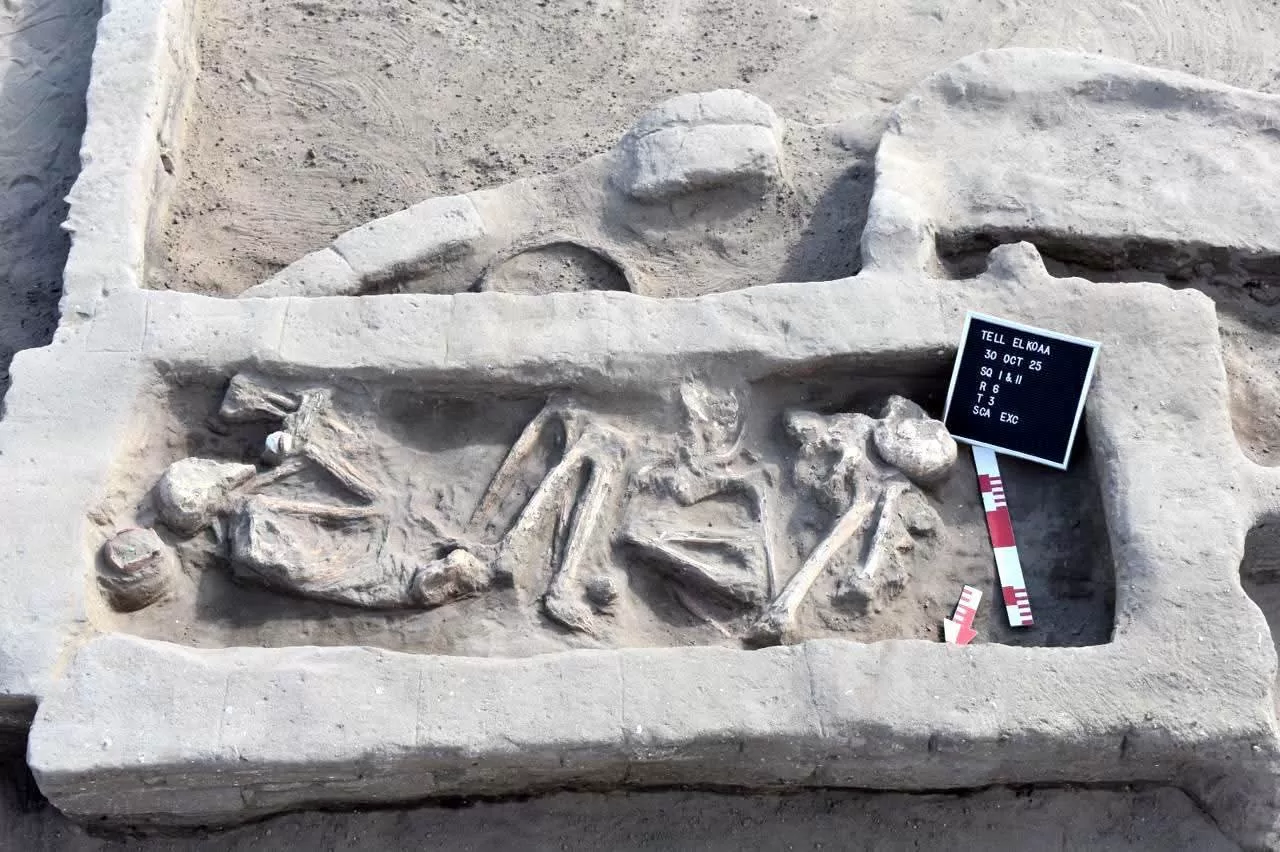
An Egyptian archaeological mission has uncovered a major settlement dating to the Second Intermediate Period at Tell el-Kou’ in Wadi Tumilat, Ismailia, including tombs, a large residential complex, kilns and storage silos.
The discovery sheds fresh light on urban life, trade and burial practices in the eastern Nile Delta during one of the most significant transitional periods in ancient Egyptian history.
The discovery reveals an integrated community comprising residential, storage, industrial and burial areas, offering fresh insights into settlement patterns in the eastern Delta, Minister of Tourism and Antiquities Sherif Fathy said.
The minister lauded the efforts of Egyptian and international archaeological missions in uncovering Egypt’s ancient heritage.
For his part, Secretary-General of the Supreme Council of Antiquities, Hisham El-Leithy, said the find highlights Tell el-Kou’ as a key site along the Wadi Tumilat corridor, an important route linking the eastern Delta with Egypt’s eastern borders.
The discovery will help researchers better understand the transition from the Second Intermediate Period to the early New Kingdom through studies of population continuity, trade, and social change, El-Leithy added.
Mohamed Abdel-Badi, Head of the Egyptian Antiquities Sector, said the mission uncovered 10 mud-brick tombs from the Fifteenth Dynasty, including mastaba-style tombs and others with decorated facades, as well as a 60-by-30-meter residential complex enclosed by a mud-brick wall with halls, rooms, ovens, and storage silos.
According to Hisham Hussein, Head of the Central Administration of Lower Egypt Antiquities, excavations also yielded scarabs, bronze tools, pottery, alabaster kohl containers, Tell el-Yahudiya-style bottles, human skeletons, and animal bones linked to daily life and funerary offerings.
Initial studies found varied burial practices involving individuals aged 25 to 40. Human burials outside mud-brick tombs, some in a squatting position, were discovered for the first time at the site.
Moustafa Hassan, Director of the Ismailia Antiquities Zone and the mission, said the site remained occupied until the mid-Eighteenth Dynasty, with pottery seals indicating extensive trade networks and suggesting Tell el-Kou’ served as an important commercial hub.

