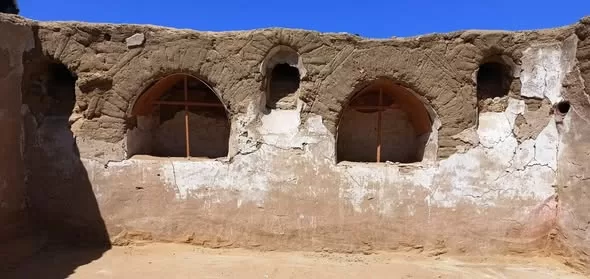


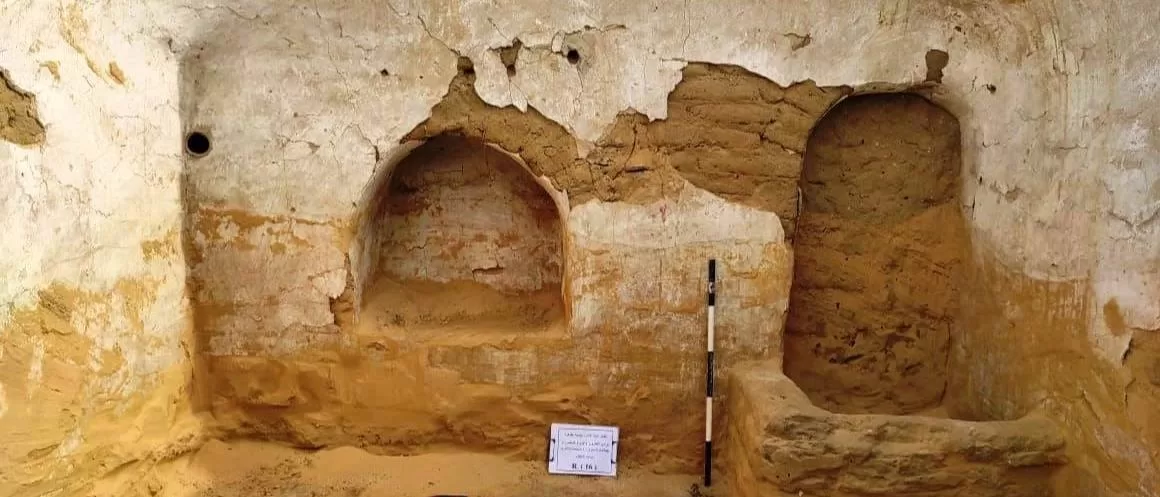
An Egyptian archaeological mission, a joint effort between the Supreme Council of Antiquities and the Faculty of Archaeology at Cairo University, has uncovered the remains of an ancient monastery building in Wadi El-Natrun, Beheira Governorate. The structure dates back to between the 4th and 6th centuries AD, a key period in the emergence of monasticism in Egypt and worldwide.
The discovery marks an important stage in the development of early monastic life. It sheds light on the architectural layout of the first monasteries in this historically and religiously significant area.
The building covers around 2,000 square meters and is constructed of mudbrick. Its outer walls are about one meter thick, while internal walls range between 60 and 70 cm in thickness, with heights ranging between 1.8 and 2.2 meters.
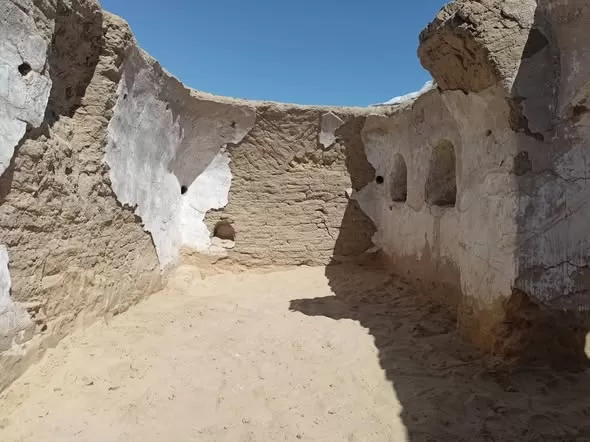
The structure features a central open courtyard surrounded by architectural units, including smaller courtyards and monks’ cells of varying shapes and sizes. Service areas were found on the western side, including kitchens, ovens, and storage spaces.
Excavations also revealed burial areas inside the building containing human remains, likely belonging to monks, highlighting the funerary aspect of monastic life.
Architectural studies show the use of vaults and domes made of mudbrick. Walls were coated with white plaster and decorated with murals depicting crosses, palm trees, and geometric and floral motifs.
Coptic inscriptions were also discovered, bearing names of monks and religious prayers, offering insights into daily life.
Officials said the find enriches understanding of early monasticism in Egypt. They added that Wadi El-Natrun remains a major spiritual centre, and the discovery strengthens its position on the global religious tourism map.