


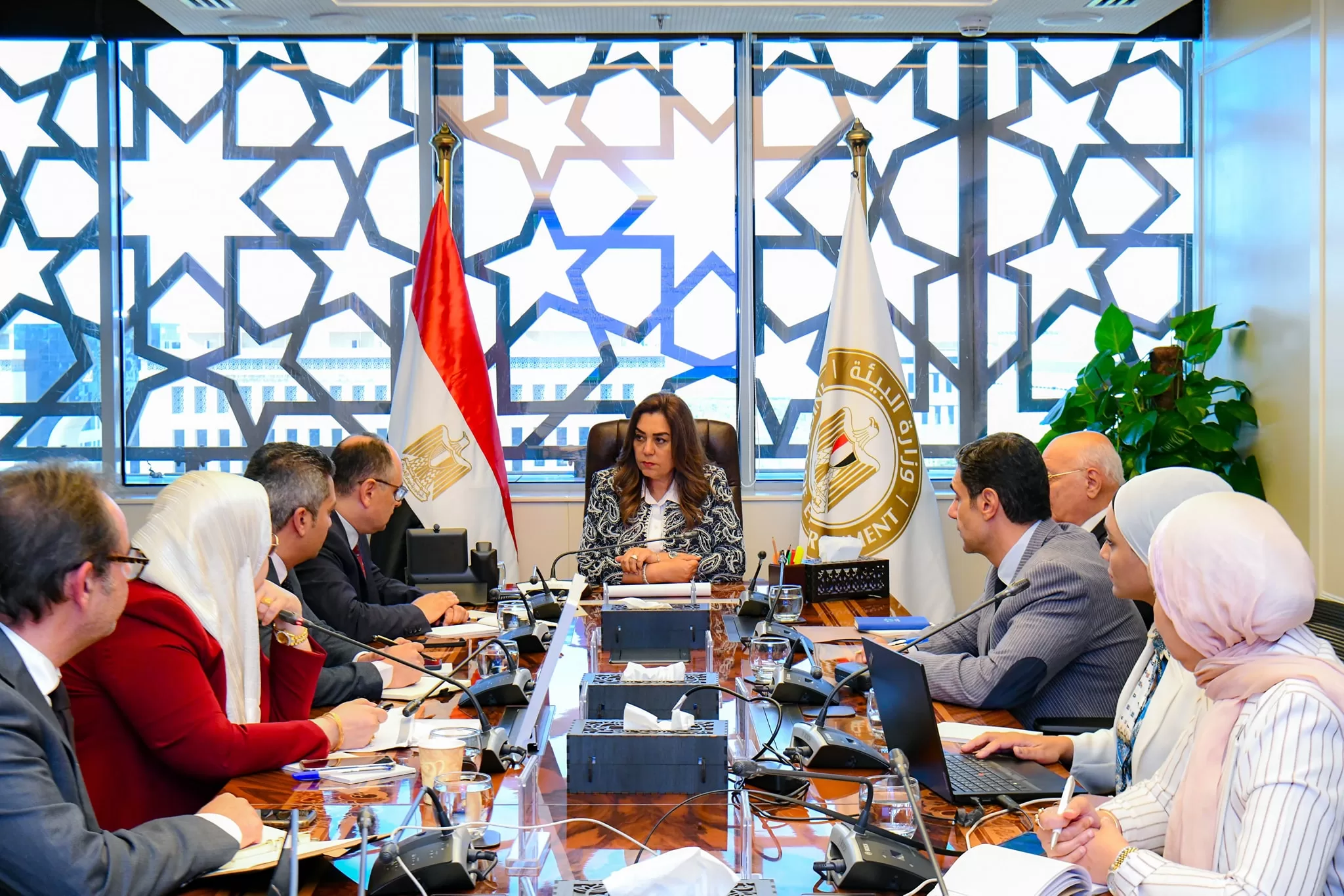
Manal Awad, Minister of Local Development and Acting Minister of Environment, held a coordination meeting Saturday to follow up on the activities implemented by the Ministry of Environment in cooperation with the Center for Environment and Development for the Arab Region and Europe (CEDARE).
The meeting is part of a series of coordination meetings to track key environmental portfolios.
The meeting was attended by Ali Abou Senna, head of the Egyptian Environmental Affairs Agency (EEAA), Raouf Saad, advisor to the minister for multilateral agreements, Mohamed Me’temed, assistant minister for planning and investment, Sherif Abdel Rahim, assistant minister for climate policy, Tamer Abu Gharrarah, advisor to the minister for international cooperation, Soha Taher, head of the Central Administration for International Cooperation and Climate Change, and Hala Ibrahim, director-general of environmental crises.
During the meeting, Awad listened to a presentation by the head of EEAA on the organizational structure of CEDARE and its cooperation with the ministry.
The center plays a role in strengthening the ministry’s capacity to prepare Egypt’s State of Environment Reports by updating the methodology in line with international standards. This is achieved through a tool powered by artificial intelligence, developed as part of a regional program with the United Nations Environment Program (UNEP).
This tool enhances the efficiency and quality of reporting, speeds up processes, and improves outcomes. It also includes training programs for staff to maximize the use of this modern technology — reflecting the ministry’s commitment to keeping pace with global developments in environmental reporting and supporting sustainable development efforts.
Awad also reviewed cooperation in implementing the ‘SwitchMed II’ project, which aims to promote the circular economy, and support sustainable consumption and production strategies in Egypt.
This project includes four key components; namely supporting the implementation of the waste management law, including collection and processing guidelines, supporting an action plan to reduce plastic bag usage through awareness campaigns, workshops, and educational videos, organizing national roundtables to discuss plastic pollution and developing a strategic roadmap for the Blue Economy.
The meeting also discussed key decisions of the 18th Board of Trustees meeting of CEDARE, which included reviewing and updating internal policies and work systems, forming a technical advisory committee, approving the Executive Director’s report, which recommended establishing four specialized units to strengthen the center’s technical, financial, and administrative capacities and to develop a fully integrated financial system, thus enhancing partnerships with the private sector and universities, and developing sustainability plans and performance evaluations.
On the other hand, Awad followed up on the Ministry’s activities with the Regional Organization for the Conservation of the Environment of the Red Sea and Gulf of Aden (PERSGA), one of the major international organizations coordinating regional efforts to conserve marine and coastal environments specific to the Red Sea and Gulf of Aden. PERSGA is responsible for developing regional protocols and strategies to conserve marine resources and reduce pollution of all types.
During the meeting, they reviewed the key decisions of the 21st Ministerial Council session of PERSGA, which included an approval for funding the second phase of the World Bank partnership project on sustainable development of fishery resources in the Red Sea and Gulf of Aden, and an approval by the Global Environment Facility (GEF) for funding a project in partnership with GEF-IW/UNEP on marine ecosystems and transition to a sustainable blue economy (2023–2027).
Awad explained that the council’s decisions also included an approval of a regional action plan to combat illegal, unreported, and unregulated (IUU) fishing in the Red Sea and Gulf of Aden, the issuance of the “Regional Guide for Sustainable Management of Ship Waste”, the implementation of regional plans to protect sharks, sea turtles, birds, and marine mammals, and an approval of updates to the regional emergency response plan for marine pollution incidents involving oil and hazardous substances in the Red Sea and Gulf of Aden.

