


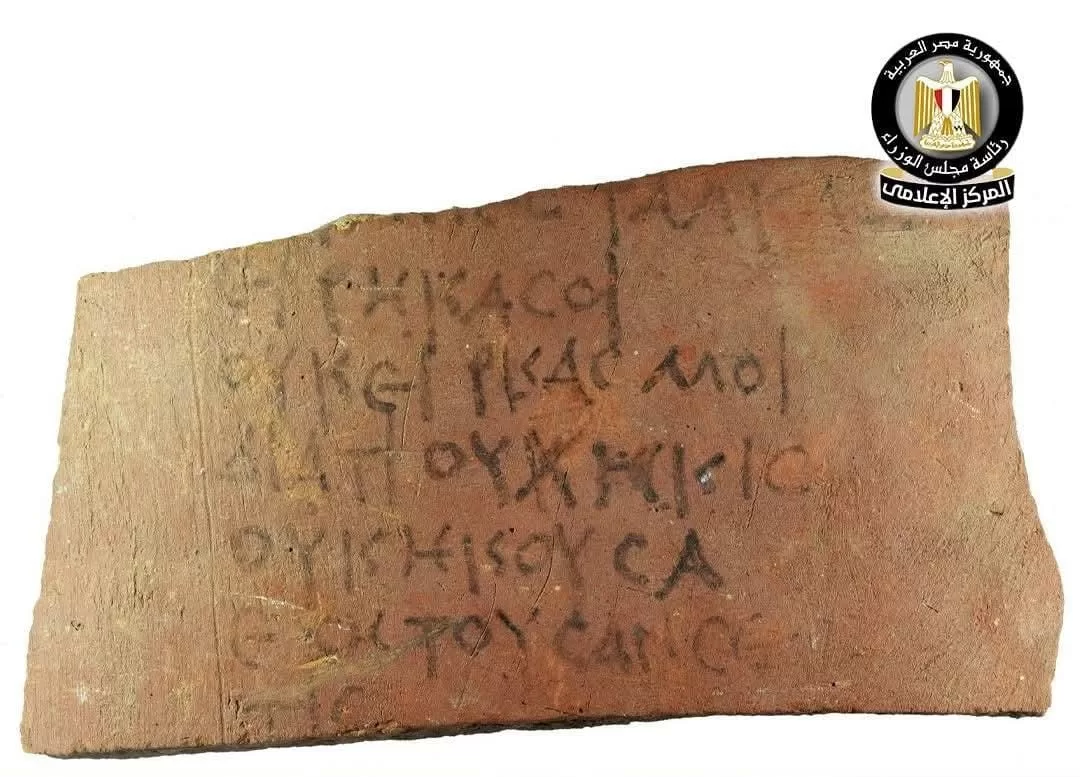
An Egyptian-German archaeological mission has unearthed 13,000 inscribed pottery shards during the current excavation season at the ancient archaeological site of Athribis, Sohag.
The mission is a joint project between the Supreme Council of Antiquities and the University of Tübingen.
The latest discoveries bring the total number of ostraca-pottery fragments used as writing surfaces-found at Athribis to about 43,000 since excavations began in 2005.
Researchers say that the number of ostraca discovered at Athribis exceeds the total found at the workers’ village of Deir el-Medina and is higher than the number uncovered at any other archaeological site in Egypt in more than 200 years of excavations.
According to the mission, most of the newly discovered ostraca contain written texts.
Between 60 per cent and 75 per cent of the inscriptions are written in Demotic script, while 15 per cent to 30 per cent are in Greek alphabet.
Around 4 per cent to 5 per cent feature pictorial or geometric drawings.
Smaller portions of the texts appear in other scripts, reflecting the linguistic diversity of ancient Egypt.
About 1.5 per cent are written in Hieratic, 0.25 per cent in Egyptian hieroglyphs, 0.2 per cent in Coptic alphabet, and roughly 0.1 per cent in Arabic script.
Most inscriptions on the ostraca consist of everyday records written in different languages and scripts.
These include accounts, lists, tax receipts and delivery orders, as well as writing exercises believed to have been used by students.
Some fragments also contain texts linked to religious practices, including hymns, prayers, consecration writings and notes confirming the safety of ritual sacrifices.
The discovery provides valuable insight into Egypt’s social and economic history across different historical periods.

