
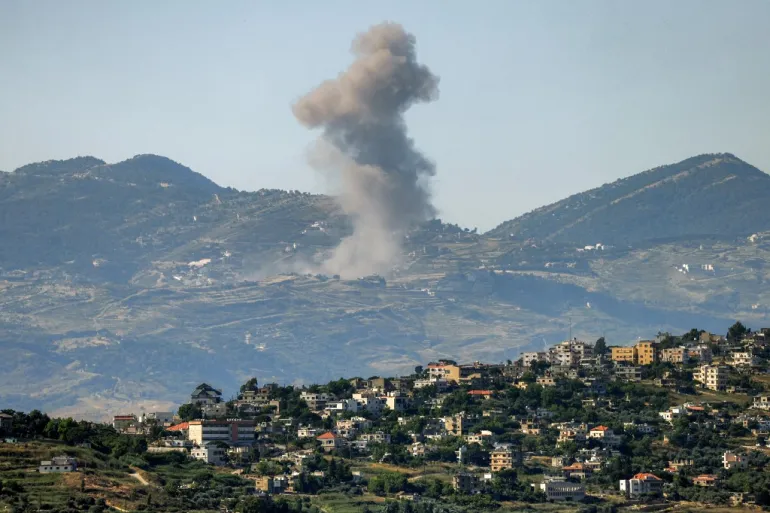










Oil entered early July trading caught in one of the strangest contradictions in commodity markets: global inventories are still being drawn down, U.S.-Iran skirmishes have not fully faded, and yet prices keep sliding. Crude has now fallen back to levels seen before the war broke out, with traders focusing more on weakening demand than on the still-tight supply picture.
In a traditional reading of the oil market, falling inventories should be bullish. They usually signal that the world is consuming more oil than it is receiving, forcing buyers to draw barrels from storage. If that drawdown continues for long enough, refiners, governments, airlines, shipping companies and traders all face the same problem: fewer spare barrels are available to cushion the next shock.
Oil Inventory Trends Before and During the War
Before the U.S.-Iran war, the global oil market entered 2026 with relatively comfortable stock levels. After earlier periods of oversupply, rising floating storage and elevated onshore inventories, observed global oil stocks in January were near their highest levels since the post-pandemic recovery period. That gave the market a meaningful safety cushion against short-term supply disruptions. Even if some exports were interrupted, there were still enough barrels in storage to prevent a severe spike in oil prices.
That balance changed sharply after the conflict erupted at the end of February. Disruptions to flows through the Strait of Hormuz turned inventories from a passive buffer into one of the market’s main sources of additional supply. As Gulf exports slowed and restrictions on tanker movements increased, refiners, importing countries and governments were forced to rely more heavily on stored crude and refined products to cover the shortfall. Strategic petroleum reserves were tapped more widely, commercial inventories came under sustained pressure, and floating storage became a more important part of the global supply chain.
According to the reported figures, global inventories fell by around 129 million barrels in March 2026. In April, the International Energy Agency initially estimated the drawdown at around 117 million barrels in its May report, before revising the figure down to 74 million barrels in its June report. In May, the drawdown rose to around 143 million barrels, equal to an average of 4.6 million barrels per day. The agency also said the average daily stock draw since the start of the Gulf crisis had reached around 3.8 million barrels per day.
For June 2026, no final published data on the actual global inventory drawdown were available as of July 1. However, the best available estimate comes from the U.S. Energy Information Administration, which projected in its June report that global oil inventories would decline during the second quarter by an average of 6.3 million barrels per day.
Applying that rate to the full second quarter, which covers April, May and June, implies an expected total drawdown of nearly 573 million barrels. Based on the IEA’s revised figures for April and May — 74 million barrels and 143 million barrels, respectively — June can therefore be inferred to have seen an implied draw of about 356 million barrels.
Rebuilding these inventories will not be a quick process. It would require an extended period in which global supply exceeds demand. That means even in a successful scenario where normal flows are restored, replacing the stockpiles consumed during the war could take several months, and possibly longer if demand remains strong or production policy stays cautious. Until then, the oil market will remain far more fragile than it was at the start of 2026, and more vulnerable to any new geopolitical disruption, severe weather event or unexpected supply outage.
So Why Are Oil Prices Falling?
The reason is that oil is not priced only on what has already happened. It is priced on what traders believe will happen next. Actual inventories reflect the supply-demand balance in the recent past and the present. Prices, especially futures prices, reflect the market’s expectations for the next balance. At the moment, traders are choosing to focus less on today’s inventory pressure and more on the possibility that supply could return to normal faster than feared at the height of the crisis.
Immediate Fundamentals Versus Future Expectations
The first key to understanding this contradiction is to distinguish between immediate market fundamentals and future expectations.
Immediate fundamentals tell us whether the market is short or long physical barrels right now. If demand is higher than available supply, inventories fall. If supply exceeds demand, inventories rise. This is the physical side of the market. It can be seen in storage tanks, refinery run rates, tanker movements, export flows and decisions to draw from emergency reserves.
Future expectations, however, are built around what traders think supply, demand and risk will look like in the coming weeks or months. Anyone buying or selling oil today is not only reacting to the current inventory drawdown. They are also asking: Will this draw continue? Will it accelerate? Will it slow? Or will it reverse?
In the current situation, falling inventories reflect the damage already caused by the Gulf conflict and the disruption of flows through the Strait of Hormuz. Falling prices, however, reflect a growing belief that more barrels will return to the market as tanker traffic improves, delayed shipments resume, temporary routes open up and some political and logistical risk pressures ease.
Futures Prices Reflect Probabilities, Not Certainties
Oil futures prices do not reflect one certain outcome. They reflect a weighted mix of several possible scenarios.
- The first scenario is that flows through Hormuz return smoothly, Middle Eastern exports recover, halted production comes back and inventories gradually begin to rebuild. Compared with a panic scenario, this is bearish for prices.
- The second scenario is that the recovery is slower than expected. Insurance costs may remain elevated, ships may need additional security arrangements, and port bottlenecks, political uncertainty or regulatory restrictions could delay the return of normal trade. In this scenario, inventories would continue to fall and upward pressure on prices could return.
- The third scenario is that the ceasefire or temporary arrangement collapses, bringing the risk of renewed supply disruption back into the market. In that case, the geopolitical risk premium could return to prices very quickly.
The current decline in oil suggests that traders are assigning more weight to the first scenario: a normalization of supply. The market is not saying inventories are comfortable. It is saying the path for supply may now be less dangerous than it appeared at the peak of the conflict.
Weaker Demand Changes the Equation
There is another reason why falling inventories are not always enough to push prices higher: demand erosion.
When prices rise sharply or fuel supplies are disrupted, consumption can begin to weaken. Airlines may cut some flights, consumers may drive less, petrochemical companies may reduce operating rates, and governments may encourage energy conservation. In some regions, demand does not remain insulated from the crisis. It adapts to it.
This matters because inventory draws measure the gap between supply and demand. If supply falls sharply but demand also weakens, the drawdown may be smaller than it would have been if consumption had remained strong. And if traders believe weaker demand will persist, they become less willing to push prices higher.
This is one of the hidden bearish forces in the current market. The Gulf shock tightened supply, but it also damaged part of consumption. If the market sees returning barrels at the same time as demand has become more fragile, the future balance may look less bullish than inventory data alone would suggest.
Why the Futures Curve Matters
One of the clearest ways to read this tension is by looking at the futures curve.
When the market is facing a near-term supply crisis, spot oil prices usually rise above prices for future delivery. This creates a structure known as “backwardation”, where nearby contracts trade above later-dated futures.
But that picture began to change as the Strait of Hormuz reopened and oil exports gradually resumed. The rising supply from the Middle East had created a short-term glut in the market, and the front-month Brent contract moved into “contango” for the first time since the start of the war.
This relative calm continued into early July as the market awaited U.S.-Iran talks in Doha and U.S. inventory data. Brent lost around $45 during the second quarter, its biggest quarterly decline since 2008.
The futures curve, therefore, acts as a bridge between the physical market and expectations. If inventories are falling while the curve is weakening, it means traders are no longer willing to pay a large urgency premium for immediate barrels.
That is a warning against reading inventory data in isolation. Stock draws are bullish when they coincide with a strong curve, elevated physical differentials and a limited supply response. But they become less bullish when the curve begins pricing in the return of supply.
The Risk of Misleading Calm
The biggest risk now is that the market has moved too quickly from panic to relief.
Oil prices often overshoot in both directions. During crises, prices can rise more than fundamentals justify because traders price in worst-case scenarios. During periods of de-escalation, prices can fall too quickly because the market rushes to remove the same risk premium.
The current risk is a misleading calm. Inventories are still falling. The system has lost part of its earlier cushion. Shipping activity may be improving, but a full return to normal could take time. Maritime risk, vessel backlogs, insurance costs, payment terms, sanctions rules and political confidence do not normalize overnight.
If the market is underestimating these frictions, the decline in prices could reverse quickly. But if supply returns faster than expected, the market’s behavior will look logical in hindsight.

