



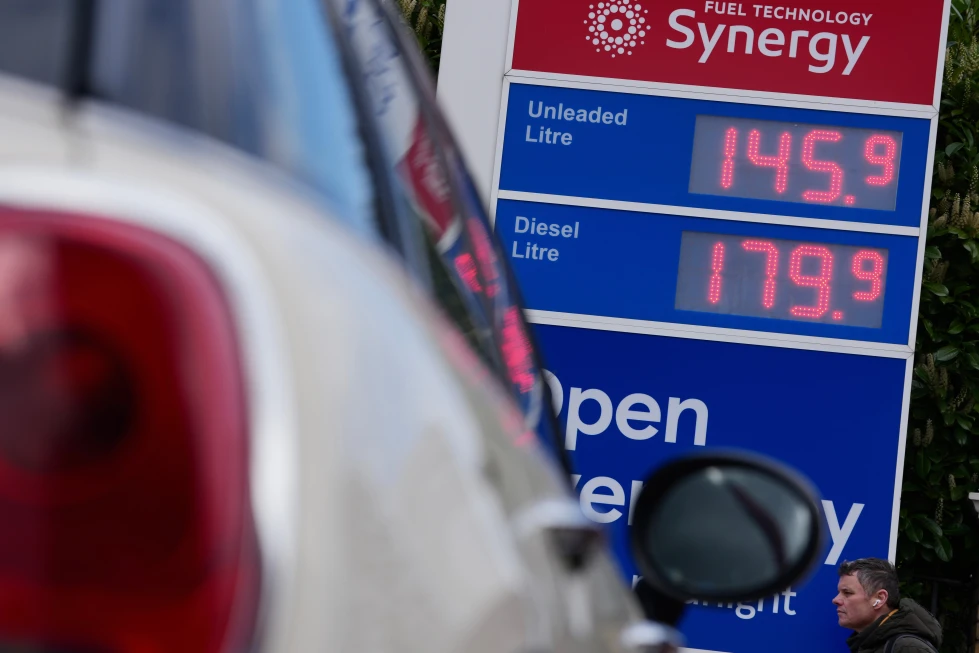
Inflation in the UK climbed in March after a sharp jump in prices at the pump in the wake of the disruption to energy supplies caused by the Iran war, official figures showed Wednesday.
The Office for National Statistics said the annual consumer price inflation rate increased to a three-month high of 3.3% from 3% the previous month. The rise was in line with market expectations.
The main reason behind the inflation spike was higher motor fuel, which increased by a monthly 8.7% — the largest increase since June 2022, shortly after the Russian invasion of Ukraine. Airfares and food prices, both related to the spike in energy prices, were also higher.
Treasury chief Rachel Reeves, whose economic plans have been blown off course by the crisis in the Middle East, said this is “not our war, but it is pushing up bills for families and businesses” as a result.
The economic fallout has put paid to any expectations that the Bank of England would cut borrowing costs. Prior to the start of the war on Feb. 28, there had been an expectation in financial markets that the bank would cut its main interest rate from 3.75% given that inflation was predicted to fall back toward its 2% target during the spring.
Inflation is set to rise further in coming months, possibly to 4%, as higher energy prices impact household bills. Economists, including policymakers at the Bank of England, will be keeping a beady eye on whether the inflation spike starts to spread through the economy, via higher wages, for example.
Luke Bartholomew, deputy chief economist at asset management firm Aberdeen, said that it will be “hard” to see workers and firms being able to push through higher wages and prices, given the relative weakness of both the labor market and the British economy.
“That should ultimately limit the size and extent of the coming inflation shock,” he said. “For now, though, the Bank of England is likely to remain in wait-and-see mode, keeping policy on hold next week and maintaining maximum optionality about whether interest rates ultimately end up increasing or decreasing later this year.”

