



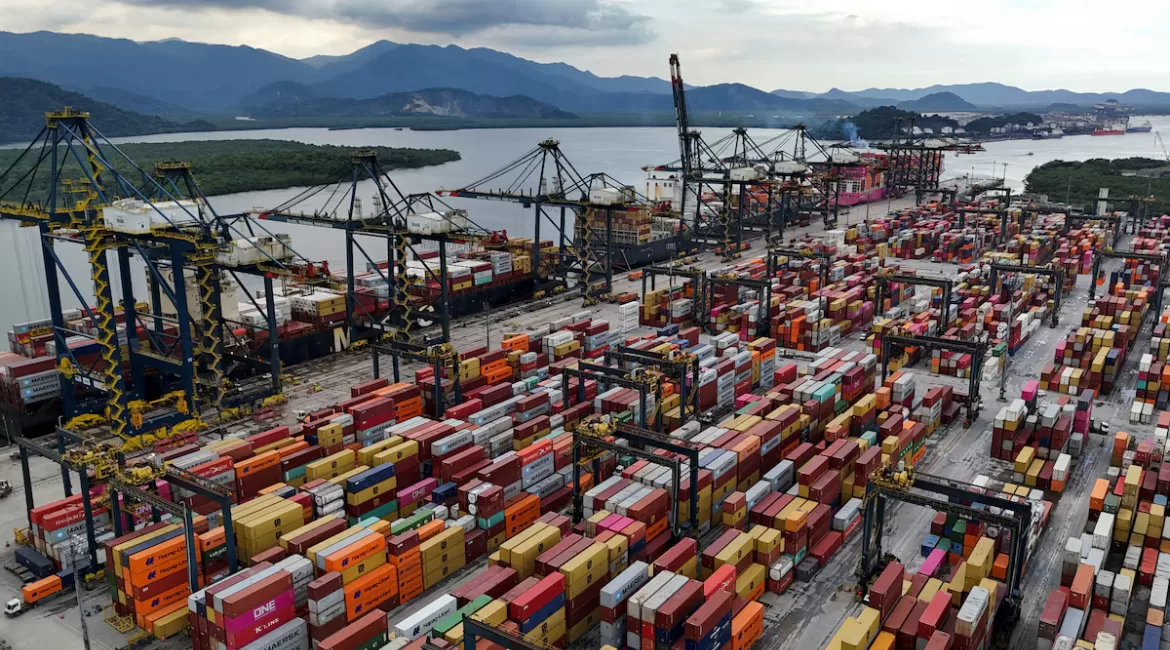
WASHINGTON/BRASILIA (Reuters) – The Trump administration has proposed a new punitive tariff of 25% on many imports from Brazil, after deciding its practices were unfair on a range of issues from digital trade to illegal deforestation, top trade official Jamieson Greer said late on Monday.
The measures, under the Section 301 trade statute, cover areas such as electronic payment services, preferential tariffs, intellectual property protection and ethanol market access as well, the Office of the United States Trade Representative said.
Brazilian President Luiz Inacio Lula da Silva reacted to the newly proposed tariff on Tuesday, accusing U.S. Secretary of State Marco Rubio of being anti-Latin America.
The president also said that U.S. and Brazilian trade negotiators have met three times in recent weeks, with no deal reached so far. Lula added that while the Trump administration sought to tariff Brazil, China, on Tuesday, declared the country free of foot-and-mouth disease.
The U.S. embassy in Brazil did not immediately respond to a request for comment.
The proposed new tariff, subject to public consultation ahead of a July 15 deadline, would exclude some items, such as beef, coffee, rare earths, other metals, energy and aircraft parts.
The USTR said its unfair trade practices investigation into Brazil, started last year under Section 301 of the Trade Act of 1974, had found practices that “are unreasonable and burden or restrict U.S. commerce,” opening the door for a punitive tariff.
Greer, speaking on CNBC, called the Brazil action “quite nuanced” because of the broad exemptions. He said that the trade agency will release the findings of several more Section 301 unfair trade practices investigations in coming weeks, adding that substantial tariffs were needed to correct a “giant” U.S. trade deficit.
Two Brazilian officials familiar with the matter said the justifications for a new U.S. tariff ignored many of the arguments presented by Brasilia in recent months, suggesting the motives were political rather than technical.
Despite a White House visit last month by Lula, bilateral relations have turned chilly.
Rubio designated Brazil’s two biggest criminal gangs as terrorist organizations over objections from Brasilia, opening the door for more aggressive interventions in the country.
Days earlier, Lula’s main rival in the October election, Senator Flavio Bolsonaro, had argued in favor of the terrorist label during a tour of Washington that included meetings with Rubio, Vice President JD Vance and President Donald Trump.

