












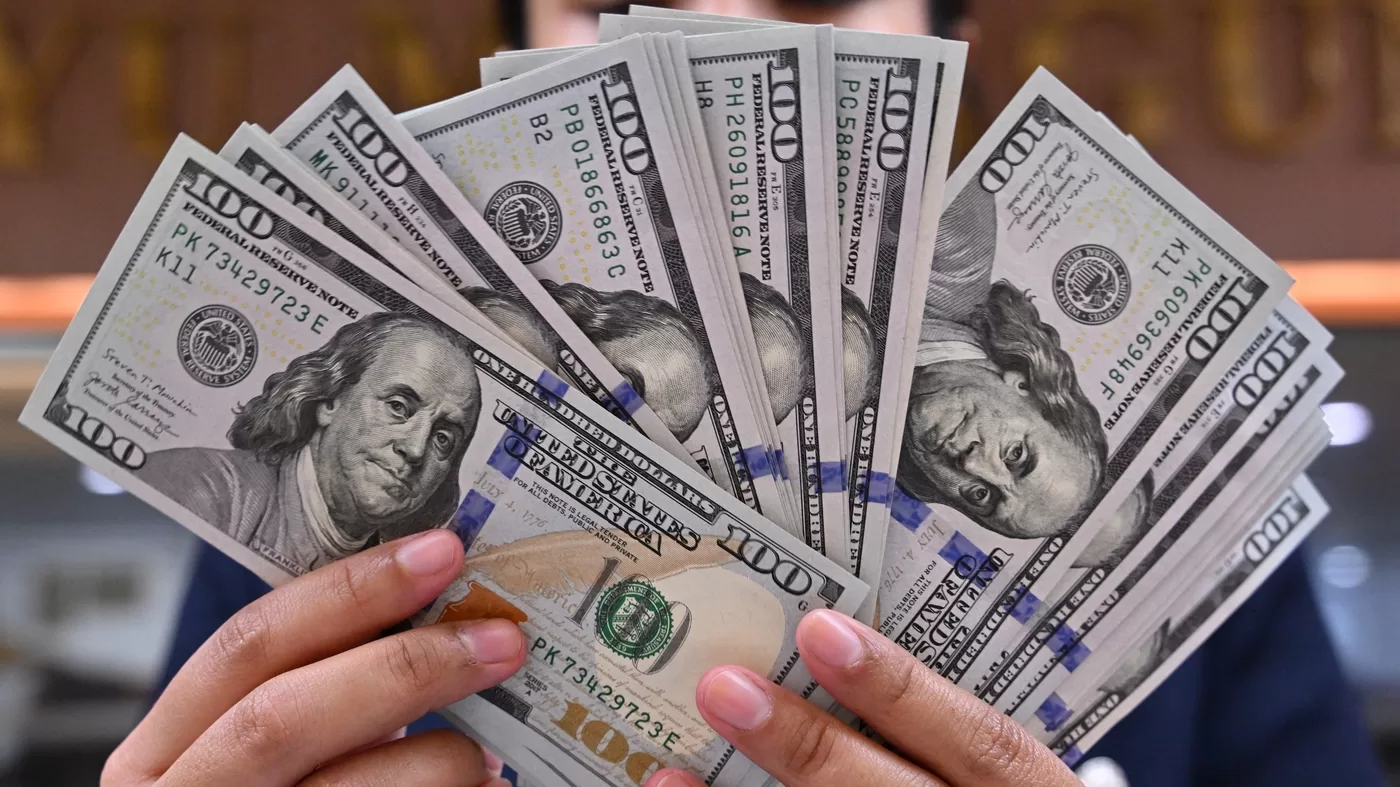
The Egyptian pound strengthened against the US dollar last week, with the exchange rate averaging LE48.07 for buying and LE48.17 for selling, according to data from the Central Bank of Egypt.
The Egyptian pound has maintained its value against the US dollar, notwithstanding the US currency’s recent global strength. This strength was underscored on Friday, where the dollar held onto steep gains following better-than-forecast US data, which consequently dampened expectations for further easing by the Federal Reserve this year.
The dollar index, which measures the greenback against major peers, was poised for its biggest weekly advance in two months after figures on U.S. economic growth, unemployment claims, durable goods and wholesale inventories all beat expectations on Thursday.
The yen traded at an eight-week low following a new raft of tariffs announced by U.S. President Donald Trump. Attention now turns to the release of U.S. consumer spending data later on Friday for signals of how urgently the economy needs additional stimulus from the Fed.
“Markets are reading through to this, and you can see a few basis points pared off of the lower rate forecasts,” said Gavin Friend, senior markets strategist at National Australia Bank. “I think when you do see numbers like we saw on Thursday, you say, well, where’s the fire?”
The dollar index edged 0.1% lower to 98.37, trimming its 0.6% gain in the previous session. It is on course for a 0.8% climb over the past five days, the steepest since the week ending August 1.
The greenback rose 0.1% to 149.68 yen after nearly breaking through the 150 mark for the first time since August 1. The euro added 0.1% to $1.1680.
Markets are now pricing in about a 60% chance of a 50 basis point cut by the Fed by its December meeting, down from 82% odds a week ago, according to the CME FedWatch Tool.
The Commerce Department reported on Thursday that U.S. gross domestic product rose by an upwardly revised rate of 3.8% from April through June, higher than the 3.3% initially reported. Economists polled by Reuters did not expect the rate to be revised.
Friday’s personal consumption expenditures (PCE) price index, the Fed’s preferred inflation measure, is expected to show a 0.3% month-on-month increase for August and a 2.7% year-on-year rise, according to a Reuters poll.
“At a time when Fed members are worried about elevated inflation, we think such a report will be encouraging,” said Bansi Madhavani, senior economist at ANZ. “So long as inflation impulse signals that this inflation trend is intact, we expect the Fed can continue to ease in gradual increments of 25 basis points.”
In Tokyo, where the central bank is on a tightening cycle, data showed core inflation in September in the capital stayed well above the central bank’s 2% target, keeping alive expectations of a near-term interest rate hike.

