




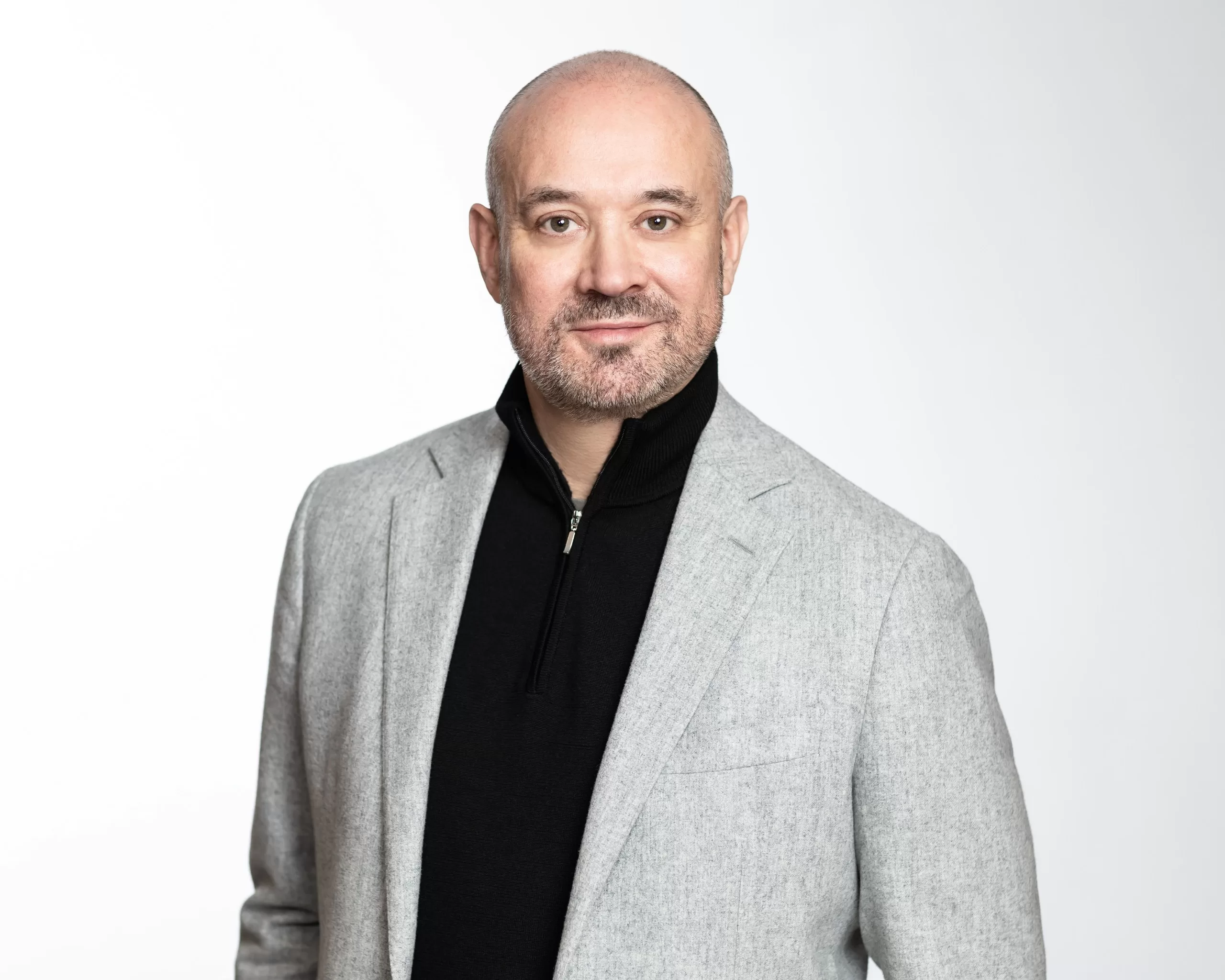
Our priorities are about increasing the number of projects toward FID and avoiding potential carbon emissions, by 2030. And by doing so, our overarching and medium-to-longer-term strategic objective is to help these heavy industries reach the self-reinforcing stage where clean industrial products become the norm, “James Schofield, Deputy Director, ITA” said that through his interview with The Egyptian Gazette.
Can you explain ITA’s core mission and what differentiates it from other climate or industry-focused organisations?
The ITA’s core mission is to fast-track industrial decarbonisation to reduce global emissions to keep us in line with the Paris Agreement to limit global warming. We do that by bringing deep decarbonisation projects across six sectors (aluminium, steel, cement, chemicals, aviation and shipping) to Final Investment Decision (FID), meaning they secure the financing to get them up and running by 2030. We have expansive networks across industry, financial institutions, and governments, and we can convene global leaders from across the industry ecosystem to unlock investment at scale, for the rapid deployment of deep decarbonisation solutions and their energy supply chains. We partner with governments to advance their green agendas, aligning industrial decarbonisation efforts with national policies and sustainability targets.
A core element of the ITA’s work is targeted project support in specific regions, working with governments, project developers and local organisations to provide bespoke support to progress a portfolio of green industrial products to FID. In 2024, the ITA launched Project Support Programmes in partnership with the government of Brazil and in the MENA region with the governments of the UAE and Bahrain. In May 2025, we announced that Egypt had joined the MENA programme.
- How does ITA define success? What does a “just and sustainable” industrial transformation look like in practice?
The ITA was established to rapidly accelerate decarbonisation of six heavy-emitting sectors and we measure our success on the following criteria: The number of new deep decarbonisation and clean industrial projects that are announced; the number of announced projects that progress towards FID; the number of announced projects that reach FID; and potential carbon emissions avoided by 2030
We support project developers and governments to progress all these criteria. This work is, by definition, part of a sustainable industrial transformation. With regard to a just transition or transformation, our targeted project support has been specifically designed to target emerging markets and developing economies. We are starting to see more momentum in the clean industrial revolution in what we are calling the “sunbelt” countries, many of which are in the global south, have abundant clean energy resources and are well-positioned to produce competitively priced, low-emission industrial commodities.
- Who are ITA’s primary stakeholders-governments, industries, communities? How do you engage them in the transition process?
Our project support programmes – currently in the MENA region and in Brazil – work with governments, project developers, and local organisations and the whole value chain, to provide bespoke and targeted support that helps progress a portfolio of green industrial products towards FID (final investment decision). The support we provide includes stimulating demand for clean industrial products through regulatory and policy alignment, developing low-emission value chains to support sustainable industrial production, and establishing risk mitigation mechanisms to encourage investment in regional industrial decarbonisation projects.
We also work internationally, helping strengthen the economic conditions that will drive investment decisions on commercial-scale decarbonisation projects globally. We’ve produced three open-access tools to help stakeholders across the value chain support green transactions. These are the Green Demand Policy Playbook, the Standards Map and the Green Purchase Toolkit.
- What does Egypt represent for you? What do you see as its success factors?
Egypt is a key industrial hub in the MENA region and is contributing to the global shift toward sustainable industry, given its strategic location and access to conventional and renewable energy sources. With the support that Egypt will receive as part of the ITA’s MENA programme, Egypt has the opportunity to become a critical supplier within the MENA region for Europe’s demand for low-carbon commodities. Egypt already has twenty-one (21) announced clean industrial projects, an established energy infrastructure, growing renewable energy capacity, and close trade ties to the EU. The Suez Canal Economic Zone (SCZone) is a strategic decarbonisation hub and over 50% of all publicly-announced projects are located in this zone.
- What are the biggest obstacles you face in accelerating industrial transformation—technical, political, or social?
Successful industrial decarbonisation and the development of new clean industrial projects require securing stakeholder support and bringing together project developers, governments, finance and others to understand challenges and barriers and to find solutions to them. The role of an independent, trusted, not-for-profit convening organisation cannot be overstated in this situation, and we are often welcomed with open arms for the ability to bring stakeholders together and bridge the gap between governments, corporates, and financial institutions.
In general, one of the common barriers is insufficient and inconsistent demand for clean industrial products. Buyers are not committing to long-term offtake agreements at scale due to the continued availability of cheaper, higher-carbon equivalents. We’re working with governments on policies that can stimulate green demand, such as targeted demand-side policies that drive investment and speed up construction of clean industrial facilities; these include mandates, carbon intensity limits on materials and products, carbon pricing, government procurement, financial and in-kind incentives.
Specifically in the UAE, one of the key challenges is access to clean electrons and the volume of clean electrons available. There are increasing volumes of renewable energy coming on stream, so we’re currently working to facilitate easier access to clean electricity – and increasing volumes – for the industrial sector.
- How does ITA approach global equity in industrial transition, especially between developed and developing countries?
Developing low-emissions products and decarbonising existing industrial facilities can increase domestic and global economies, protect energy security and resilience, create hundreds of thousands of jobs, and improve the quality of life for people across the planet by reducing pollution and supporting global climate goals. Beyond reducing emissions, decarbonisationefforts can generate local economic opportunities, improve health outcomes, and build long-term community resilience.
We believe that the “sunbelt’ countries, with their access to abundant renewable energy, can play an important role in the global energy transition in terms of creating cheaper and more efficiently-produced clean industrial products.
- Can you share any recent data or milestones that highlight ITA’s impact to date?
MPP’s Global Project Tracker, funded by the ITA, tracks the progress of hundreds of net-zero-aligned industrial projects to meet 2030 milestones for decarbonising the heavy-emitting industry and transport sectors. The tracker is updated twice a year and its data enables critical insights on the progress of the energy transition. Last November, it showed that progress is steady but must accelerate. The tracker will be updated next month, on 19 June, and we recommend looking for that update. The ITA will also be giving an update on our progress and impact in Belem at COP30.
- What are ITA’s strategic priorities for the next 3–5 years?
Our priorities are about increasing the number of projects toward FID and avoiding potential carbon emissions, by 2030. And by doing so, our overarching and medium-to-longer-term strategic objective is to help these heavy industries reach the self-reinforcing stage where clean industrial products become the norm.
So our project support programmes are incredibly important in terms of accelerating the clean industrial revolution. Ideally, having proved that this model of working is successful, we can roll it out to more countries, and they can benefit from the work we are doing now in MENA and Brazil.
- How can citizens, businesses, or governments support your mission more effectively?
We hear again and again that increased demand for clean industrial products will unlock these projects, making them bankable and bringing them into production. Thus, for both businesses and citizens: consider buying green in all their purchasing decisions – it will help drive the transition. And for governments: facilitate that demand through policies and support.

