







Minister of Industry Khaled Hashem said the Leather Tanning Technology Cente (LTTC) represents one of the key technological arms supporting Egypt’s leather tanning sector, given its role in transferring and localising the latest global tanning technologies, providing technical support to manufacturers and qualifying specialised technical labour.
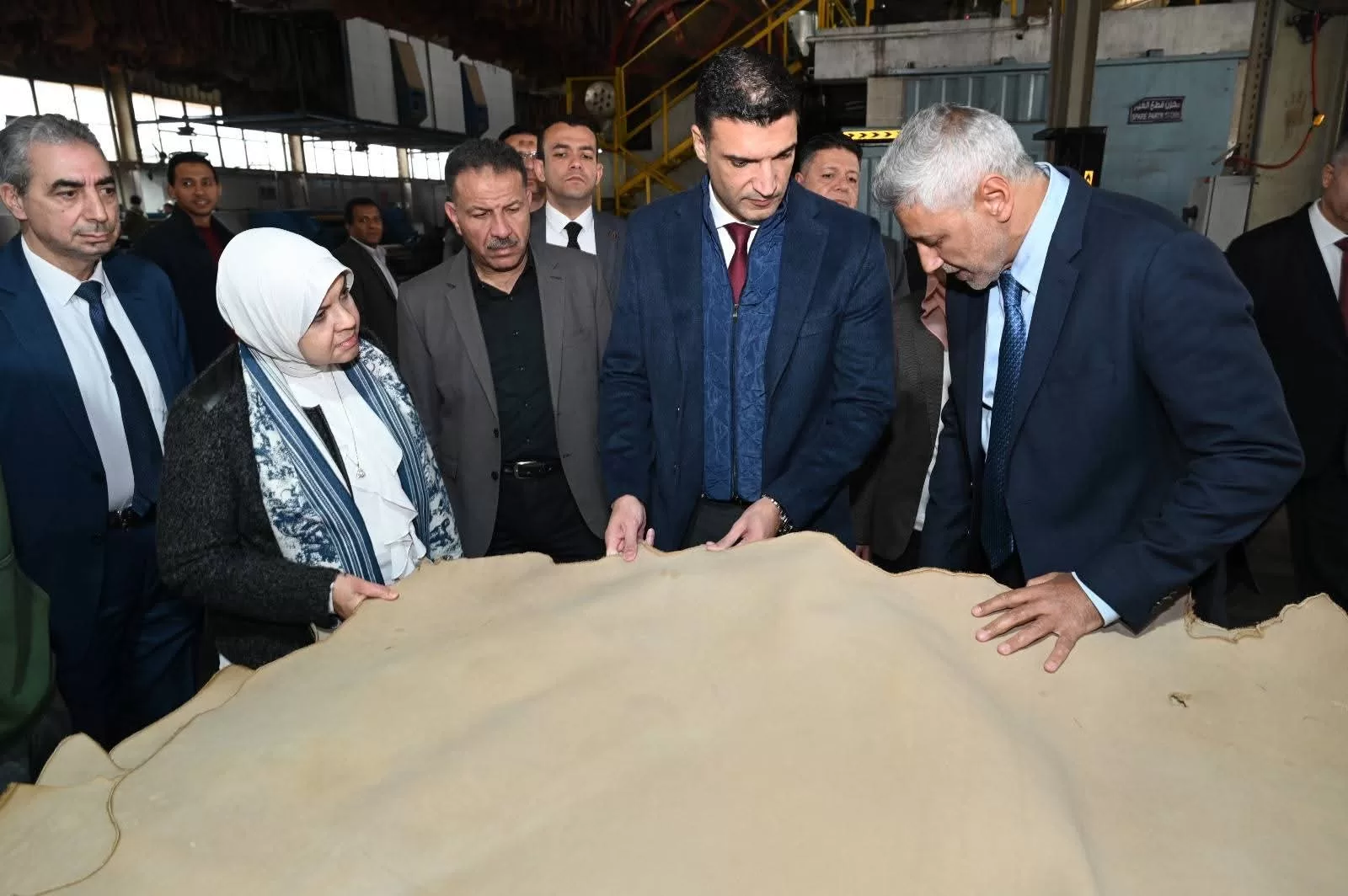
The remarks came during the minister’s inspection tour Friday of Robbiki Leather City (Tanneries) to follow up on operations at factories and the LTTC Center, review production rates and measures required to boost exports and identify challenges facing investors in the city.
The visit comes within the framework of the ministry’s strategy to develop the leather industry, deepen local manufacturing and enhance the added value of national industries.
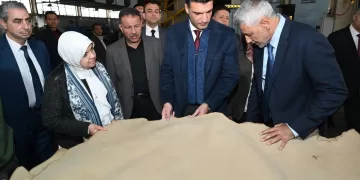
The minister began his tour by inspecting the LTTC, where he reviewed research and development laboratories as well as testing and analysis facilities. He also followed the various stages of leather processing, starting from splitting and preparation operations and the “wet blue” section, through dyeing, drying and spraying machines, and ending with the final finishing stages, in addition to visiting the training halls at the center.
Hashem said the centre was recently upgraded to provide equipment required for different production stages and laboratories, as well as to train technical cadres.
The center represents a model of partnership between the government and the private sector through assigning its technical and financial management to Robbiki Leather Tanning Technology Company, in which tannery owners participate, contributing to improving the sector’s efficiency and enhancing its regional and international competitiveness, he said.
The minister also inspected the second phase of glue factories and tanneries currently being completed, directing officials to expedite finishing works to meet investors’ needs and relocate tanneries to the city.
Hashem stressed that Robbiki Leather City is among the most important integrated industrial projects in the region, as it includes a comprehensive system for the leather industry starting from tanning to the manufacture of fully finished leather products. The minister said the State aims to transform the city into a regional hub for the leather industry in the Middle East and Africa, boosting the competitiveness of Egyptian products in foreign markets.
He said the Ministry of Industry is preparing to offer a number of new production units in the city’s third phase soon, with the aim of localising and modernising the national leather industry and attracting global companies specialising in leather manufacturing, particularly those with strong technological and marketing capabilities that enable access to global markets, thereby increasing the added value of Egyptian leather and boosting exports.
During the tour, the minister inspected Serag Tannery, established on an area of 5,547 square meters with investments exceeding $10 million and a production capacity of up to 800,000 square feet of leather per month, with a local component of 70%. The tannery exports around 95% of its production and provides more than 200 direct and indirect job opportunities.
The minister reviewed the various operational stages, starting from receiving raw hides and hair removal to primary tanning, followed by dyeing, colouring and buffing stages, leading to the final products.
He also inspected the Egyptian-German Company for Industry and Trade tannery, built on an area of 11,000 square metres with investments of LE150 million and an annual production capacity exceeding 750,000 square feet, with a 100% local component. The company exports about 95% of its production and provides 55 direct and indirect jobs.
During the visit, the minister reviewed leather dyeing, re-tanning, drying and final finishing processes, in addition to sorting, packaging and preparation for shipment.
The tour also included a number of factories operating in the 100-Factory Zone, which specializes in manufacturing leather products. The minister visited TAMZ Company’s factory for manufacturing shoes and leather products, established on an area of 1,000 square meters with investments of LE23 million and a production capacity of up to 90,000 pairs of shoes annually, with a local component of 80%. The factory provides 68 direct and indirect job opportunities. The minister reviewed the various stages of shoe manufacturing, from stitching and assembly to the final product.
He also inspected Trico House, which specialises in manufacturing sports shoe components. The factory is built on an area of 1,000 square meters with investments of $500,000 and a production capacity of up to 100,000 pieces per month, with a 50% local component. The company exports about 90% of its production and provides around 50 direct and indirect jobs. The minister reviewed the production lines for shoe components and machines used in manufacturing sports shoe soles.
He concluded his tour by visiting Sigma Shoes, established on an area of 4,600 square metres with investments of LE25 million and a production capacity of up to 1.5 million pairs of shoes annually, with a local component of 45%. The company exports about 5% of its production and provides 250 direct and indirect job opportunities.
He also reviewed stages of raw material preparation, cutting, printing and stitching lines, as well as shoe injection lines.

