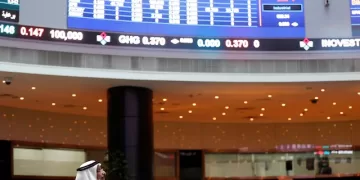







Most Gulf markets edged higher on Tuesday, but the broader momentum was tempered by escalating hostilities between Washington and Tehran, prompting many traders to stay on the sidelines as they brace for a prolonged standoff.
Tehran threatened the US with “economic warfare” and claimed an advanced missile strike on American warships, intensifying a dangerous cycle of retaliation following recent cross-border attacks.
Compounding the jitters, Houthi attacks hammered several Saudi cities, wounding 73 people and forcing energy facilities offline. The flashpoint follows Saturday’s US strikes on three Iranian tankers near the vital Kharg Island export hub, launched in retaliation for Revolutionary Guard attacks on American vessels.
Saudi Arabia’s benchmark index eased 0.3 per cent, with Al Rajhi Bank losing 0.3 per cent. The country’s biggest lender by assets, Saudi National Bank was down 0.5 per cent.
The Qatari index gained 0.3 per cent, helped by a 0.4 per cent gain in the Gulf’s biggest lender Qatar National Bank.
Dubai’s main share index rose 0.3 per cent, with top lender Emirates NBD advancing 0.9 per cent.
In Abu Dhabi, the index increased 0.3 per cent.
Reflecting broader concerns over trade vulnerabilities, the United Arab Emirates is establishing backup export corridors to prevent its economy from being “held hostage” by the standoff, UAE presidential adviser Anwar Gargash noted on Monday.

