

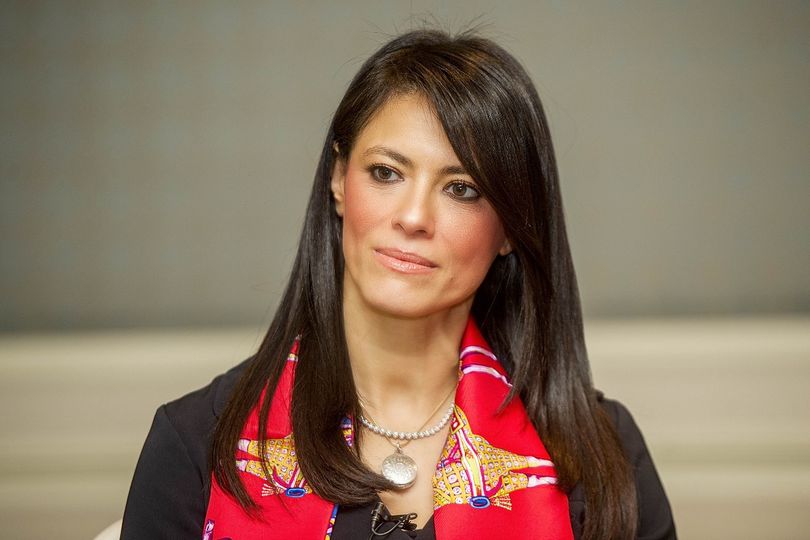
International Co-operation Minister, Rania el-Mashat, said Sunday that the German state-owned investment and development bank, KfW, would specify 41 million Euros for the Ministry of Education within the debt swap programme. The ministry, she said, would use this amount of money in implementing the Comprehensive Technical Education Initiative in Egypt.
The new grant comes within the framework of economic relations between Egypt and Germany, the minister said. It also comes within the framework of support for the programmes of the Ministry of Education nationwide, she added.
She said the programme is the last to be financed within the second tranche of the second phase of the debt swap programme between Egypt and Germany. Minister el-Mashat revealed that the total value of the second phase of the programme is 80 million Euros.
She noted that three development projects would be implemented during this phase of the programme in several sectors, including in the technical and vocational education sector.
She explained that the new agreement between Egypt and Germany within the debt swap programme would support Egypt’s efforts to develop technical education and prepare learners within this education for the labour market.
Our efforts in this regard would also seek to create more employment opportunities for youths and move ahead with the implementation of the fourth Sustainable Development Goal, namely quality education, Minister el-Mashat said.
She praised co-operation with Germany in the implementation of projects that are financed through grants and funds. She added that this co-operation also covers projects financed through the Egyptian-German debt swap programme.
Minister el-Mashat pointed out that Cairo and Berlin are now preparing for the release of the third tranche of the second phase of the programme next year. Concerned agencies in Egypt and Germany are now communicating to decide priority projects, the minister added.
She highlighted her ministry’s keenness to benefit from debt swap programmes by specifying funds for priority development projects. These projects, she said, serve the national development agenda and achieve the sustainable development goals.
Minister el-Mashat explained that her ministry also seeks to advance economic and development cooperation with development partners through what she described as ‘economic diplomacy’. It is worth noting that the ongoing development cooperation portfolio with Germany amounts to 1.7 billion Euros.
This portfolio has so far included 30 projects that were implemented through technical support grants and financial contributions. The projects were implemented in a wide range of sectors, including energy, renewable energy, sanitation, water resources development, and solid waste management.
The projects were also implemented in the fields of migration, labour market, innovation in the private sector, technical education, vocational training, urban development, and administrative reform.


Discussion about this post