


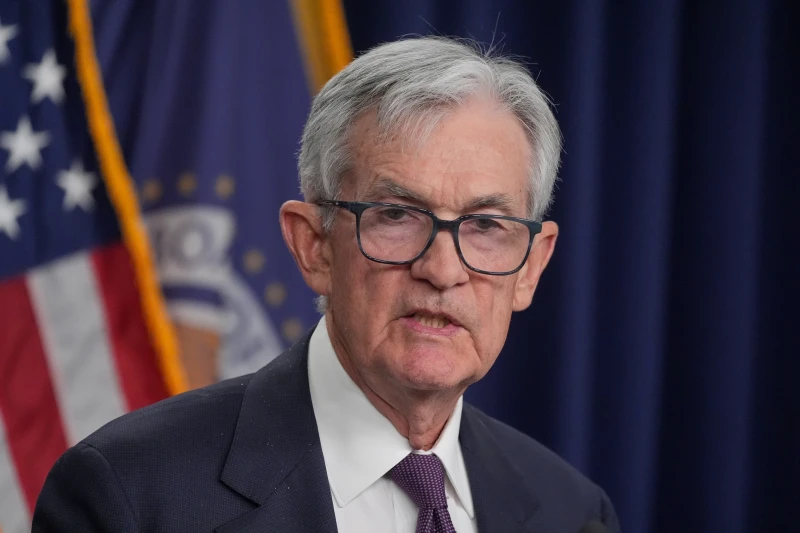
The Federal Reserve kept its key interest rate unchanged and Chair Jerome Powell highlighted the increasingly uncertain outlook for the US economy and inflation in the wake of the Iran war, suggesting the Fed could stand pat for an extended period.
Fed policymakers maintained their forecast for an additional rate cut this year, but in a news conference, Powell suggested that the central bank remains concerned about inflation that was still stubbornly elevated even before the conflict’s impact on gas prices.
“The thing I really want to emphasize is, nobody knows,” Powell said, referring to the impact of the Iran war. “The economic effects could be bigger, they could be smaller, they could be much smaller, they could be much bigger. We just don’t know.”
Powell said the central bank would need to see further progress in the price of goods declining as the impact of tariffs fades before cutting rates further. The Fed reduced its short-term rate three times last year to 3.6%, before pausing in January and on Wednesday.
“The rate forecast is conditional on the performance of the economy, so if we don’t see that progress then you won’t see the rate cut,” Powell said.
Investors were discouraged by such comments, sending share prices sharply lower. The broad S&P 500 index dropped 1.4%.
Fed officials “are aware they’ve missed their inflation target for five years, and they do not want to continue to miss it indefinitely,” said Nathan Sheets, chief economist at Citi and a former top economist at the Fed. Inflation, according to the Fed’s preferred measure, was 2.8% in January, up from 2.3% nearly a year ago. It’s also above the Fed’s target of 2%.
At the press conference, Powell did clarify a key question about the Fed’s future: He said he has “no intention” of leaving the central bank until an investigation into his congressional testimony about the Fed’s building renovation is dropped.

