








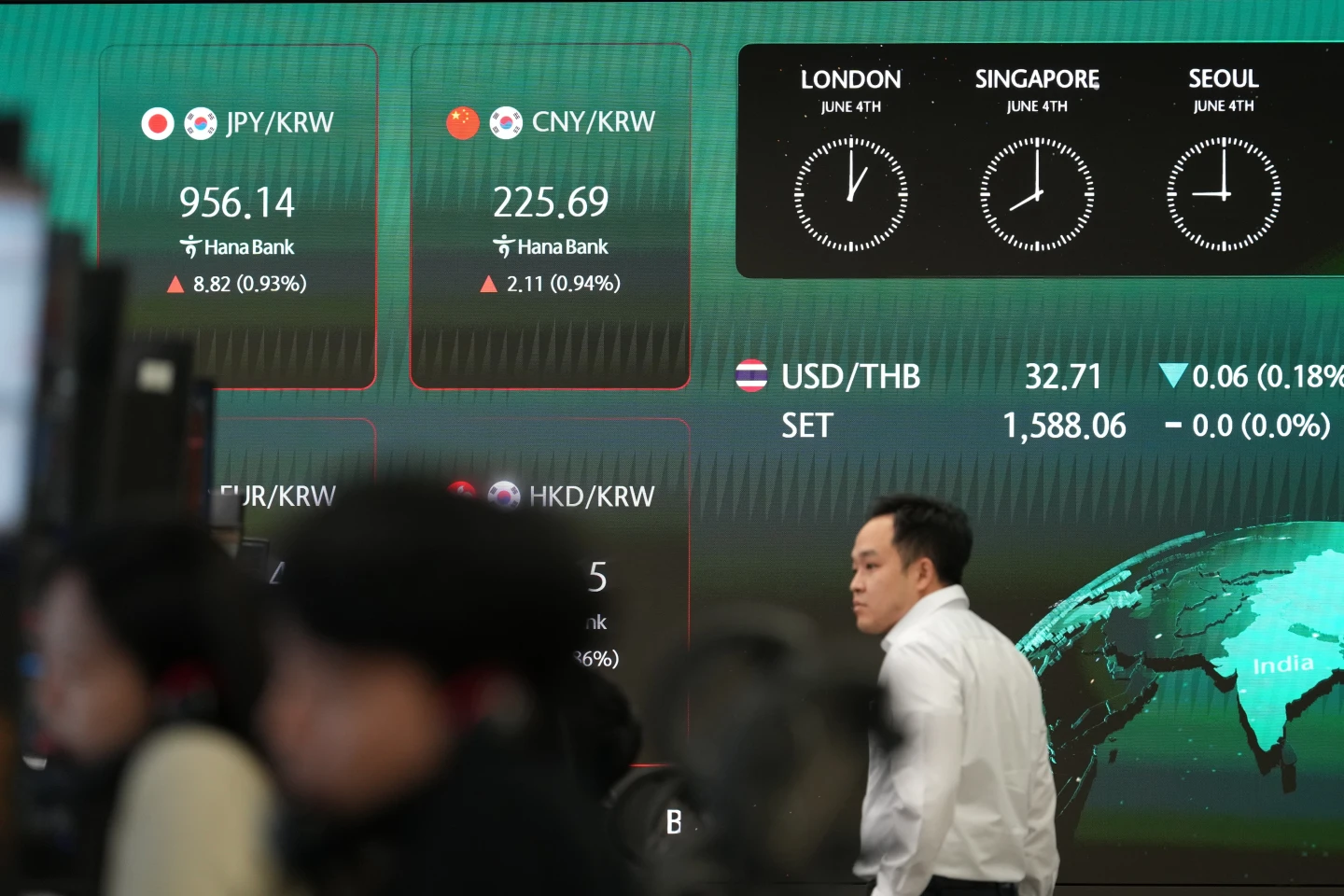
World shares were mixed Thursday after declines on Wall Street that snapped a nine-day winning streak for the S&P 500.
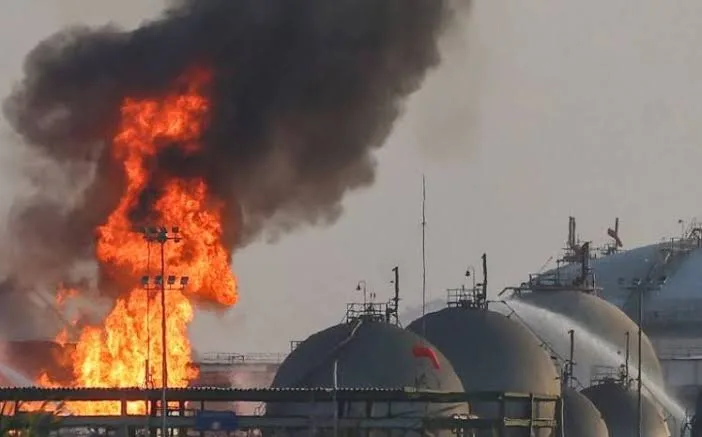
Oil prices fell back after Israel and Lebanon said they had agreed to renew their fragile ceasefire and create a number of “pilot” security zones inside Lebanon from which Hezbollah militants would be banned.
Crude had surged Wednesday when both the United States and Iran said they launched retaliations for earlier attacks or attempted ones.
Early Thursday in Asia, Brent crude was trading 65 cents lower at $97.16 per barrel, while benchmark US crude oil shed 58 cents to $95.44 per barrel.
In early European trading, Germany’s DAX gained 0.6% to 24,933.09 and the CAC 40 in Paris also climbed 0.6%, to 8,201.85. Britain’s FTSE 100 edged 0.1% higher to 10,344.32.
The future for the S&P 500 shed 0.2% while that for the Dow Jones Industrial Average added 0.2%.
Japan’s Nikkei 225 shed 1.4% to 67,470.69 on selling of technology stocks. Energy and technology giant SoftBank Group slumped 11.2%, while Shin-Etsu Chemical dropped 3.8%.
Hong Kong’s Hang Seng lost 1.4% to 25,274.98, and the Shanghai Composite index fell 0.8% to 4,057.78.
In South Korea, the Kospi sank 1.8% to 8,639.41, while Australia’s S&P/ASX 200 declined 1.1% to 8,686.10.
On Wednesday, the S&P 500 fell 0.7% from its all-time high for its first drop in 10 days. The Dow industrials dropped 1.2% and the Nasdaq composite sank 0.9%.
Stocks felt pressure from higher yields in the bond market, which climbed with the price of oil. The yield on the 10-year Treasury was steady at 4.49%, up from 4.46% late Tuesday and from just 3.97% before the war began.
High yields worldwide are threatening to slow economies and undercut prices for stocks and all kinds of other investments. They have already forced the average long-term US mortgage rate to its most expensive level in nine months, and they could curtail companies’ borrowing to build the artificial-intelligence data centers that have supported the US economy’s growth recently.
More expensive loans can hurt smaller companies in particular because many need to borrow to grow. The Russell 2000 index of the smallest US stocks fell 1.3%, more than the rest of the market.
Still, stocks remain near their records, even with all the pressure on the global economy created by higher inflation.
Oil prices remain below their peaks from earlier in the war with Iran, and hope seems to be remaining on Wall Street that the United States and Iran will ultimately agree to reopen the Strait of Hormuz to oil tankers. That would improve the global flow of crude and hopefully lower its price.

