





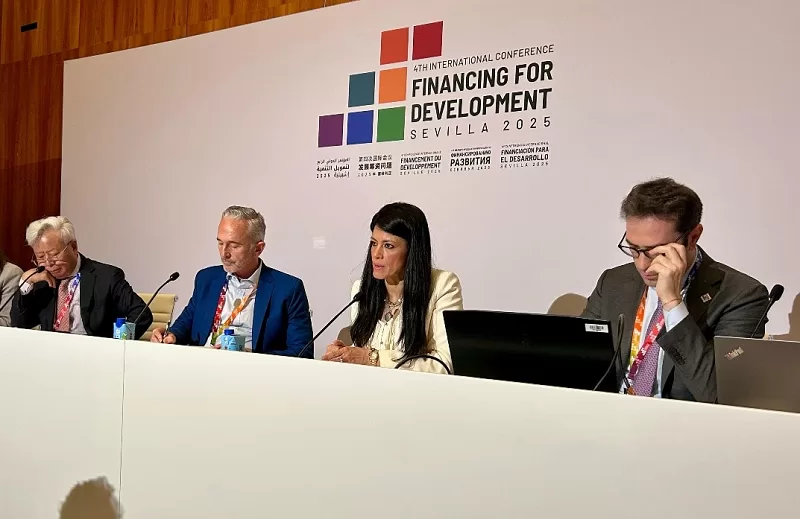
SEVILLE, Spain – Egypt has taken a proactive approach to sustainable debt management and reform, leveraging innovative tools and strategic partnerships, according to Minister of Planning, Economic Development and International Cooperation Rania Al-Mashat.
Speaking during a session on debt solutions at the Fourth International Conference on Financing for Development (FfD4) in Spain, Mashat highlighted Egypt’s successful debt swap programs with Germany and Italy worth over $900 million, and a first-of-its-kind agreement with China. These deals, she said, redirected debt repayments toward priority sectors such as health, education, and climate action.
Mashat warned that developing countries face record debt burdens, with external debt for low- and middle-income nations hitting $8.8 trillion in 2023. Over $1.4 trillion was spent on debt servicing last year, with borrowing costs rising sharply, she stated.
Over 60% of low-income countries are in or near debt distress, she added, predicting global public debt could exceed 100% of GDP by 2030 without urgent intervention.
She cited Egypt’s national integrated financing strategy (E-INFS) and its historic debt-for-investment deal with the UAE as models for aligning financing with development. Egypt also issued green bonds and is exploring sustainable and blue finance tools to diversify debt sources, she said.
Mashat called for a fairer, more resilient global financial architecture, urging multilateral frameworks to resolve sovereign debt more transparently. She advocated adopting global standards for responsible lending, including automatic debt standstills during crises, and promoted debt-for-climate swaps tailored to national priorities.

