


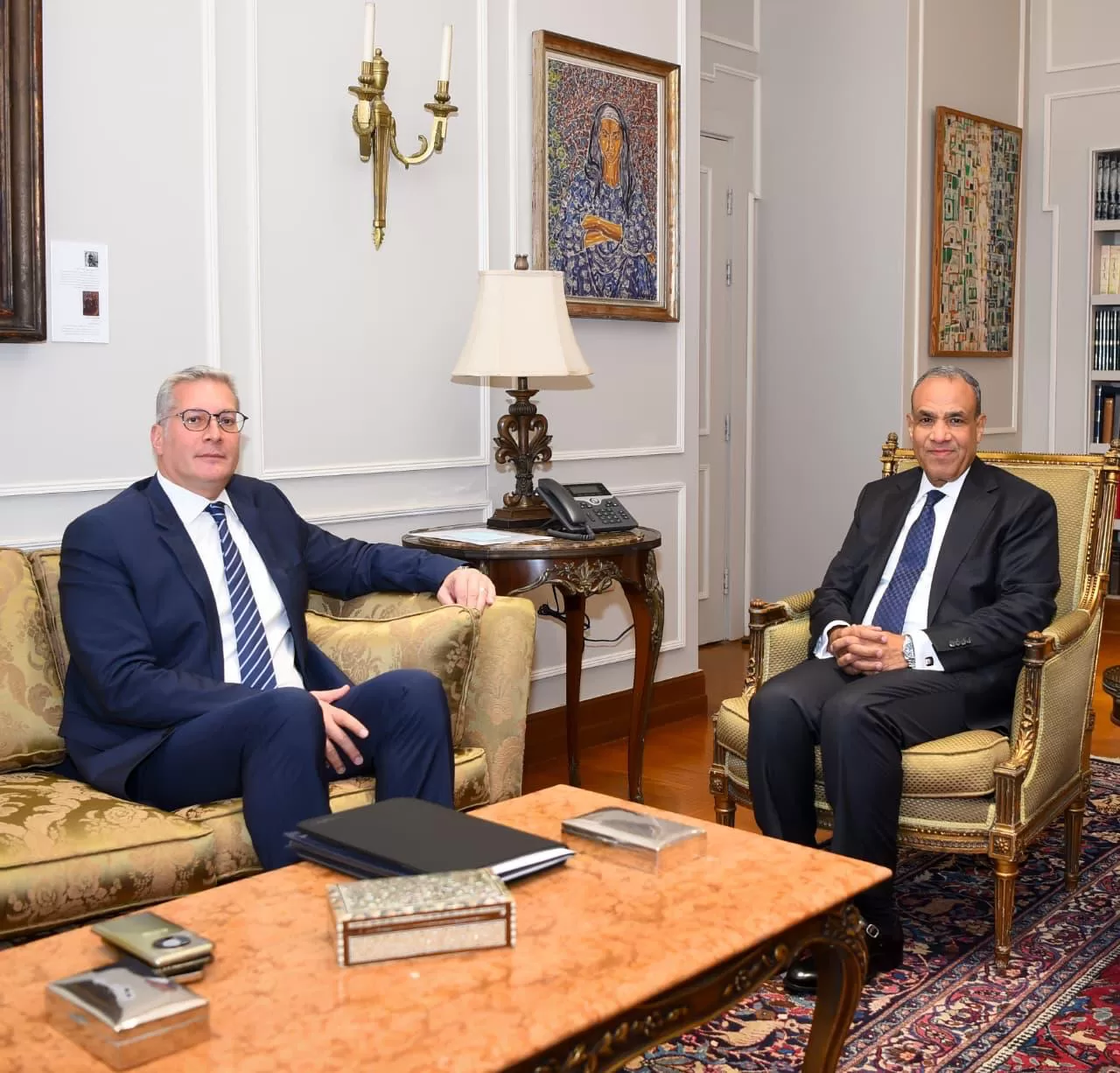
Egypt’s Minister of Foreign Affairs, Immigration and Egyptian Expatriates Badr Abdel-Aati met Minister of Petroleum and Mineral Resources Karim Badawi to discuss ways to strengthen coordination between the two ministries and support Egypt’s priorities in the energy sector.
During the meeting, Abdel-Aati emphasised the importance of continued institutional coordination to attract foreign investment and maximise the optimal use of Egypt’s energy resources.
He said these efforts support Egypt’s goal of consolidating its position as a regional energy hub, in line with President Abdel Fattah El Sisi’s directives to transform Egypt into a regional center for renewable energy and related logistics services, enhancing its role in regional and international supply chains.
The discussions also covered Egypt’s strategy to diversify energy sources and expand partnerships with various countries to achieve energy security and support sustainable economic development. Regional cooperation in the natural gas sector was highlighted, including plans to export liquefied natural gas to Europe through Cyprus and Egypt’s signing of a memorandum of understanding to supply natural gas to Lebanon via Syria, as part of efforts to support regional stability and integration in the energy sector.
The two ministers reviewed the role of the East Mediterranean Gas Forum, hosted by Egypt, as a key regional platform for enhancing cooperation among member states, supporting regional energy security, and developing shared infrastructure to ensure the optimal use of natural gas resources.
In this context, the meeting reviewed the memorandum of understanding signed on January 4 between Egypt and Qatar in the energy sector.
The agreement aims to establish a comprehensive institutional framework for developing bilateral cooperation in line with the strategic visions of both countries.
The ministers noted the growing importance of natural gas cooperation as a pillar of regional energy security and sustainable development.
They said the agreement reflects integration between Egypt’s strategic infrastructure and Qatar’s production capabilities, serving as a model for effective regional cooperation that maximizes economic returns and supports stability in regional energy markets.

