


July 3, 2013 will go down in history as a seminal day when the future of this country was decided for many decades to come.
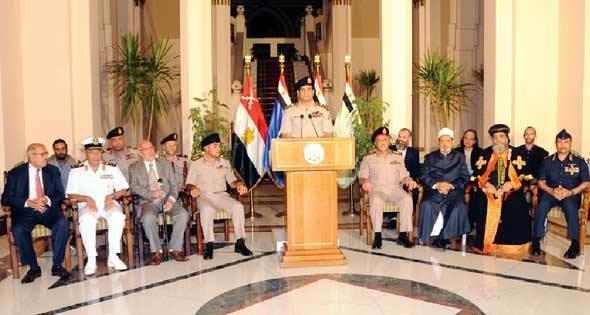
Eight years ago today, then-minister of defence and head of the army council, Abdel Fattah El Sisi appeared flanked by representatives of the nation’s political and religious forces to declare the suspension of the constitution and the appointment of the head of the Supreme Constitutional Court as Egypt’s president for an interim period in preparation for drafting a new constitution and holding new presidential elections.
This declaration was met with resounding jubilation by tens of millions of Egyptians on the streets and at the nation’s homes.
However, it will be difficult to understand this jubilation without understanding the events that led up to this
seminal day and the decisive action of the political forces to suspend the constitution and appoint an interim president, instead of Muslim Brotherhood president Mohamed Morsi.
Over his one year in office, Morsi had proved an utter failure in dealing with Egypt’s economic problems. Fuel
and commodity shortages became more acute and security conditions were going from bad to worse.
Morsi’s movement increased the country’s political polarisation by antagonising all other political forces.
Deteriorating economic, political and security conditions led to an increase of anger on the streets.
Millions of people started taking to the streets from the beginning of June 2013 to ask the then Islamist president to step down and hold snap presidential elections.
Morsi’s movement countered by asking its members and supporters to stage protests and sit-ins on the streets, pitting them against their opponents and opening the door for civil war.
The possibility of this civil war increased with more people taking to the streets on both sides, even as a minority of Morsi’s supporters was faced with a flood of opposition to him by all Egyptians.
The Supreme Council of the Armed Forces (SCAF) made numerous efforts to convince the Islamist president to ask his supporters to go home and avoid confrontations with the rest of the people.
SCAF also enlisted help from several religious figures, including some Salafist preachers and politicians with close connections to the Muslim Brotherhood, to convince the now-terrorist group to ask its supporters to go home.
The council gave Morsi a chance until July 3 to take a decision to calm down the street and end the country’s political crisis. Instead of doing this, the late president in a video address on social media called on his supporters to protest further.
This was when the SCAF found it appropriate to intervene to prevent the country’s slide into civil war.
The decision of the SCAF to suspend the constitution and appoint an interim president opened all the gates of hell on Egypt as Brotherhood militias were set loose to attack policemen, judges and army troops everywhere.
One of the leaders of the Muslim Brotherhood even admitted that a branch of the Islamic State of Iraq and Syria in Sinai coordinated with his movement.
Nevertheless, the army’s decision to take sides with the people against Morsi and his movement proved prescient, given the failures of the late president and his movement’s desire to radicalise Egyptian society.
Tens of millions of Egyptians will remember July 3 of 2013 for many years to come. They will remember the army
chief who was later voted into the presidency by the vast majority of the people.
Millions of Egyptians will remember softly-spoken Sisi as he addressed the nation announcing the suspension of
the constitution. Beside him, the Grand Imam of al-Azhar, the Patriarch of the Coptic Orthodox Church and representatives of all leftist, liberal and Islamist parties stood to show that Morsi’s ousting was a decision of the people, not of any other force.


Discussion about this post