


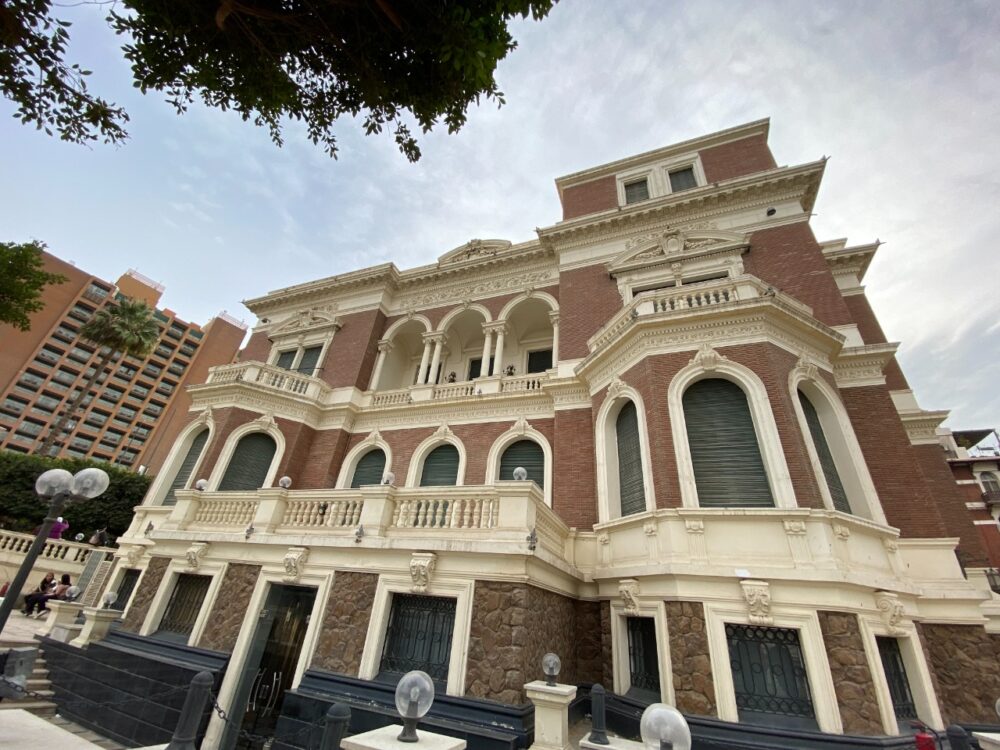
On the shore of the Nile in Zamalek lies the 20th century Aisha Fahmy Palace, which became a centre of arts in 1986. Before being associated with arts, the palace had many stories to tell.
It was built in 1917 by Ali Bey Fahmy, from an aristocratic family. It was designed by famed Italian architect Antonio Lasciac (1856-1946) in the Neo-Renaissance style with a few Baroque touches.
In 1922, the well-to-do Fahmy married French beauty Marguerite Alibert also known as Maggie Miller and resided in the palace. A year later, the couple travelled to London, but because of different cultures they quarrelled so much. Unfortunately, on a dark night at their stay in Savoy Hotel she ended a quarrel by killing him with a pistol repeatedly from behind.
This terrible incident rocked Cairo. Despite her crime, Miller didn’t take her deserved punishment, as the British jury found not guilty. The lawyer turned the case into an East against West conflict as he claimed that she was a victim of the brutality of her oriental husband.
She returned to Egypt asking for inheritance, but the Egyptian court denied her share. Because Fahmy had no children, his fortune was distributed to his four sisters. Aisha was the one who resided in the palace.
After an affair, Aisha married famous Egyptian actor Youssef Wahby (1898- 1982). Wahby was inspired by her late brother’s terrible fate. In 1932, he starred in and wrote Awlad el-Zawat, the first Arabic-language film. It delves into the problems facing Egyptian men who marry foreign women, portraying the suitors as gold diggers and cheats. It is said that the film was the reason the couple divorced later.
After the July revolution in 1952 which toppled the monarchy, the palace was used for many purposes until it became the Centre of Arts in 1986.
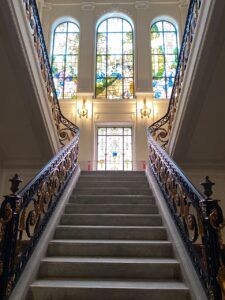
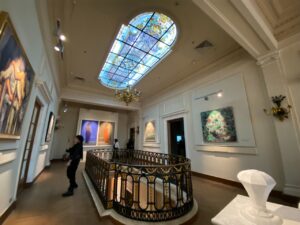
The 2,700-square-metre palace consists of two floors and a spacious garden overlooking the Nile.
Most of the palace ceilings have a stained glass shokhshikha (an elevated skylight that lets in the light) in the middle, and nearly all the floors are made of parquet.
The exterior has plaster decorations while the walls are made of dark brown brick.
The Ministry of Culture renovated the palace so it could be a venue for exhibitions. It is equipped with the latest in display and lighting technology and provides exemplary services.
The rooms inside the awe-inspiring rococo palace are painted in bright colours with unique silk and linen paintings adorning the walls.
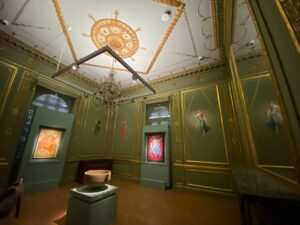
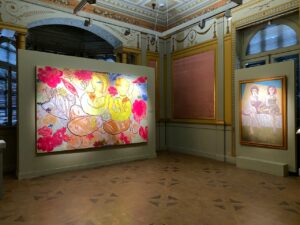
The Japanese room is one of the most beautiful rooms in the palace. The walls are painted in red and are decorated with Japanese letters cut out of gold-coloured silk cloth. The doors are painted green and display gold-coloured drawings of Japanese landscapes, while the ceiling is covered in drawings of birds and cherry blossoms.
Ehab el-Labban, director of the Centre of Arts, told the Egyptian Mail that the palace is regarded as pioneering in forming the Egyptian Fine movement.
“It is the biggest place in Egypt holding exhibitions for local and international artists in addition to cultural events.”
In 2005, it was closed for restoration and opened in 2017.
The palace hosted exhibitions displaying rare artefacts some of which were displayed for the first time taken from museums affiliated to the Culture ministry.
There were exhibitions on Coptic and Islamic textiles; some of these works date back to the 3rd century.
Photographic and sculptural works for the family of Mohamed Ali Pasha were also among treasures showcased in the palace.
It also displayed orientalists’ works on Egypt and its life before the photography era featuring attire, customs and traditions.
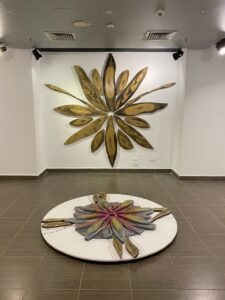
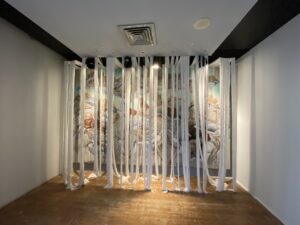
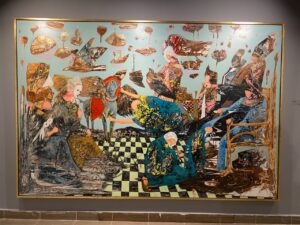
The latest exhibition, which runs until May 14, is entitled ‘The Scene’.
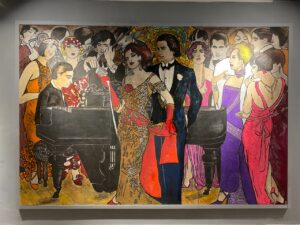
“It shows the current art movement with its different trends and numerous elements that define the features of contemporary Egyptian art with its rich diversity in various directions artistically, technically, and conceptually,” el-Labban said.
It features works of 96 artists from different generations and in photography, sculpture and video.
El-Labban added that there will be following sessions of this exhibition, in which they observe all the experiences of Egyptian artists of all ages and directions that are effective and influential in the composition of the Egyptian art movement, to monitor and document such different experiences every year.
Aisha Fahmy Palace (aka Centre of Arts) is located at 1 Aziz Abaza St, Zamalek. It is open daily (except Fridays) from 9am to 9pm.


Discussion about this post