



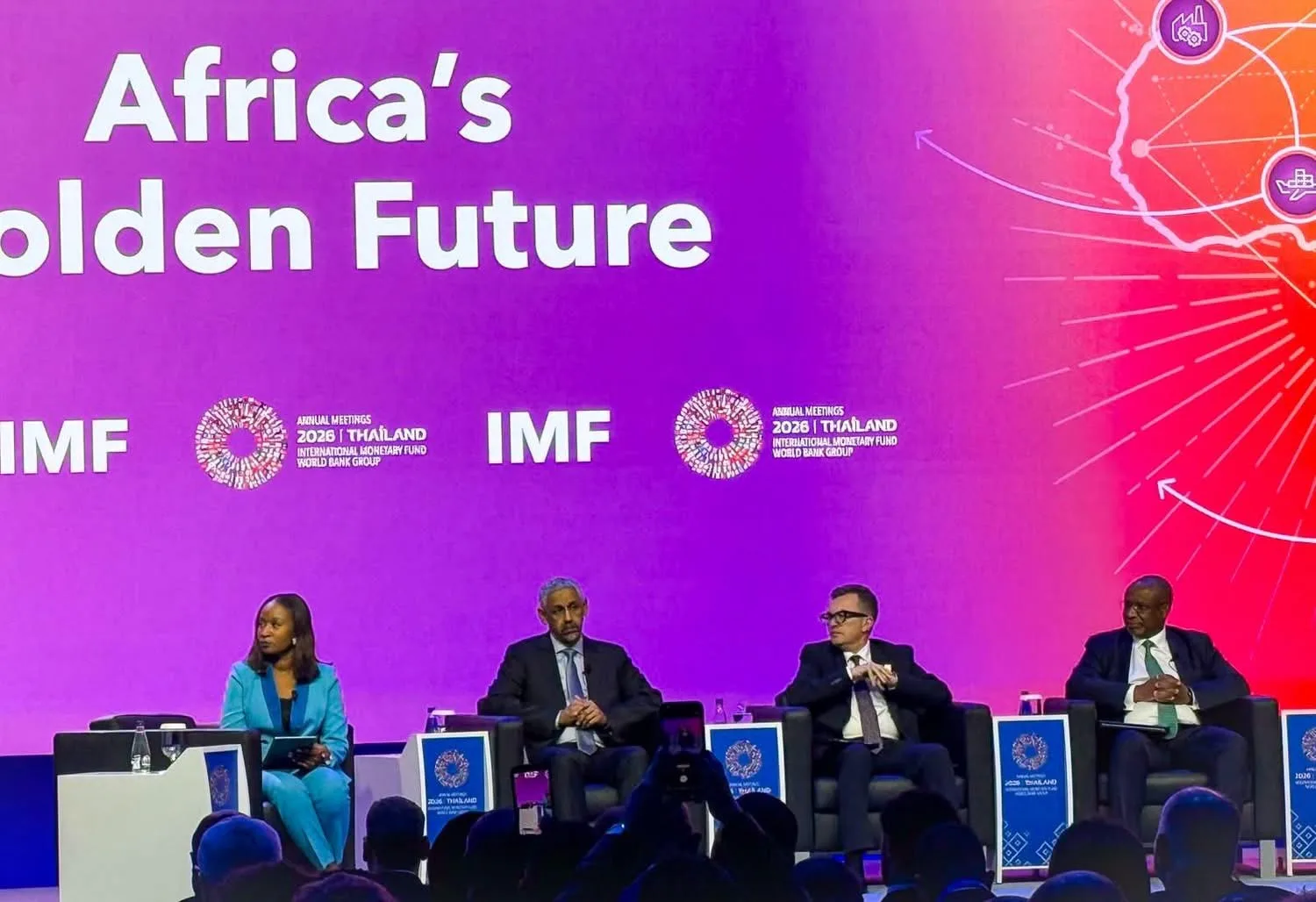
As part of the Annual Meetings of the World Bank Group and the International Monetary Fund in Bangkok, Minister of Planning and Economic Development Ahmed Rostom presented Egypt’s vision for strengthening private sector participation and advancing economic integration across Africa during a high-level panel on “Africa’s Promising Future: Structural Reforms, Trade Integration and Private Sector-Led Growth.”
Rostom said Africa possesses vast untapped natural resources and a young workforce capable of driving sustainable growth, stressing the need to move beyond state-led economic models toward deeper reforms that place the private sector at the centre of productivity and competitiveness.
The minister highlighted Egypt’s economic performance as a regional example, noting that the economy recorded real growth of 5.1 per cent in FY2025/2026, supported by foreign currency assets reaching $73.1 billion and an overall balance of payments surplus of $6.4 billion.
On private sector empowerment, Rostom revealed that private investment accounted for 57.7 per cent of total investments in FY2025/2026, up from 43.1 per cent in FY2023/2024. He said the government aims to raise this share to 67 per cent by 2030 through implementation of the State Ownership Policy, promotion of competitive neutrality, simplification of procedures, and expansion of one-stop investment services.
The minister also reassured international investors about Egypt’s energy sector, saying the full settlement of dues owed to international oil companies in June 2026 had helped restore confidence. He added that Egypt is rapidly expanding renewable energy projects in partnership with the private sector with the aim of reaching a 42 per cent share of clean energy in the national energy mix by 2030.
Rostom noted that Africa has long been viewed primarily as a source of agricultural resources without sufficient development of food processing industries, arguing that recent global shocks have highlighted the importance of deepening industrialisation and value-added production on the continent. He made a similar point regarding strategic minerals, stressing the importance of expanding local processing industries to enhance value chains and support renewable energy development.
The minister described the Infrastructure Financing Guarantee Mechanism as a practical model for productive co‑operation with African countries, helping attract investment and finance major development projects. He concluded by emphasising that full implementation of the African Continental Free Trade Area (AfCFTA), customs facilitation, cross-border electricity interconnections and green hydrogen projects are essential to strengthening energy security and regional value chains, while creating sustainable jobs for Africa’s youth.
