



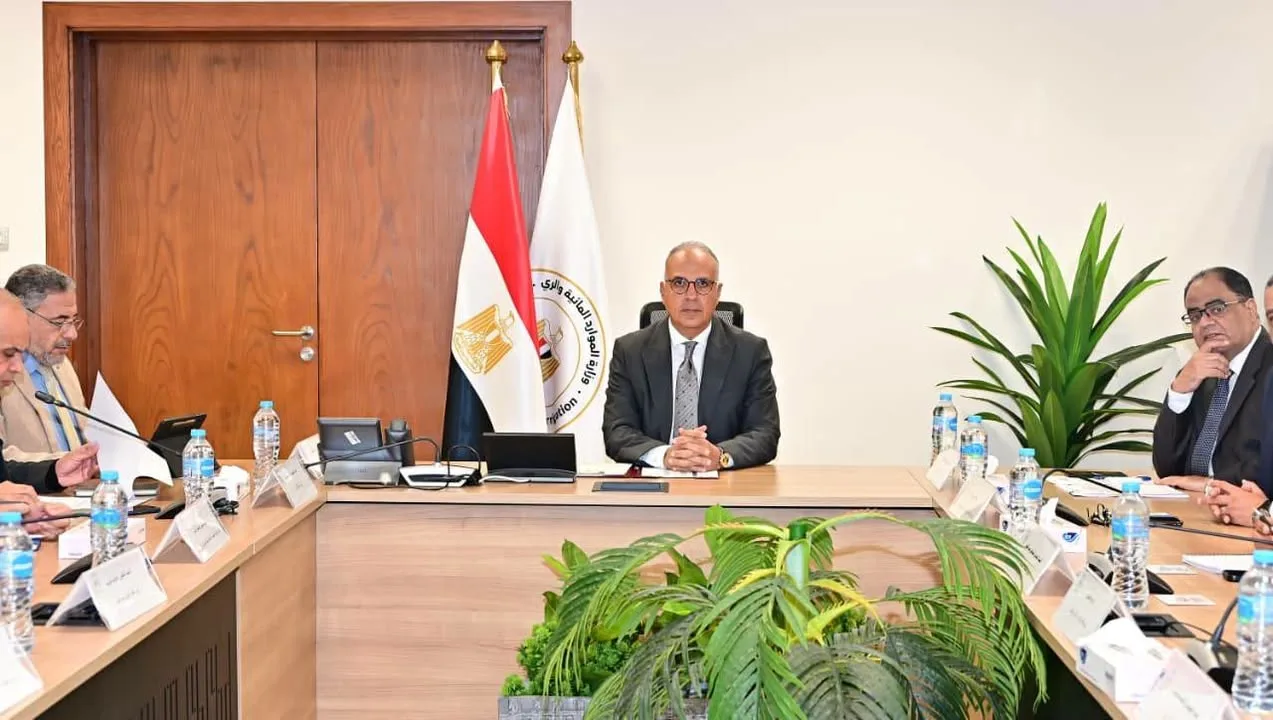
The Permanent Committee for Regulating the Nile River’s Revenue held a meeting chaired by Minister of Water Resources and Irrigation Hani Swailem, attended by ministry officials and representatives of the National Water Research Centre, to prepare for the upcoming flood season and heavy rainfall.
The committee reviewed the latest climate indicators issued by regional and international centres concerning the El Niño and La Niña phenomena and their potential impact on rainfall patterns worldwide, including in East Africa. It stressed that these indicators are important factors in preparing seasonal forecasts.
The committee also reviewed ongoing work to expand the Toshka Spillway as part of the ministry’s efforts to improve the efficiency and readiness of major water infrastructure. The project aims to enhance the management of water flows and levels in Lake Nasser, support the operation of the High Dam and strengthen the capacity to respond to various hydrological scenarios.
Minister Swailem said the ministry would continue to manage water resources dynamically, relying on real-time monitoring of the Upper Nile, hydrological forecasts generated using advanced mathematical models and satellite imagery.
He added that the timing of water releases is determined based on these data, the capabilities of the water infrastructure, particularly the High Dam, and continuous monitoring of the network’s discharge capacity, taking into account water needs across different sectors and the network’s capacity.
The minister also stressed that ministry departments would continue working around the clock to ensure the efficient operation of irrigation and drainage systems nationwide. This includes clearing canals and drains as needed and checking the readiness of waterways, embankments, pumping stations and emergency units to respond to any incidents.
- Latest
- Trending

