


• Latest
  • Trending
  • All
  • Egypt
  • Business
  • Local
  • World
The surprising legal power of women in Ancient Egypt

The surprising legal power of women in Ancient Egypt

October 11, 2026
Egypt prepares for flood season, heavy rainfall

Egypt prepares for flood season, heavy rainfall

October 11, 2026
Sisi arrives in Malaysia for state visit

Sisi reaffirms Egypt’s Nile water rights, rejects unilateral measures

October 11, 2026
Saudi Arabia vows response to Houthi attack on Riyadh airport

Saudi Arabia vows response to Houthi attack on Riyadh airport

October 11, 2026

Sisi reaffirms Egypt’s water rights, support for Palestinian statehood

October 11, 2026
Nepal urges villagers to flee after landslide flood

Nepal urges villagers to flee after landslide flood

October 11, 2026
World Bank in crisis aid talks with dozens of countries

World Bank in crisis aid talks with dozens of countries

October 11, 2026
Egypt’s rowing future takes shape in Tunisia

Egypt’s rowing future takes shape in Tunisia

October 11, 2026
Why mining matters to Egypt: from gold rush to industry?

Why mining matters to Egypt: from gold rush to industry?

October 11, 2026
Egypt, Greece, Cyprus build dual energy bridge to Europe

Egypt, Greece, Cyprus build dual energy bridge to Europe

October 11, 2026
In search of the author

The gift of grammar

October 11, 2026
  • Advertise
  • Privacy & Policy
  • Contact
Sunday, October 11, 2026
  • Login

Editor-in-Chief

Mohamed Fahmy

Board Chairman

Tarek Lotfy

Egyptian Gazette
No Result
View All Result
  • HOME
  • EGYPT
    • Local
    • Features
  • World
    • National Day
  • Technology
  • BUSINESS
    • Real Estate
    • Automotive
  • SPORTS
  • ENTERTAINMENT
    • Arts
    • Health
    • Lifestyle
    • Travel
  • Skyward
    • Snippets from EgyptAir history
  • MORE
    • Multimedia
      • Video
      • Podcast
      • Gallery
    • OP-ED
  • HOME
  • EGYPT
    • Local
    • Features
  • World
    • National Day
  • Technology
  • BUSINESS
    • Real Estate
    • Automotive
  • SPORTS
  • ENTERTAINMENT
    • Arts
    • Health
    • Lifestyle
    • Travel
  • Skyward
    • Snippets from EgyptAir history
  • MORE
    • Multimedia
      • Video
      • Podcast
      • Gallery
    • OP-ED
No Result
View All Result
Egyptian Gazette
No Result
View All Result
Home Entertainment

The surprising legal power of women in Ancient Egypt

by Salwa Samir
October 11, 2026
in Entertainment
The surprising legal power of women in Ancient Egypt 11 - Egyptian Gazette
Share on FacebookWhatsapp

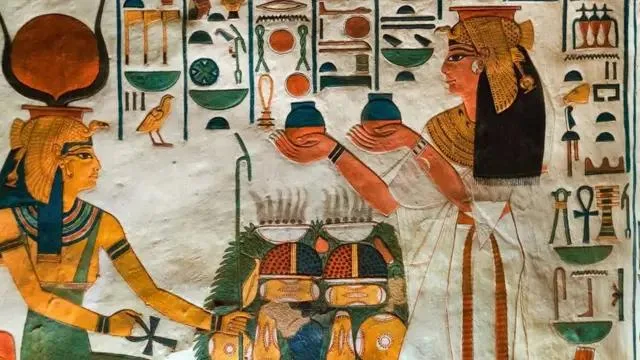
Ancient Egyptian women owned land, signed contracts and took their spouses to court, millennia before modern feminism emerged.

Legal records show women not only as mothers and wives, but also as property owners, parties to contracts, litigants and economic partners. 

They could also end a marriage.

Egyptologists call for paying attention to this history as the world marks the International Day of the Girl Child on October 11. The rights ancient Egyptian women held as adults, they say,helped shape the society where they grew up.

Egyptologist Magdy Shaker quoted French Egyptologist Christiane Desroches Noblecourt (1913-2011): “Egyptian women led happy lives in a country where equality between the sexes seemed natural”.

“The ancient Egyptian civilisation produced some of the first laws on women’s role, most notably marriage laws,” Shaker told The Egyptian Gazette.

These laws, he added, were based on mutual respect between spouses and gave wives authority over the household.

“Women had inheritance rights equal to those of men,” he noted.

A wife was entitled to a third of her husband’s wealth if he divorced her without cause. Husbands also sought burial beside their wives, whom they regarded as life partners.

Legal documents show women could manage and dispose of private property, including land, goods and livestock, according to Shaker.

They could also sign contracts covering marriage, divorce and purchases, and bring lawsuits. Papyri and wall paintings indicate that women’s testimony was accepted in court.

A prenuptial agreement on display at the University of Chicago offers one example. The papyrus, about 2.4 metres long, was signed in 365 BC and written in Demotic, a cursive script used in ancient Egypt. 

It stipulated that, if the marriage broke down, the wife would receive 1.2 silver coins and 36 sacks of grain a year in compensation.

The document also points to women’s rights to own, manage and sell property, and to sign marriage and divorce agreements.

“Women’s standing extended into religion,” Shaker said.

Goddesses stood alongside gods: Maat was associated with justice, Hathor with love and Sekhmet with power. Women served as high priestesses, and Queen Hatshepsut held the title ‘God’s Hand’.

Egyptologist Hussein Bassir, meanwhile, urged caution when it comes to the issue of the age of marriage.

As far as he knows, there is no known law in ancient Egypt that set a uniform age at which a girl would marry.

“Evidence about brides’ ages is scarce and practices varied by period and social class,” Bassir told The Gazette.

He ruled out information about ancient Egyptian women being deprived of inheritance as “incorrect”.

Children, he said, received their rightful shares of their parents’ estates.

Bassir cited the will of Naunakhte, a woman from the New Kingdom workers’ village of Deir el-Medina, who decided to receive her property.

“She was not a mere recipient of inheritance but an owner of wealth who could legally decide her fate,” he said of the woman.

Women could also buy and sell, make contracts and go to court, Bassir said. Some of them managed their children’s money.

“It is more accurate to say that ancient Egyptian women enjoyed a significant degree of legal and economic independence,” Bassir, also the director of the Antiquities Museum at the Bibliotheca Alexandrina, said.

“Rights varied, however, across periods and social classes,” he added.

Ancient Egypt also had women who rose to positions of power, including Hatshepsut. Peseshet is often described as the earliest known woman physician, while Nebet is identified as the first recorded female vizier.

“History does not move in a straight line from darkness to light,” Bassir said. 

“Rights present in one era may diminish in another, only to be demanded again centuries later,” he added.


Tags: ancient EgyptEgyptEgyptian womenInternational Day of the Girl Child
ADVERTISEMENT
egyptian-gazette-logo

The Egyptian Gazette is the oldest English-language daily newspaper in the Middle East.
It was first published on January 26, 1880 and it is part of El Tahrir Printing and Publishing House.

Follow Us

Gazette Notifications

Would you like to receive notifications on our latest news ?

  • Advertise
  • Privacy & Policy
  • Contact

Copyrights for © Egyptian Gazette - Administered by Digital Transformation Management.

Welcome Back!

Login to your account below

Forgotten Password?

Retrieve your password

Please enter your username or email address to reset your password.

Log In
No Result
View All Result
  • HOME
  • EGYPT
    • Local
    • Features
  • World
    • National Day
  • Technology
  • BUSINESS
    • Real Estate
    • Automotive
  • SPORTS
  • ENTERTAINMENT
    • Arts
    • Health
    • Lifestyle
    • Travel
  • Skyward
    • Snippets from EgyptAir history
  • MORE
    • Multimedia
      • Video
      • Podcast
      • Gallery
    • OP-ED

Copyrights for © Egyptian Gazette - Administered by Digital Transformation Management.

This website uses cookies. By continuing to use this website you are giving consent to cookies being used. Visit our Privacy and Cookie Policy.