





Egypt is advancing natural gas connection and processing projects with Cyprus and Greece, targeting the transport of Eastern Mediterranean gas to European markets.
The state is committed to turning discovered gas resources into production and commercial projects.
During a meeting with Greek Environment and Energy Minister Stavros Papastavrou and Cypriot Energy Minister Michael Damianos, on Wednesday Minister of Petroleum and Mineral Resources, Karim Badawi, reaffirmed the importance of accelerating East Mediterranean gas development and connecting regional resources to European markets.
The meeting was held on the sidelines of the Eastern Mediterranean Gas Forum’s (EMGF) high-level roundtable in Athens.
Minister Badawi said integrating Egypt’s infrastructure with Eastern Mediterranean resources and European networks will position Egypt as a premier regional gas trading hub.
Vertical Gas Corridor
The ministers participating in the roundtable highlighted the Vertical Gas Corridor’s role in opening routes for East Mediterranean gas to Southern and Central Europe, supporting supply diversification and regional energy connectivity.
The Corridor is not a single pipeline. It links existing gas networks running north from Greece through countries, including Bulgaria and Romania towards Moldova and Ukraine, allowing LNG arriving at Greek terminals to reach markets further into Europe. Egypt is one of the potential gas sources for the corridor.
Cronos gas field
The Cronos gas field stands out as one of the most important projects that could test the new model of co-operation between Cairo and Nicosia.
The project is aimed to transfer the gas produced from the Cypriot field to Egypt, where it can benefit from Egyptian processing and liquefaction facilities, before re-exporting to global markets.
In July 2026, France’s TotalEnergies and Italy’s Eni have approved the development of the Cronos gas field in Cyprus to supply Europe with liquefied natural gas, with production start-up expected in 2028.
Cronos is a major natural gas discovery in Block 6 of Cyprus’ exclusive economic zone in the Mediterranean Sea, operated as a 50/50 joint venture between Eni and TotalEnergies.
Estimated to hold more than 3 trillion cubic feet of gas, the project plans to pipe and process the reserves in Eni’s existing facilities in Egypt for export towards Europe via the Damietta LNG terminal.
“As Cyprus’ first gas project, Cronos will support the development of a new regional gas hub in the Eastern Mediterranean, leveraging Egypt’s infrastructure,” TotalEnergies CEO Patrick Pouyanne said recently.
Aphrodite field
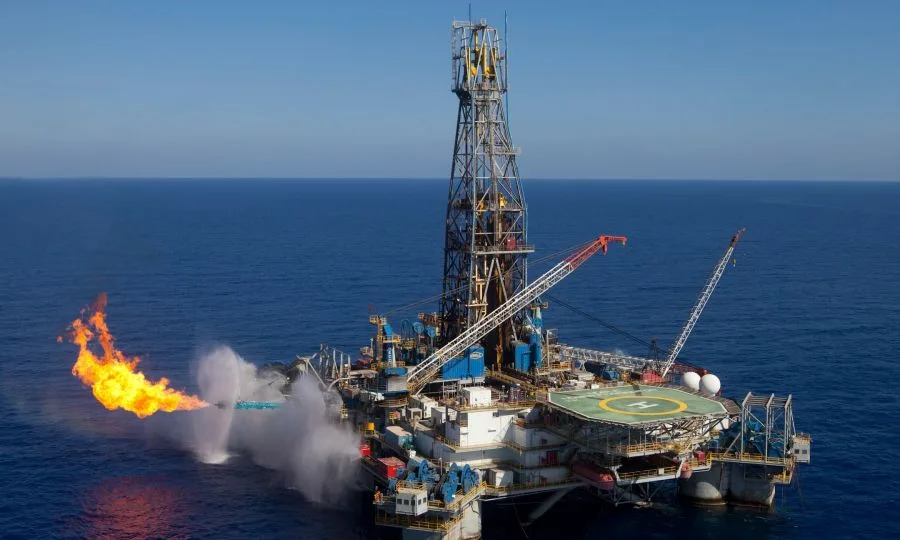
The Aphrodite gas field is one of the key projects upon which Cyprus is pinning its hopes to maximise the utilisation of its offshore resources.
Egypt and Cyprus are entering the final stages of establishing commercial, contractual, and regulatory frameworks to tie the offshore Aphrodite gas field directly to Egypt’s energy grid.
In March 2026, Egypt and Chevron signed an agreement to accelerate the development and production of gas from Aphrodite and connect the field to Egypt through a 280-kilometre subsea pipeline, before transporting the gas to Egypt’s network in Port Said for processing and re-export.
Egypt is placing great importance on developing power interconnection projects, foremost among them the ‘GREGY’ project with Greece, President Abdel Fattah El-Sisi said at a press conference with Cypriot President Nikos Christodoulides and Greek Prime Minister Kyriakos Mitsotakis last month.
GREGY subsea cable is designed to connect Egypt’s electricity grid with Greece, enabling renewable electricity generated in Egypt to reach European markets.
President Sisi also pointed to the gas interconnection projects with Cyprus to channel the output of Cyprus’s most promising gas fields into Egypt’s liquefaction infrastructure to be re-exported to European markets.
“This co-operation is not limited to securing Europe’s energy supplies but also extends to generating economic benefits for the people of the three countries,” added El-Sisi.
In a joint declaration, the three leaders called for work connecting Cyprus’ offshore gas fields to Egyptian infrastructure to be completed as soon as possible.
Robust infrastructure
Egypt’s role in the emerging regional gas system rests largely on infrastructure.
The country has two LNG export facilities, at Damietta and Idku. It also possesses an extensive domestic gas network and processing facilities.
This infrastructure gives Egypt an advantage in dealing with gas from neighbouring countries that do not yet have comparable liquefaction capacity.

