



Minister of Industry Khaled Hashem said the textile and spinning sector is a key target of Egypt’s industrial strategy, given its strong potential to integrate into global supply chains, deepen local manufacturing and boost exports.
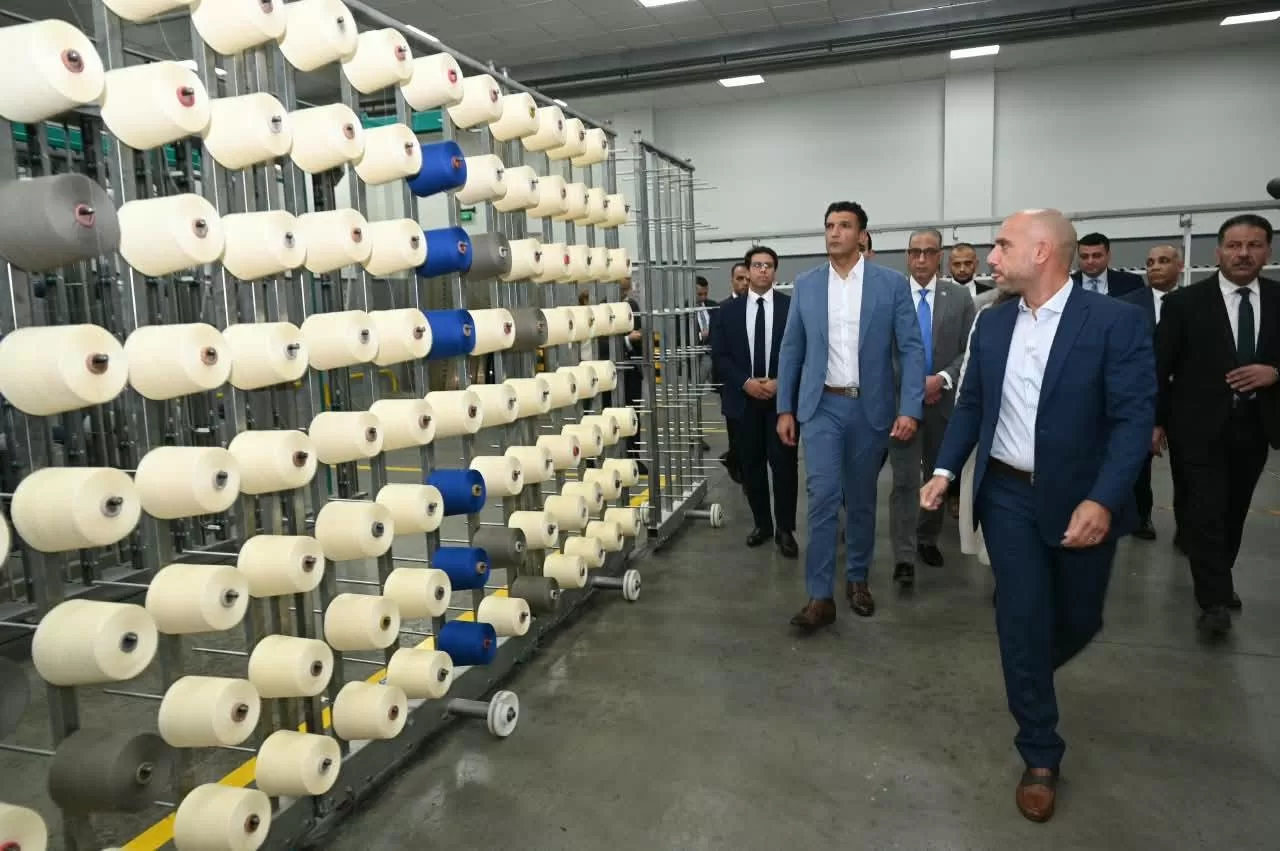
During a tour of the 6th of October City’s industrial zone on Saturday, Hashem inspected two factories specialised in textiles, knitting, dyeing, printing and finishing. He followed up on production operations and manufacturing stages.
He highlighted the sector’s competitive advantages, including its labour-intensive nature, relatively low energy consumption and availability of skilled workers, which he said could attract further investment and support production and exports.
At Naga Tex, the minister reviewed a factory producing around 1.44 million metres of fabric annually, with 90 per cent local components. The company exports about 60 per cent of its output to Switzerland, Turkey, Germany, Brazil and Italy, generating around $2 million in exports.
He also inspected Misr Al-Salam for knitting, dyeing, printing and finishing, which has annual capacity of 5,000 tonnes of dyed and printed fabric, with 80 per cent local components. The company exports 20 per cent of its output to Turkey and Morocco, generating $3 million in exports.
Hashem stressed the importance of raising local components and integrating production chains to enhance the competitiveness of Egyptian products and support the country’s export and industrialisation targets.
Earlier in the day, Minister Hashem opened a new production line at Unilever’s Mashreq personal care factory in 6th of October City, with the aim of increasing the plant’s annual production capacity by 20 per cent.
The new line, the 13th at the factory, will dedicate its entire output to export markets.
Hashem said that Unilever has become an important partner for Egyptian industry, operating three factories in the country and exporting Egypt-made products to more than 30 countries.
Unilever’s 22,000-square-metre Mashreq factory produces personal care, beauty and home care products. Around 65 per cent of its current production is exported, while approximately 80 per cent of the materials used in manufacturing are sourced locally.
The factory is marking 20 years of operations in Egypt with the opening of the new production line.
Hashem affirmed that the government is working to increase local manufacturing and exports, improve industrial services and make it easier for existing companies to expand and make new investments.
According to the Industry Ministry, Unilever ranks first among exporters of personal care products from Egypt.

